

Key takeaways
- To fly with a dog in the cabin, confirm your airline allows pets on your specific route.
To fly with a dog in the cabin, confirm your airline allows pets on your specific route, book the pet spot early because the number per flight is capped, and bring an approved carrier that fits fully under the seat in front of you with your dog able to stand and turn around. Everything else, from paperwork to fees, follows from those first three checks.
This guide is for owners planning a first trip with a small dog and for travelers who want a cleaner checklist before booking. It covers carrier rules, health paperwork, timing, security screening and how to keep your dog calm. Airline and destination rules change, and 2026 policies differ between carriers, so treat this as a framework and confirm every detail with the airline and your veterinarian.
Who Can Fly in the Cabin
Cabin travel is generally limited to dogs small enough to fit in a carrier under the seat. The size limit is set by the airline and depends on the carrier plus the dog, not by breed alone. Larger dogs usually travel as checked pets or cargo, and some airlines restrict or ban those options at certain times of year.
Service animals follow separate rules that vary by country and airline, and emotional support animals are no longer treated as service animals on many carriers. If you are traveling with a service dog, contact the airline’s accessibility team well ahead of time and ask what documents they require.
Know the Carrier Rules
Size and fit
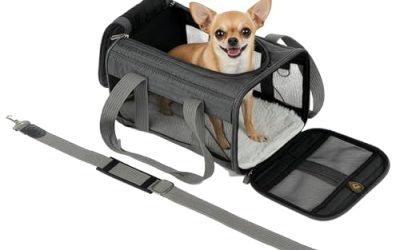
Airlines publish maximum carrier dimensions and a maximum combined weight for pet and carrier. Measure the underseat space for your aircraft type if the airline lists it, because dimensions differ between planes. Your dog should be able to stand, turn and lie down without touching the top.
Soft sided or hard sided
Soft carriers can flex slightly to fit under a seat, while hard carriers offer more protection but have fixed dimensions. Many airlines accept either as long as it is leak-proof, well ventilated and has a secure closure. Look for mesh panels on more than one side and a sturdy base.
Counts as your carry-on item
A pet carrier often counts as one of your personal or carry-on items. Plan your luggage so you can still stow a bag in the overhead bin if needed, and expect to keep the carrier under the seat for takeoff and landing.
Paperwork and Health Checks
For domestic trips, airlines may ask for a health certificate issued within a set number of days before travel, and some do not. International trips add entry rules such as vaccination records, microchip requirements, import permits or quarantine periods, and these can take weeks to arrange. Start with the destination’s official animal import page and ask your veterinarian to confirm the timeline.
Schedule a veterinary visit before you book travel to discuss your dog’s fitness to fly. Short-nosed breeds and dogs with heart, breathing or anxiety concerns need special attention, and your veterinarian can advise whether flying is appropriate. Avoid giving sedatives unless your veterinarian specifically recommends them, since some can affect breathing and balance at altitude.
A Planning Timeline
| When | What to do | Why it matters |
|---|---|---|
| Weeks to months before | Check airline policy and destination rules | Entry rules can take time to satisfy |
| At booking | Reserve the pet spot and pay the pet fee | Cabin pet spaces are limited per flight |
| Several weeks before | Introduce the carrier at home | A familiar carrier reduces stress |
| Before departure | Visit the veterinarian and gather records | Health documents may be required |
| Day of travel | Exercise, a light meal and a bathroom break | A calmer, comfortable dog |
| At the airport | Check in at the counter and clear security | Some airlines require counter check-in for pets |
Day of Travel
Security screening
At security, you will usually remove your dog from the carrier and carry or walk it through the screening lane while the carrier goes through the scanner. Use a secure leash or hold your dog firmly, since airports are noisy and unfamiliar. Ask for a private screening area if your dog is nervous.
Comfort during the flight
Line the carrier with an absorbent pad and a familiar blanket, and keep it under the seat throughout the flight unless the airline says otherwise. Offer small amounts of water before boarding rather than during the flight. Avoid opening the carrier in the cabin, since most airlines forbid taking pets out.
After landing
Find the pet relief area as soon as you can, and give your dog time to settle. Check the carrier for damage and keep your records handy in case you are asked to show them at arrival.
Before You Book
- Confirm the airline accepts pets in the cabin on your route and aircraft.
- Check size and weight limits for the carrier and the dog together.
- Look up destination entry and vaccination requirements.
- Ask your veterinarian whether your dog is fit to fly.
- Reserve the pet spot as early as possible.
- Practice with the carrier at home for several weeks.
- Plan layovers that allow a relief break.
Preparing Your Dog for the Trip
Carrier training
Leave the carrier open at home for several weeks with a blanket and treats inside, so your dog sees it as a normal resting place. Practice short closed sessions, then longer ones, and take a few car rides with the dog inside. A dog that settles in the carrier at home is far more likely to stay calm on the plane.
Exercise and meals
Give your dog a good walk before leaving for the airport, and offer a bathroom break right before check-in. Many owners feed a light meal a few hours before travel, but ask your veterinarian what suits your dog. Avoid a large meal just before the flight.
Identification
Make sure your dog wears a collar with a current tag and that microchip details are up to date. Attach a label to the carrier with your name, phone number and destination contact. If your dog slips out during screening, identification makes a quick reunion far more likely.
Choosing flights wisely
Nonstop flights reduce handling and the chance of a missed connection, and they shorten the time your dog spends in the carrier. Mid-day departures tend to be less crowded and easier on a dog that dislikes noise. In hot or cold seasons, some airlines apply temperature rules for pets, so read the seasonal notes on the airline’s pet page before you pick a date.
What to Pack in Your Carry Bag
- Copies of vaccination and health records, plus any airline forms.
- A small supply of the food your dog normally eats.
- A collapsible water dish and a small bottle of water.
- Absorbent pads and waste bags for accidents and relief breaks.
- A familiar blanket or item that smells like home.
- A spare leash and a backup collar.
- Any medication your veterinarian prescribed, with instructions.
Keep these items in an accessible spot, since you may need them during a delay. If you have a layover, check whether the airport has a pet relief area and how far it is from your gate, and allow time to use it without rushing back.
Related guides
- Washable Dog Feeding Mat For Messy Drinkers
- How To Get Cat Urine Smell Out Of Carpet
- Dog Nail Clippers For Thick Nails
Frequently Asked Questions
How much can my dog weigh to fly in the cabin?
Limits are set by each airline and usually apply to the dog and carrier combined. Check the airline’s pet page for the exact number, and confirm it when you book.
Can my dog sit on my lap or out of the carrier?
Generally no. Most airlines require the dog to stay in the closed carrier under the seat for the whole flight, including taxi, takeoff and landing.
Should I give my dog medication to relax?
Only if your veterinarian recommends it. Sedation can cause health risks at altitude, so many vets advise against it, and a familiar carrier and a calm routine are safer first steps.
What if my dog is a short-nosed breed?
Some airlines restrict these breeds because of breathing concerns. Ask your veterinarian and the airline before booking, and consider ground travel if flying is not advised.
More from Amazon
Programs that pair well with the guide above. Offers and eligibility are set by Amazon and may change.
Set up recurring deliveries of everyday items on eligible products. Terms and savings are set by Amazon.
Explore Subscribe & SaveFree shipping on eligible items, Prime Video and more. Eligible new members can start with a free trial.
Start a Prime free trialAudiobooks and podcasts to listen to on the go. Eligible new members can start with a free trial.
Try Audible freeRead from a large library of eBooks and audiobooks on any device. Check Amazon for current plans.
Explore Kindle UnlimitedAs an Amazon Associate we earn from qualifying purchases.








Write Your Review
No reviews yet. Be the first to share your experience!