

Key takeaways
-
1–2 mm: Best for warm water, sun protection, wind protection, and brief sessions. These suits prioritize flexibility over insulation.
-
3/2 mm: The most versatile choice for many temperate-water sports. It works well when you are active and water temperatures are moderate.
-
4/3 mm: A better choice for cool water, longer sessions, or people who become cold easily. Look for flexible neoprene in the shoulders.
-
5 mm and above: Intended for genuinely cold conditions, usually with matching boots, gloves, and sometimes a hood. The extra warmth comes with more weight and resistance to movement.
The best wetsuits are the ones whose thickness matches the water temperature, whose seams prevent flushing without restricting movement, and whose fit is close enough to insulate without compressing your breathing or stroke.
Our top picks


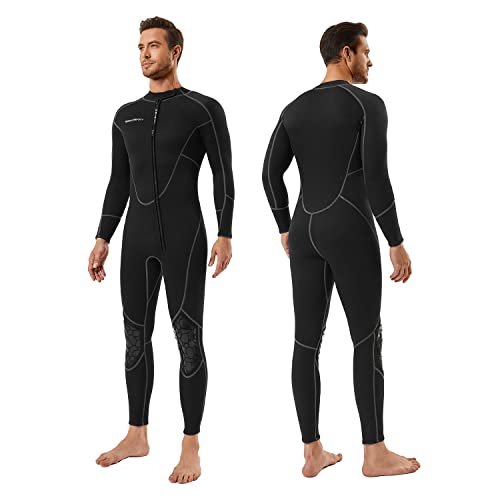

As an Amazon Associate we earn from qualifying purchases at no extra cost to you. Ratings are shown as listed on Amazon.
Quick picks by water sport and situation
| Situation | Best wetsuit type | Useful thickness | Typical water range | Why it fits the job |
|---|---|---|---|---|
| Warm-water snorkeling, surfing, or swimming | Shorty or full suit | 1.5–3/2 mm | 18–24°C / 64–75°F | Light insulation with good shoulder mobility |
| General surfing and paddleboarding | Full suit | 3/2 mm | 14–20°C / 57–68°F | A versatile balance of warmth, flexibility, and price |
| Cool-water surfing or open-water swimming | Full suit with sealed seams | 4/3 mm | 10–16°C / 50–61°F | More insulation while retaining usable movement |
| Cold-water surfing, kayaking, or diving | Hooded full suit or cold-water suit | 5/4/3–6/5/4 mm | 5–12°C / 41–54°F | Reduces heat loss through the torso, head, and extremities |
| Triathlon and long-distance swimming | Swimming-specific full suit | 1.5–5 mm, often variable | Usually 14–24°C / 57–75°F | Designed for shoulder rotation, buoyancy, and quick removal |
These ranges are starting points rather than guarantees. Wind, body size, activity level, sunshine, and time in the water can make a suit feel warmer or colder. A person swimming continuously may prefer less rubber than someone sitting on a surfboard between waves.
How to choose wetsuit thickness
Neoprene thickness is normally written as a series such as 4/3 mm. The first number describes the thicker panels around the chest and back; the second describes thinner panels at the arms and legs. A 5/4/3 mm suit commonly uses 5 mm over the core, 4 mm through the legs, and 3 mm in the arms.
-
1–2 mm: Best for warm water, sun protection, wind protection, and brief sessions. These suits prioritize flexibility over insulation.
-
3/2 mm: The most versatile choice for many temperate-water sports. It works well when you are active and water temperatures are moderate.
-
4/3 mm: A better choice for cool water, longer sessions, or people who become cold easily. Look for flexible neoprene in the shoulders.
-
5 mm and above: Intended for genuinely cold conditions, usually with matching boots, gloves, and sometimes a hood. The extra warmth comes with more weight and resistance to movement.
Do not compensate for an overly loose suit by choosing a thicker one. Gaps at the neck, lower back, and ankles allow water to circulate inside the suit, which can defeat the benefit of extra millimeters.
Seam construction: the difference between warm and merely thick
Flatlock seams
Flatlock stitching joins panels with a seam that sits relatively flat against the skin. It is comfortable and breathable, but small openings in the stitch line allow more water through. Flatlock suits are most appropriate for warm water and short sessions.
Glued and blind-stitched seams
Glued and blind-stitched seams are warmer because the panels are bonded and the stitching does not pass completely through the neoprene. They offer a strong balance for 3/2 mm and 4/3 mm suits.
Taped or liquid-sealed seams
Seam tape reinforces the inside of a seam and limits water entry. Liquid or externally sealed seams provide even more protection in cold water, though they usually cost more and can feel slightly less supple. For frequent cold-water use, sealed seams are often more valuable than decorative features or very smooth exterior fabric.
Inspect high-wear areas before buying: the seat, knees, cuffs, zipper base, and underarms. Reinforced knee panels matter for kneeling in a kayak or repeatedly standing on a surfboard, while extra torso taping matters more for long, cold sessions.
Fit comes before brand
A wetsuit should feel snug everywhere, with smooth contact at the neck, wrists, ankles, lower back, and crotch. It should not create folds across the torso or leave an air pocket between your shoulders and the suit. Some resistance while pulling it on is normal; sharp pressure, numbness, restricted breathing, or shoulder pain is not.
-
Measure height, chest, waist, hips, and weight, then compare all of them with the manufacturer’s chart.
-
If your measurements fall between sizes, choose the size that keeps the torso and lower back close to the body, provided your shoulders can move normally.
-
Try the suit in a dry, private setting with clean hands. Pull neoprene gradually from the lower legs and torso instead of yanking the neck or cuffs.
-
Raise both arms overhead, rotate your shoulders, squat, and take several deep breaths. These movements reveal restrictions that are easy to miss while standing still.
-
Do not judge fit by how quickly the suit goes on. A loose suit is often comfortable on land but cold in moving water.
Triathlon and open-water swimming suits are intentionally different from many surf suits. They often use buoyant panels around the legs and hips, thinner material around the shoulders, and slick coatings for faster removal. That design can be excellent for swimming but less suitable for repeated contact with rocks, board decks, or kayak hardware.
Front zip, back zip, or zipperless?
Back-zip suits
A back zipper is usually the easiest design to put on and take off, making it practical for beginners, children, and anyone with limited shoulder mobility. The trade-off is a longer entry opening and a possible cold spot along the spine. A long leash, wide pull tab, and secure zipper flap improve usability.
Chest-zip suits
Chest-zip designs normally offer a closer upper-body seal and less water entry than traditional back zippers. They are popular for surfing and cool-water use, but the opening can be harder to reach. Choose one with a flexible entry panel rather than forcing the zipper when the suit is twisted.
Zipperless suits
Zipperless suits maximize stretch across the shoulders and can feel exceptionally comfortable during paddling or swimming. They require more effort to put on and may be less convenient for changing outdoors. They suit experienced users who prioritize mobility and can fit the suit carefully.
Best choices by budget and frequency
| Use pattern | Recommended specification | General market range | Ownership logic |
|---|---|---|---|
| One or two warm-water holidays | 1.5–3/2 mm flatlock or basic sealed suit | About $70–$180 | Spend on fit and easy entry rather than premium lining |
| Monthly temperate-water sessions | 3/2 mm glued and blind-stitched suit | About $150–$350 | Better seams usually repay the cost through comfort and longer use |
| Weekly surfing or paddling | 4/3 mm flexible suit with taped seams | About $250–$500 | Prioritize shoulder stretch, durable knees, and replaceable accessories |
| Frequent cold-water use | 5/4/3 mm or thicker, fully sealed, often hooded | About $350–$700+ | Warmth, seam sealing, and dependable entry system matter more than the lowest price |
These are broad 2026 market ranges and vary by construction, region, and seasonal discounts. Established brands such as O’Neill, Rip Curl, Billabong, Xcel, Patagonia, Orca, and Zone3 offer different strengths across surf, paddle, and swim categories; compare the construction and size chart rather than choosing only by label.
Maintenance that extends wetsuit life
Rinse the suit with cool fresh water after every session, including the zipper and inner lining. Hang it inside out in the shade until the interior is dry, then turn it right-side out. Avoid radiators, hot car trunks, tumble dryers, bleach, and prolonged direct sunlight, all of which can damage neoprene and adhesives.
Put the suit on with clean, trimmed fingernails or thin fabric gloves. Fingertip punctures are a common cause of early failure. Do not stand on rough pavement while dressing, and do not pull hard on the neck opening. Wash occasionally with a wetsuit-specific cleaner to reduce salt, chlorine, and odor buildup.
For a simple value calculation, a $300 suit used 30 times per year for three years costs about $3.33 per session before cleaning and repairs. A cheaper suit that stretches out or leaks after one season may cost more per use, especially if it also requires a second suit for colder conditions.
Bottom line
Choose a 3/2 mm suit for versatile moderate-water use, move to 4/3 mm when water or sessions are colder, and reserve 5 mm-plus construction for cold conditions with suitable boots, gloves, and head coverage. Select sealed seams for warmth, the most flexible shoulders you can afford, and the zipper design you can operate without damaging the neoprene. The best wetsuits are not the thickest or most expensive; they are the ones that fit closely, match your activity, and remain easy to use season after season.

Write Your Review
No reviews yet. Be the first to share your experience!