

Key takeaways
- Best Concert Ukuleles for Live Performance The best concert ukulele for live performance is usually a 14.75-inch-scale instrument with geared tuners, a reliable pickup, comfortable neck width, and enough acoustic projection to serve as a backup if the amplifier fails.…
Best Concert Ukuleles for Live Performance
The best concert ukulele for live performance is usually a 14.75-inch-scale instrument with geared tuners, a reliable pickup, comfortable neck width, and enough acoustic projection to serve as a backup if the amplifier fails.
Concert ukuleles sit between soprano and tenor sizes. They retain the familiar ukulele tuning of G-C-E-A while offering more fret space, fuller low-end response, and better comfort for longer sets. For most performers, the ideal choice is not simply the loudest instrument; it is the one that stays in tune, produces a controllable amplified signal, and remains comfortable after an hour on stage.
Our top picks
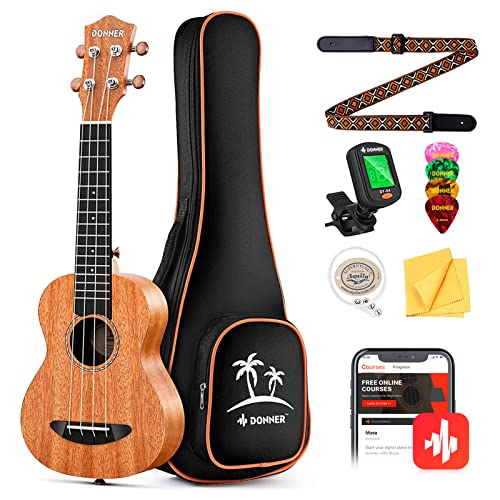


As an Amazon Associate we earn from qualifying purchases at no extra cost to you. Ratings are shown as listed on Amazon.
Quick Comparison: Strong Concert-Uke Choices for the Stage
| Instrument or type | Scale length | Construction and tonewood | Electronics | Best suited to |
|---|---|---|---|---|
| Kala KA-C | About 14.75 in | Mahogany-style body, walnut fingerboard and bridge | None on the standard model | Budget players using a microphone or adding a pickup later |
| Cordoba 20TM-CE | About 14.75 in | Solid spruce top with mahogany back and sides | Fishman K-1M system | Players who need clearer amplified detail and a cutaway |
| Solid-top concert ukulele | 14.5–15 in | Solid spruce, cedar, mahogany, or koa top | Optional undersaddle or internal pickup | Acoustic-focused performers wanting greater dynamic range |
| All-solid concert ukulele | 14.75–15 in | Solid top, back, and sides | Often optional or factory-installed | Frequent performers who prioritize acoustic tone and repairability |
Specifications can vary by production year and finish, so confirm the exact model configuration before buying. The table is most useful as a starting point: scale length, electronics, construction, and intended use matter more than decorative details.
Best Picks by Performance Situation
Best budget choice: a laminated mahogany concert ukulele
A model such as the Kala KA-C is a sensible starting point for open-mic performers, students, and players who are not yet sure whether they will use amplification regularly. Laminated mahogany-style construction is generally less vulnerable to ordinary changes in humidity than an all-solid instrument, and replacement costs are easier to manage.
Its limitation is stage connectivity. A standard acoustic model must be miked, which can create feedback and restrict movement. If you play seated near one microphone, this is not a serious disadvantage. If you sing, move around, or share a crowded stage, a factory-installed pickup is usually worth the additional cost.
Best for amplified clarity: a spruce-top concert ukulele with a pickup
The Cordoba 20TM-CE combines a concert-scale neck with a spruce top, mahogany back and sides, cutaway access, and Fishman K-1M electronics. Spruce typically emphasizes articulation and separation, making it useful when the ukulele must sit beside guitar, keyboard, bass, and drums.
This kind of voice can be more revealing of uneven right-hand technique. That is helpful for experienced players, but beginners may prefer the softer, less immediate response of mahogany. The onboard tuner and preamp also reduce the amount of equipment needed between the instrument and the amplifier.
Best for rich acoustic projection: a solid-top concert ukulele
A solid spruce or cedar top can provide more noticeable changes in volume and color as your picking strength changes. That makes it attractive for solo singing, acoustic duos, and quieter venues where the instrument is heard through a microphone rather than a heavily processed pickup.
Solid wood is not automatically louder in every room. Setup, bracing, string choice, and the player’s technique all affect projection. It also requires more care: avoid leaving it in a hot car, near a radiator, or in an extremely dry room. A padded case and a small soundhole humidifier may be worthwhile for frequent travel, especially in dry climates.
Best for frequent gigging: a reliable concert ukulele with conservative electronics
For weekly performances, prioritize serviceability over exotic tonewood. Choose a model with accessible battery placement, a standard endpin jack, a tuner that is easy to read in low light, and tuners that can be replaced without specialized parts. A slightly less ornate instrument with a stable neck and dependable pickup is usually a better working tool than a fragile showpiece.
How the Main Specifications Affect Stage Use
Tonewood
Mahogany-style instruments often produce a balanced, mid-focused sound that works well for strumming and vocals. Spruce tends to emphasize attack and note definition. Cedar can feel warmer and more responsive at a lighter touch. Koa is associated with attractive grain and a balanced tone, but a koa appearance alone does not guarantee superior projection.
For amplified performance, the pickup and preamp can matter more than the difference between two similar tonewoods. An instrument with a beautiful acoustic voice may sound ordinary through a low-quality piezo system, while a modest laminated uke can perform effectively with a well-adjusted pickup and amplifier.
Scale length and neck comfort
Concert scale is commonly around 14.5 to 15 inches. Compared with a soprano, it gives the fretting hand slightly more room without the reach of a tenor, which commonly approaches 17 inches. Players with larger hands may appreciate a tenor, but the concert format is often easier to hold while singing.
Look for a neck that does not force your thumb far behind the instrument and a fingerboard width that lets you fret cleanly without touching neighboring strings. Neck shape matters as much as width. If possible, play a concert ukulele for at least 10 minutes while standing with a strap, because a neck that feels comfortable in a shop can feel tiring during a complete set.
Electronics
An undersaddle piezo pickup is common and provides strong feedback resistance, although it can sound bright or compressed without equalization. Internal microphone systems can sound more natural but are usually more sensitive to stage volume. A blend system offers flexibility but adds controls, battery dependence, and more potential points of failure.
For a loud band, choose feedback resistance and a dependable tuner first. For a quiet solo act, a microphone or microphone-blend system may provide a more natural result. Always confirm whether the instrument uses a 9-volt battery or a small coin cell, and carry a spare before performing.
Tuning stability
Geared tuners are generally preferable for live use because they allow fine adjustments and resist accidental movement better than inexpensive friction tuners. Tuning stability also depends on the nut slots, bridge saddle, string quality, temperature, and how aggressively the strings are stretched after installation.
New strings can drift for several sessions. Install them at least a few days before an important performance, stretch them gently by hand, retune repeatedly, and check the instrument again after it has acclimated to the venue.
Decision Matrix for Choosing Your Concert Ukulele
| Your situation | Recommended specification | Why |
|---|---|---|
| Under roughly $100 | Laminated body, geared tuners, no electronics | More budget remains for a case, setup, and quality strings |
| First public performances | Concert scale, comfortable C-shaped neck, built-in tuner | Simple handling reduces distractions on stage |
| Weekly amplified gigs | Factory pickup, accessible battery, endpin jack, geared tuners | Improves repeatability and reduces setup time |
| Solo acoustic performances | Solid spruce or cedar top, strong unplugged projection | Provides greater dynamic contrast through a microphone |
| Outdoor or changing environments | Laminated construction and a padded hard case | Offers a more practical balance of durability and protection |
Stage Setup: A Five-Minute Reliability Check
-
Tune before connecting the cable. Electrical noise and stage movement can distract from tuning. Check the open strings, then verify fretted notes around the fifth and twelfth frets.
-
Inspect the battery. Replace a weak battery before the show rather than waiting for distorted or intermittent output.
-
Set the amplifier flat. Begin with moderate volume, bass, middle, and treble. Add only enough treble for definition and reduce bass if the instrument feeds back.
-
Test your loudest strum. A quiet soundcheck can hide feedback that appears when you play with full energy.
-
Pack a backup path. Bring a short instrument cable, spare strings, a clip-on tuner, a battery, and a small screwdriver. If the pickup fails, knowing where to stand near the vocal microphone can save the performance.
Ownership Costs and Common Failure Points
The strings and battery are the main consumables. A typical set of fluorocarbon or nylon ukulele strings may last several months for occasional playing, but frequent performers may replace them every few weeks when tuning becomes inconsistent, the surface feels rough, or the tone loses clarity. If strings cost about $10–$20 per set and you perform twice weekly, replacing them every eight weeks works out to roughly $0.60–$1.25 per performance, before batteries and maintenance.
The parts most likely to need attention are the strings, tuning machines, nut slots, bridge saddle, output jack, and battery connector. Wipe perspiration from the strings and finish after every performance, loosen no hardware unnecessarily, and store the instrument in its case. A professional setup is worthwhile if notes buzz, the action feels unusually high, or the instrument goes sharp when fretted.
Final Recommendation
Choose a laminated mahogany concert ukulele if affordability and durability come first. Choose a spruce-top concert model with electronics if you need articulation and plug-in convenience. Choose a solid-top or all-solid instrument when acoustic expression is central and you are prepared to control humidity and transport carefully.
Whatever the price, the best concert ukulele is the one that stays in tune, feels comfortable under a strap, produces a controllable signal, and has a dependable backup plan when the venue is louder or less predictable than expected.

Write Your Review
No reviews yet. Be the first to share your experience!