

Key takeaways
- The best watercolor paint sets depend on whether you prioritize affordable learning, high-pigment mixing, travel convenience, or the larger color capacity of tubes: beginners usually get the best balance from a compact student-grade pan set, while serious artists often benefit…
The best watercolor paint sets depend on whether you prioritize affordable learning, high-pigment mixing, travel convenience, or the larger color capacity of tubes: beginners usually get the best balance from a compact student-grade pan set, while serious artists often benefit from artist-grade tubes or a curated half-pan palette.
Our top picks

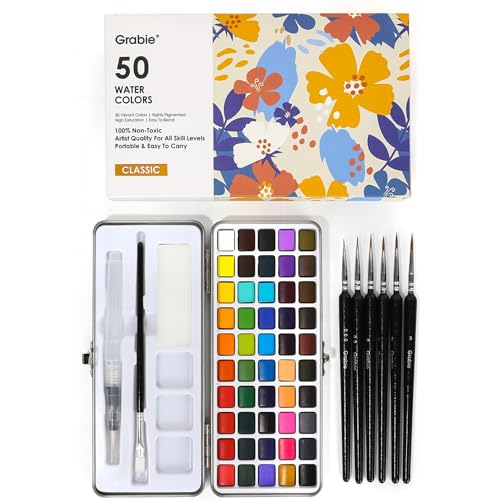


As an Amazon Associate we earn from qualifying purchases at no extra cost to you. Ratings are shown as listed on Amazon.
Quick picks by painting situation
| Situation | Best format | Strong options | Why it fits |
|---|---|---|---|
| First set on a limited budget | Student-grade pans | Winsor & Newton Cotman or Royal Talens Van Gogh | Affordable, portable, and forgiving while you learn water control |
| Frequent travel or sketching outdoors | Compact half-pan set | Schmincke Horadam or Sakura Koi Travel Set | Built-in mixing wells and a smaller footprint |
| Color mixing and professional work | Artist-grade tubes | Daniel Smith Extra Fine, QoR, or Winsor & Newton Professional | Higher pigment load, stronger darks, and more predictable mixes |
| Small desk or limited storage | 12-color half-pan palette | Any reputable artist-grade or high-quality student-grade set | Enough mixing potential without a large box of rarely used colors |
| Large washes and illustrations | Tube set | Artist-grade tubes in 5–8 ml sizes | Faster loading, more paint, and less scrubbing for broad areas |
Best watercolor paint sets compared
Best affordable starting point: Winsor & Newton Cotman
Cotman is a practical entry point when you want a recognizable brand, consistent behavior, and a moderate price. Its student-grade pigments are generally less concentrated and may use more mixtures or substitutes than the company’s Professional Water Colour line, but that is not a serious disadvantage for exercises, cards, urban sketches, and everyday practice.
Small Cotman pan sets are convenient because the paint is already portioned and the lid often provides mixing wells. The range is broad enough to teach warm-versus-cool color choices, although the included palette may contain convenience colors that are less useful than a carefully chosen limited palette. Expect a typical set to cost roughly $15–$45, depending on the number of pans and accessories.
Best student-grade color range: Royal Talens Van Gogh
Van Gogh sets are appealing for beginners who want lively color and a larger selection without immediately paying artist-grade prices. The paint re-wets readily and works well for color charts, lettering, travel journals, and controlled illustrations. Its transparency is usually good, but some colors can appear more opaque or staining than a beginner expects, so test each color before using it for delicate glazing.
Van Gogh is a good choice if you want a 12- to 24-color set and prefer pans. It is less compelling if your main goal is subtle single-pigment mixing, where artist-grade sets normally provide cleaner results.
Best for professional color mixing: Daniel Smith Extra Fine
Daniel Smith Extra Fine Watercolors are best considered as tubes or individually selected half pans rather than as a large beginner box. The line includes highly granulating earths, transparent staining colors, and unusual mineral-based pigments. These characteristics create expressive texture, but they can make a first palette feel unpredictable if you do not yet understand granulation, staining, or pigment separation.
A curated six- to twelve-color Daniel Smith palette can outperform a crowded 24-color set because each strong pigment has a useful mixing role. Tube prices commonly range from about $10–$18 for small artist-grade tubes, with sets costing more according to size and pigment selection. Choose it when mixing quality matters more than the lowest initial cost.
Best broad artist-grade range: Winsor & Newton Professional
Winsor & Newton Professional Water Colour is a versatile option for artists who want dependable transparency, extensive color availability, and easy access to replacement pans or tubes. The range includes transparent, semi-transparent, staining, and granulating behavior depending on the pigment, so the label and pigment information matter more than the color name alone.
Professional paint is particularly useful for layered work. A transparent glaze can modify an underpainting without covering it, while a strong staining pigment can preserve a crisp edge. The main drawback is cost: a compact artist-grade set commonly falls around $40–$120, and larger sets can cost substantially more.
Best premium compact palette: Schmincke Horadam
Schmincke Horadam is a strong choice for painters who want a refined travel palette with highly workable pans. The paint generally reactivates easily with a damp brush, which is valuable when painting outdoors or returning to a palette after several days. Many sets include generous mixing areas, though the exact layout varies.
Horadam is expensive compared with student-grade paint, and its smooth handling can hide poor water control rather than fix it. Buy it for long-term use, frequent travel, or nuanced washes—not simply because more colors appear on the lid.
Best casual travel set: Sakura Koi
Sakura Koi pocket sets are designed for convenience. They commonly combine pans, a small brush, and a compact mixing lid, making them suitable for quick sketches, journaling, and coloring rather than archival exhibition work. The color range is often generous for the size, but the paint may be less transparent or less nuanced in mixtures than artist-grade alternatives.
Koi is a sensible choice when portability and low replacement cost matter more than maximum pigment purity. It can also serve as a secondary travel kit after you move to a more specialized studio palette.
Pan versus tube watercolor: which format wins?
| Factor | Half pans | Tubes |
|---|---|---|
| Typical paint capacity | About 1–2 ml per half pan | About 5 ml in small tubes; 15 ml in larger tubes |
| Best for | Small washes, travel, detailed work | Large washes, frequent painting, refilling palettes |
| Setup time | Ready after wetting the surface | Requires squeezing, drying, or using fresh paint |
| Mixing space | Usually built into the case | Requires a separate palette or mixing tray |
| Waste risk | Low once the pan is filled | Higher if too much paint is squeezed out |
| Large-area efficiency | Slower to load a broad brush | Faster and easier for saturated washes |
A useful compromise is to squeeze tube paint into empty half pans and let it dry before traveling. This gives you tube-grade pigment in a portable format, although very smooth or honey-rich formulas may remain soft and should be stored level.
What to examine before buying
Pigment quality and labeling
Look for pigment codes such as PB29, PR108, or PY150 rather than relying only on names such as “blue,” “red,” or “flesh tint.” Single-pigment colors are often easier to mix cleanly. Multi-pigment convenience colors can be useful, but they may become dull when mixed with other complex colors.
Artist-grade paint normally contains more pigment and offers a wider selection of lightfast, single-pigment colors. Student-grade paint is still suitable for learning, especially when the work is not intended for permanent display.
Transparency and staining behavior
Transparent colors are useful for glazing and luminous layered washes. Opaque or semi-opaque colors can cover previous marks and are helpful for highlights, but they may reduce the glow of a painting. Staining colors are difficult to lift once dry; non-staining colors are easier to correct but can disturb earlier layers.
Color range without redundancy
A 12-color set is often enough: a warm and cool version of yellow, red, and blue, plus an earth color, dark neutral, and optional green. A 24- or 36-color set saves mixing time but does not automatically improve results. Extra greens, violets, and skin-tone colors can be convenient, yet they may duplicate what a basic palette can mix.
Mixing space and portability
Check the number and depth of wells. Shallow wells are fine for small amounts, while deeper wells are more useful for pooling a wash. A compact box with six colors and four large wells may be more practical than a crowded box with 24 tiny pans and almost no room to mix.
Paper compatibility matters as much as the paint
Watercolor paint cannot compensate for unsuitable paper. Cold-pressed paper around 300 gsm (140 lb) is the safest general-purpose choice for beginners because it tolerates repeated washes better than thin sketchbook paper. Hot-pressed paper, often around 300 gsm as well, has a smoother surface for fine lines and lettering but can show blooms and uneven edges more clearly.
Paper below roughly 200 gsm may buckle under wet washes unless it is taped or stretched. If you use student-grade paint on cellulose paper, keep the washes controlled. Artist-grade pigments reveal more of the paper’s texture and absorbency, so upgrading paper can produce a larger improvement than immediately buying a larger paint set.
A practical setup and ownership guide
- Create a color chart before painting. Record the brand, color name, pigment code, transparency, and whether the color lifts after drying.
- Use two water containers: one for removing pigment and one for clean washes. This keeps pale mixtures from becoming muddy.
- Wipe the palette after mixing, but do not scrub dried pans aggressively. A damp brush should reactivate the surface; hard scrubbing can damage the pan or load the brush with unwanted residue.
- Let a wet palette dry with the lid open. Closing it immediately can encourage mold or soften paints and pans unnecessarily.
- Replace damaged brushes before replacing paint. A pointed synthetic round in sizes 4–8 handles most beginner exercises, while a larger wash brush speeds up backgrounds.
Paint usually wears out before the metal or plastic case does. Pans may crack if dropped, tube caps can seize when paint dries in the threads, and inexpensive mixing wells can stain permanently without affecting performance. Store tubes tightly closed, keep palettes away from heat, and label any decanted tube paint so you can reorder the same pigment later.
Final buying decision
Choose Winsor & Newton Cotman or Van Gogh for affordable practice, Sakura Koi for casual portability, Schmincke Horadam for a premium compact palette, and Daniel Smith Extra Fine or Winsor & Newton Professional when pigment behavior and long-term mixing quality are the priority. Whichever set you select, prioritize pigment information, usable mixing space, and compatible 300 gsm paper over the raw number of colors in the box.

Write Your Review
No reviews yet. Be the first to share your experience!