

Key takeaways
- Small kibble generally works in compact feeders, but very small pieces may trickle through gaps in some mechanisms.
- Large-breed kibble needs a wide chute and a motor rated for larger pieces.
- Mixed kibble and treats can separate inside the hopper, so the first and last servings may not have the same proportions.
- Wet food normally requires a refrigerated or compartment-style feeder rather than a dry-food hopper.
- Do not put food into a feeder unless the manufacturer specifically lists it as compatible.
The best automatic dog feeders for consistent portion control are the PetSafe Healthy Pet Simply Feed for measured, low-maintenance scheduling, the PETLIBRO Granary for app-connected flexibility, and a large-capacity 7L feeder for homes that need fewer refills.
Our top picks


As an Amazon Associate we earn from qualifying purchases at no extra cost to you. Ratings are shown as listed on Amazon.
Quick picks by feeding situation
| Situation | Best fit | Why it stands out | Main limitation |
|---|---|---|---|
| Most dependable basic schedule | PetSafe Healthy Pet Simply Feed | Up to 12 meals daily, slow-feed option, and portions adjustable in small increments | Less convenient than app-controlled models |
| Remote scheduling and notifications | PETLIBRO Granary Smart Feeder | Wi-Fi scheduling, app control, and food-level or dispensing alerts on supported versions | Requires setup through an app and a stable power connection |
| Large dog or infrequent refills | 7L gravity-resistant automatic feeder | Approximately 29.6 cups of dry food capacity | Large hopper takes more floor space |
| Small space or travel backup | Compact 3–4L feeder | Smaller footprint and easier carrying | Usually needs frequent refilling for medium and large dogs |
What matters most when choosing an automatic dog feeder
Portion accuracy
A feeder’s displayed “portion” is not automatically a measured cup. On many models, one portion is a timed auger cycle or a small volume of kibble. The amount changes with kibble shape, density, oil content, and how full the hopper is.
For practical portion control, look for adjustable dispensing increments, a hopper that keeps food moving evenly, and a design that allows you to calibrate output. A feeder that claims 1/16-cup increments may still dispense slightly more or less in each cycle. Weighing the output with a kitchen scale is more reliable than trusting the on-screen number.
The PetSafe Healthy Pet Simply Feed is useful for owners who want a structured schedule without depending on a phone. It supports up to 12 scheduled meals per day and offers slow-feed dispensing for dogs that eat too quickly. Its conveyor-style mechanism is intended to handle a range of dry food shapes more consistently than a simple flap or gravity opening.
Kibble size and food type
Most automatic dog feeders are designed for dry kibble. Compatibility is often more important than capacity. Small, round pieces usually pass through easily; large, irregular, triangular, freeze-dried, or very oily pieces can bridge the outlet or cause inconsistent portions.
- Small kibble generally works in compact feeders, but very small pieces may trickle through gaps in some mechanisms.
- Large-breed kibble needs a wide chute and a motor rated for larger pieces.
- Mixed kibble and treats can separate inside the hopper, so the first and last servings may not have the same proportions.
- Wet food normally requires a refrigerated or compartment-style feeder rather than a dry-food hopper.
- Do not put food into a feeder unless the manufacturer specifically lists it as compatible.
Before buying, measure the longest dimension of your dog’s kibble and compare it with the manufacturer’s stated food-size range. If that range is missing, treat the feeder as a higher-risk choice for unusually large or irregular food.
Scheduling controls
A basic feeder with buttons is often sufficient when the routine never changes. Wi-Fi models are more useful when you need to alter meal times remotely, add a temporary meal, or receive a notification when food is low or dispensing has stopped.
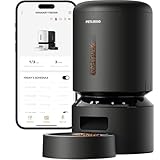
The PETLIBRO Granary Smart Feeder is aimed at this connected use. Depending on the specific Granary version, it offers app-based schedules, adjustable portions, and notifications. Confirm whether the model you are considering uses Wi-Fi or only local controls; similarly named versions can have different features.
App features should not replace a physical backup plan. A power interruption, router failure, jammed outlet, or empty hopper can still prevent feeding. Choose a model with battery backup if available, and keep the feeder where you can hear or inspect it.
Feature comparison
| Feeder type or model | Capacity | Typical meal scheduling | Portion control | Power and backup considerations | Best for |
|---|---|---|---|---|---|
| PetSafe Healthy Pet Simply Feed | 24 cups of dry food | Up to 12 meals per day | Adjustable servings; slow-feed option | Uses mains power; check the exact package for battery-backup details | Owners prioritizing a repeatable routine |
| PETLIBRO Granary Smart Feeder | 5L, approximately 21 cups depending on kibble density | Multiple scheduled meals through local controls or app, depending on version | Adjustable portions; calibrate with a scale | Usually mains powered; some versions support backup batteries | Remote monitoring and schedule changes |
| Large 7L automatic dry-food feeder | 7L, approximately 29.6 cups by volume | Commonly 4–10 meals per day | Often measured in timed portions rather than true weight | Battery backup varies widely | Large dogs or fewer refills |
| Compact 3L automatic feeder | 3L, approximately 12.7 cups by volume | Commonly 4–6 meals per day | Usually coarse portion increments | Battery backup varies widely | Small dogs, apartments, or travel |
Capacity conversions are approximate because cups measure volume while food labels and feeding plans often use weight. A cup of one kibble may weigh substantially more than a cup of another.
A worked portion calculation
Suppose your dog’s daily food allowance is 240 grams and you want four equal meals. Each meal should provide 60 grams. Set the feeder to dispense one meal, collect five or more servings in a bowl, and weigh the total. If five servings weigh 285 grams, the average serving is 57 grams. You would need to increase the setting slightly and repeat the check.
Once calibrated, divide the daily allowance into the chosen number of meals. If the dog also receives training treats, chews, or table food, account for those separately rather than assuming the feeder’s full daily output is appropriate. Feeding amounts can depend on the dog’s size, age, activity, body condition, and the food’s calorie density; ask a veterinarian for individualized guidance when needed.
Ownership realities: cleaning, jams, and wear
Clean the parts food touches
Remove leftover kibble and wipe the hopper, chute, bowl, and dispensing mechanism on the schedule recommended by the manufacturer. Oil from kibble can form a sticky coating that attracts dust and slows moving parts. A stainless-steel bowl is generally easier to clean than a permanently attached plastic bowl, but the bowl still needs regular washing.
Expect the outlet to need attention first
The dispensing chute and auger experience the most stress. Crumbs, oversized pieces, and moisture can cause partial jams. If a feeder begins dispensing less than expected, unplug it before clearing the mechanism, empty the hopper, and inspect for compacted food. Do not force the motor or push objects into the outlet while it is powered.
Prevent moisture and food spoilage
Keep the feeder away from water bowls, steam, direct sunlight, and areas where a dog can knock it over. Do not top up old food indefinitely. Emptying and cleaning the hopper periodically helps prevent stale crumbs from accumulating at the bottom, where they can interfere with consistent dispensing.
Secure the feeder
A determined dog may shove, tip, or chew an unsecured feeder. Choose a stable base, place it against a wall if appropriate, and consider an anti-slip mat. If your dog can reach the hopper lid, use a model with a locking lid rather than relying on the schedule to restrict access.
How to set up an automatic feeder accurately
- Measure the food your dog currently receives over a normal day, including treats that affect the overall plan.
- Confirm that the kibble passes through the feeder without sticking or bridging.
- Program the meal times, then run at least five dispensing cycles during the day.
- Weigh the output from each cycle and calculate the average rather than judging one serving.
- Adjust the portion setting until the average is close to the intended amount.
- Observe at least one full day of operation before relying on the feeder unattended.
- Keep a backup feeding method available for outages, jams, or travel.
Final buying advice
Choose the PetSafe Healthy Pet Simply Feed when repeatable scheduling and straightforward controls matter more than remote access. Choose the PETLIBRO Granary when app scheduling and notifications justify the additional setup. Choose a 7L feeder when refill frequency is the main concern, but verify that its outlet accepts your dog’s kibble and that its portion system can be calibrated.
For any model, prioritize a stable dispensing mechanism, a lockable lid, an easy-to-clean bowl, and a backup plan over a large number of app features. The best automatic dog feeder is the one that delivers the right food, in a verified amount, at the right time for your dog’s routine.



Write Your Review
No reviews yet. Be the first to share your experience!