

Key takeaways
- Disassemble and wash the fountain weekly with warm soapy water, paying attention to the pump and spout; slimy biofilm builds quickly.
- Change carbon filters every two to four weeks, as the maker advises.
- Never run the pump dry. Check the level daily with small reservoirs.
- Place the fountain away from food bowls, since many cats prefer water separate from food.
- Keep the cord out of chewing range with a cord cover.
- If a pet stops drinking or drinks much more than usual, contact a veterinarian, since changes in thirst can signal health problems.
For a home with more than one pet, choose a fountain by reservoir size, material and how easy it is to clean: stainless steel models such as the PetSafe Drinkwell 360 Stainless Steel and ceramic models such as the Pioneer Pet Raindrop resist bacteria and scratches, while plastic fountains like the Veken 3L and Catit Flower are the lowest-cost way to get running water for a cat or small dog. Larger dogs and multi-pet homes need 168 ounces or more, while a single cat does well with about 3 liters.
Our top picks


As an Amazon Associate we earn from qualifying purchases at no extra cost to you.
Quick comparison of pet water fountain picks
| Pick | Best for | Material | Capacity | Filter | Price range |
|---|---|---|---|---|---|
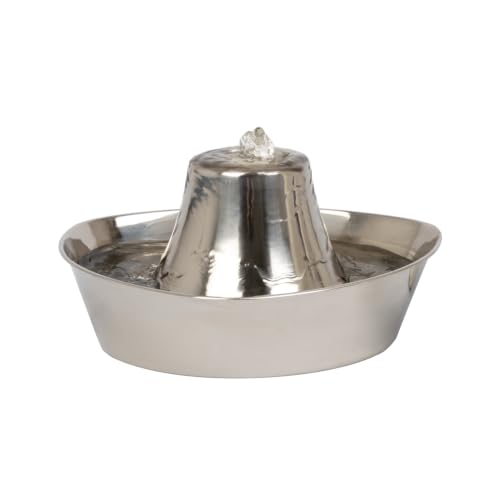
| PetSafe Drinkwell 360 Stainless Steel | Multiple pets, free-falling stream | Stainless steel | 128 oz | Carbon filter | Mid-range |
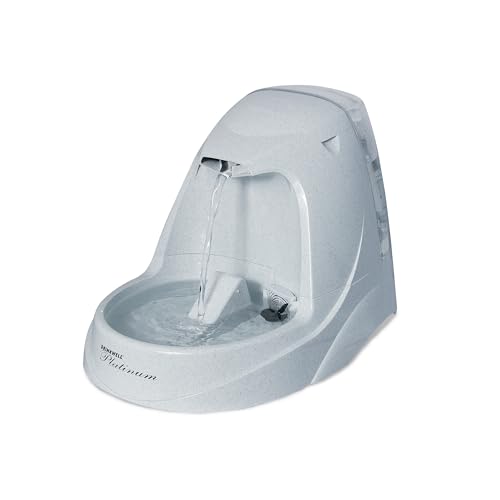
| PetSafe Drinkwell Platinum | Large dogs and multi-dog homes | Plastic | 168 oz | Carbon filter | Mid-range |
| Pioneer Pet Raindrop Ceramic | Quiet, easy-to-sanitize design | Ceramic | 60 oz | Carbon filter | Mid-range |
| Catit Flower Fountain | Cats and small dogs, low noise | Plastic | 3 L | Foam and carbon | Budget |
| Veken Pet Fountain 3L | Value, quiet pump | Plastic or stainless variants | 3 L (about 101 oz) | Carbon filter | Budget |
| Petlibro Dockstream | Smart features | Stainless or plastic variants | Varies by model | Replaceable filter | Upper-mid |
Capacities and materials come from manufacturer pages; models are updated often, so confirm the specification of the exact variant.
Best stainless steel: PetSafe Drinkwell 360 Stainless Steel
The Drinkwell 360 has a large open bowl and a free-falling stream that appeals to cats and dogs alike. Stainless steel is easy to sanitize and does not develop scratches that harbor bacteria in the way plastic can. The open design lets multiple pets drink at once. It is heavier than plastic models and takes more counter space.
Best for large dogs and multi-dog homes: PetSafe Drinkwell Platinum
With a 168 ounce reservoir, the Platinum is for households that cannot refill daily. It sits on the floor at a height dogs can reach. Plastic parts need careful cleaning, and the pump can be noisy as water gets low, so top it up regularly.
Best ceramic: Pioneer Pet Raindrop
Ceramic is heavy, stable, easy to scrub and avoids the plastic taste some cats dislike. The design flows quietly over a raised spout. It can chip or crack if dropped, and capacity is modest for multiple pets.
Best for cats on a budget: Catit Flower Fountain
The Catit has several flow settings from a fountain to a gentle stream, and a gentle sound. Its small size suits one cat or a small dog. The three-liter reservoir needs refilling every few days with more than one pet.
Best value: Veken Pet Fountain 3L
The Veken has a quiet pump, a clear window to see the water level and replaceable filters. It is a good starter fountain. Plastic versions can pick up scratches over time; choose a stainless steel variant if you can.
Best smart features: Petlibro Dockstream
Petlibro focuses on app-connected and low-noise designs across its fountain range, with details varying by model. It costs more and relies on electronics, so confirm current specifications and filter availability.
Material and size decision guide
| Your home | Recommended size | Material | Why |
|---|---|---|---|
| One cat | 2 to 3 L | Ceramic or stainless | Easy to clean, avoids chin acne risks from plastic |
| Two cats or a cat and small dog | 3 to 4 L | Stainless steel | Open bowl, durable |
| One medium to large dog | 128 oz or more | Stainless steel or plastic | Refill every few days |
| Multi-dog home | 168 oz or more | Plastic or steel with a large reservoir | Water lasts a full day |
Refill math: a cat drinks roughly 3.5 to 4.5 ounces of water per 5 pounds of body weight each day, per general veterinary guidance, so a 10 pound cat needs about 8 ounces. A 3 L fountain holds about 101 ounces and lasts a single cat many days, but two cats and a dog drinking 80 ounces a day need a larger unit or daily refills. Dogs typically drink about 1 ounce per pound of body weight daily, so a 60 pound dog drinks about 60 ounces and a 168 ounce fountain lasts about three days.
Cleaning, filters and common mistakes
- Disassemble and wash the fountain weekly with warm soapy water, paying attention to the pump and spout; slimy biofilm builds quickly.
- Change carbon filters every two to four weeks, as the maker advises.
- Never run the pump dry. Check the level daily with small reservoirs.
- Place the fountain away from food bowls, since many cats prefer water separate from food.
- Keep the cord out of chewing range with a cord cover.
- If a pet stops drinking or drinks much more than usual, contact a veterinarian, since changes in thirst can signal health problems.
Why fountains help, and when they do not
Cats evolved from desert animals and tend to drink less than they need, especially when they eat dry food. Some cats prefer moving water because it looks fresher and oxygenated, and a fountain can encourage extra sips, which supports urinary and kidney health according to general veterinary advice. Dogs often drink from anything, but a large reservoir that stays filtered and cool encourages hydration in hot weather and during exercise. A fountain does not replace a clean bowl as a backup, however. If power fails or a pump clogs, pets need an alternative, so keep a simple bowl available.
Some pets are wary of new equipment. Introduce a fountain by keeping the old bowl nearby for a few days, set the flow to the lowest setting at first, and place the unit where your pet already drinks. Cats with long whiskers may prefer a wide, shallow surface, so ceramic and stainless open designs often win over narrow plastic spouts. Pets with dental or mobility issues benefit from a raised or low-lip design, and a large non-slip mat under the fountain catches splashes that wet your floor.
Running costs and noise
Most pet fountains use a small submersible pump that draws only a few watts. Running one continuously costs only a few dollars per year in electricity, according to typical wattage on manufacturer listings, so filters and replacement pumps are the real ongoing costs. Noise depends on water level, pump condition and the surface the fountain sits on. A silicone pad or a folded towel under the base dampens vibration, and regular cleaning keeps the pump near its original sound level. If a fountain starts to hum loudly, check for mineral buildup, a worn impeller or a low water level before replacing it.
Frequently Asked Questions
Do pets drink more with a water fountain?
Many do, as moving water appeals to cats in particular. Results vary by pet, so watch for changes in drinking and contact your vet about concerns.
Which material is best for a pet fountain?
Stainless steel and ceramic are easiest to sanitize and resist scratches. Plastic works and costs less but needs more careful cleaning.
How often should I clean a pet water fountain?
Wash it weekly and replace filters every two to four weeks. Dirty fountains can grow slime that pets avoid.
Are water fountains noisy?
Most are quiet when water is above the minimum level. Low water, a dirty pump or air in the line are the common causes of buzzing.
What size fountain do I need for multiple pets?
Plan on a reservoir that lasts at least two days at the combined daily intake. For two cats, 3 to 4 liters works, while multiple dogs need 168 ounces or more.



Write Your Review
No reviews yet. Be the first to share your experience!