

Key takeaways
- Straps: Dirt, sweat, and repeated wetting can weaken nylon or cause odor. Wash removable straps according to the instructions and replace them when stitching, holes, or buckle parts deteriorate.
- Contact points: Threads can corrode or become dirty. Remove residue with a soft, dry cloth and replace damaged points with the correct manufacturer-approved parts.
- Charging seals: Missing caps, loose covers, or trapped grit can compromise water resistance.
- Transmitter buttons: Frequently used rubber covers may crack or become less tactile. Physical controls are preferable, but they still require protection from drops and grit.
- Rechargeable batteries: Capacity normally declines over years. Check whether the battery is user-replaceable or whether service must be performed by the manufacturer.
The best dog e collars are the ones with fine-grained, clearly controlled stimulation, a receiver your dog can comfortably wear, reliable waterproofing, and enough range for your actual training space—not simply the collar with the highest advertised distance.
An electronic training collar can provide a long-distance cue for dogs that already understand basic commands, but it should not replace reward-based training or be used to frighten, punish, or “correct” behavior that has not been taught. Start with the lowest effective setting, pair cues with a known command, and consult a qualified force-free trainer if your dog shows fear, aggression, or confusion.
Our top picks

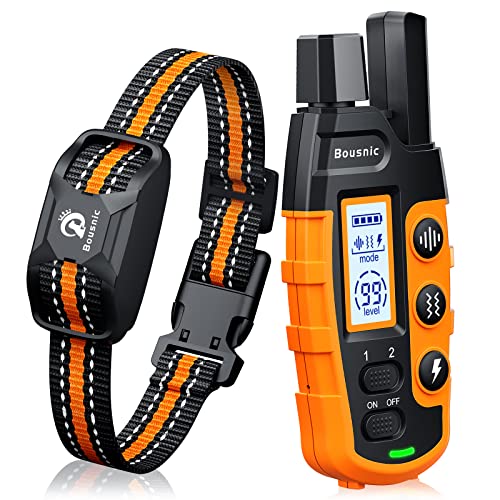
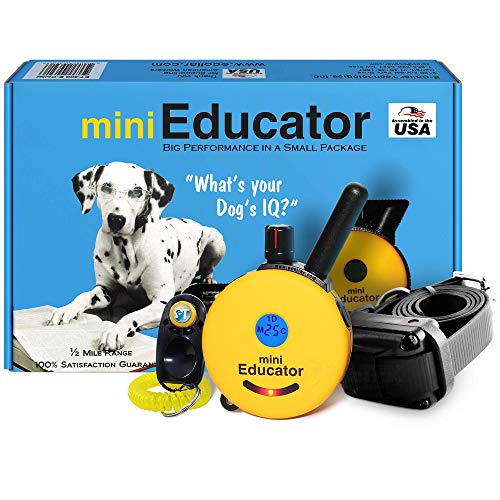
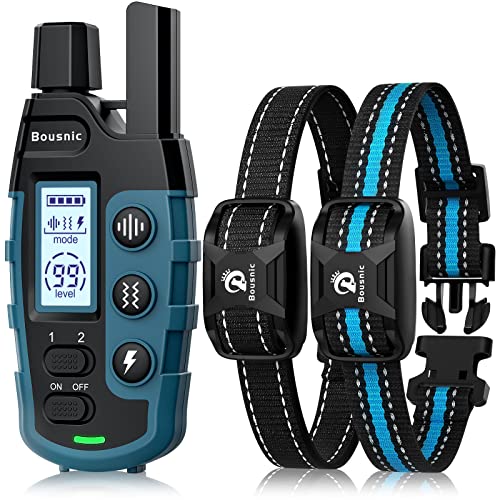
As an Amazon Associate we earn from qualifying purchases at no extra cost to you. Ratings are shown as listed on Amazon.
Quick comparison: leading training-collar types and models
The figures below are manufacturer-stated specifications or commonly published product specifications. Exact package contents, dimensions, and pricing can vary by region and revision, so verify the current manual before purchasing.
| Product or type | Stimulation levels | Advertised range | Water resistance | Receiver size / weight | Best fit |
|---|---|---|---|---|---|
| Dogtra 280C | 100 stimulation levels | Up to 0.5 mile | Waterproof receiver and transmitter | About 2.4 oz receiver; compact profile | Everyday recall and obedience training for small-to-medium dogs |
| SportDOG FieldTrainer 425X | 21 static levels plus tone and vibration | Up to 500 yards | Waterproof and submersible to about 25 feet | About 4.5 oz receiver | Multiple dogs, outdoor training, and owners wanting expandable systems |
| Garmin Sport PRO | 10 stimulation levels plus tone and vibration | Up to 1 mile | Water-resistant receiver and transmitter; confirm immersion limits | About 3.5 oz receiver | Handlers who value long range and a transmitter with physical controls |
| Educator ET-300 Mini | 100 stimulation levels plus tone and vibration | Up to 0.5 mile | Waterproof receiver and transmitter | About 2.4 oz receiver | Small dogs and precise, low-level cueing |
| Basic remote training collar | Usually 8–20 levels | Commonly 300–1,000 yards | Varies widely; some are only splash-resistant | Often 2–5 oz receiver | Occasional use when budget is the main constraint |
Range is measured in open conditions. Buildings, trees, hills, wet vegetation, radio interference, and the position of the transmitter can reduce usable distance substantially.
Best choices by training situation
| Your situation | What to prioritize | Most suitable choice |
|---|---|---|
| First-time owner with a small or sensitive dog | Small receiver, many low-intensity steps, tone, vibration, and a secure fit | Compact 100-level collar such as the Dogtra 280C or Educator ET-300 Mini |
| Large property or open-field recall work | At least 0.5–1 mile advertised range, tactile buttons, and strong weather resistance | Garmin Sport PRO or another long-range field model |
| Swimming, rain, and muddy outdoor use | Clearly stated waterproofing, sealed charging points, and washable strap materials | SportDOG FieldTrainer 425X or a similarly submersible model |
| Two or more dogs | Expandable transmitter, separate channels, and color-coded receivers | SportDOG FieldTrainer 425X system |
| Infrequent training and a limited budget | Simple controls, replaceable or long-lasting strap, and a usable warranty | A reputable basic model with tone, vibration, and at least 10 intensity levels |
Stimulation levels: more numbers can mean better control
A collar with 100 levels does not automatically deliver better training than one with 21. Its advantage is that the increase between settings can be smaller, allowing you to locate the lowest noticeable sensation for an individual dog. This matters because coat thickness, skin sensitivity, attention level, and emotional state all affect how a dog responds.
Use stimulation as a brief communication cue, not a punishment. Teach the verbal or hand signal first, then introduce the lowest setting in a quiet environment while rewarding the correct response. A dog that yelps, freezes, scratches at the collar, tucks its tail, avoids the handler, or becomes agitated is receiving too much pressure or is not ready for this training stage.
Look for a transmitter with separate buttons for tone, vibration, and stimulation. Physical buttons are easier to identify without looking down, particularly when walking or managing a long line. A lockable intensity dial or accidental-activation lock is valuable because it reduces the risk of pressing a stronger setting unintentionally.
Receiver fit and dog comfort
Receiver weight is especially important for small dogs. A 4.5-ounce receiver may be insignificant on a large dog but bulky on a 12-pound dog, particularly when combined with the strap. Check the manufacturer’s minimum neck size and weight guidance rather than choosing by breed name alone.
The strap should be snug enough that the contact points remain in a consistent position, with room for two fingers between the strap and the neck. It should not rotate freely or hang below the throat. Check the fit before every session, and move the collar slightly around the neck between sessions instead of leaving it in the same position for hours.
Contact points must reach through the coat without being painfully long. Long-haired dogs may need manufacturer-approved extended contact points, while short-haired dogs generally need the standard set. Do not shave the neck merely to make a collar work, and do not use a collar over irritated, broken, or inflamed skin. If skin problems appear, stop using the device and seek veterinary advice.
Waterproofing, range, and battery life
“Water-resistant” and “waterproof” are not interchangeable. For a dog that swims, choose a receiver explicitly rated for submersion and follow the depth and time limits. The transmitter may have a different rating from the receiver. After wet use, rinse away salt, mud, and chlorine with clean water, dry the contacts, and inspect the charging-port seal.
Battery runtime is often more useful than headline range. Suppose a collar provides 40 hours of receiver use per charge and you train four 20-minute sessions each week. That is:
4 sessions × 20 minutes = 80 minutes per week
40 hours ÷ 1.33 hours per week ≈ 30 weeks of receiver runtime
Real-world standby drain, cold weather, aging batteries, and transmitter use reduce that estimate. Recharge before a long outing rather than relying on the battery indicator at the start of the walk. A model with a magnetic charging connection may be convenient, while a sealed charging port generally offers better protection against water—but inspect either system for debris and corrosion.
What wears out first
- Straps: Dirt, sweat, and repeated wetting can weaken nylon or cause odor. Wash removable straps according to the instructions and replace them when stitching, holes, or buckle parts deteriorate.
- Contact points: Threads can corrode or become dirty. Remove residue with a soft, dry cloth and replace damaged points with the correct manufacturer-approved parts.
- Charging seals: Missing caps, loose covers, or trapped grit can compromise water resistance.
- Transmitter buttons: Frequently used rubber covers may crack or become less tactile. Physical controls are preferable, but they still require protection from drops and grit.
- Rechargeable batteries: Capacity normally declines over years. Check whether the battery is user-replaceable or whether service must be performed by the manufacturer.
A safer setup sequence
- Teach the behavior without the collar. Practice recall, “place,” loose-leash walking, or another cue with food, play, and a long line where appropriate.
- Condition the collar as ordinary equipment. Let the dog wear it powered off during short, supervised sessions so its appearance does not predict pressure.
- Check fit and controls. Confirm the correct receiver channel, test tone and vibration, and use the lowest stimulation setting.
- Train in a low-distraction area. Give the cue once, reward compliance, and increase distance or distraction gradually rather than immediately increasing intensity.
- Record the setting and response. Notes help prevent guessing and make it easier to identify whether the problem is distance, distraction, fit, or an unclear command.
- Inspect the dog and equipment afterward. Look for redness, dampness, loose hardware, and battery or seal problems.
How much should you spend?
Basic remote training collars commonly cost about $40–$100, while established mid-range systems often fall around $150–$300. Premium multi-dog or long-range systems can cost roughly $300–$600 or more. The meaningful upgrade is usually better control resolution, waterproof construction, transmitter ergonomics, battery serviceability, and support—not a more severe correction.
If your dog has reliable obedience but needs a carefully managed distance cue, a compact model with many levels may be the best value. If you regularly train in rain, swimming areas, or large fields, pay more for verified sealing and durable controls. If the collar is being considered for fear, aggression, separation distress, barking driven by anxiety, or any behavior that may have a medical cause, work with a qualified trainer and veterinarian instead of escalating stimulation.
Bottom line
For many owners, the best dog e collars combine a lightweight receiver, at least 20–100 finely adjustable levels, tone and vibration, a secure two-finger fit, dependable waterproofing, and a transmitter that prevents accidental activation. Choose range for your environment, not your property’s maximum dimensions; choose receiver size for your dog’s comfort; and treat the device as a precise training aid that supports teaching, rewards, and supervision.




Write Your Review
No reviews yet. Be the first to share your experience!