

Key takeaways
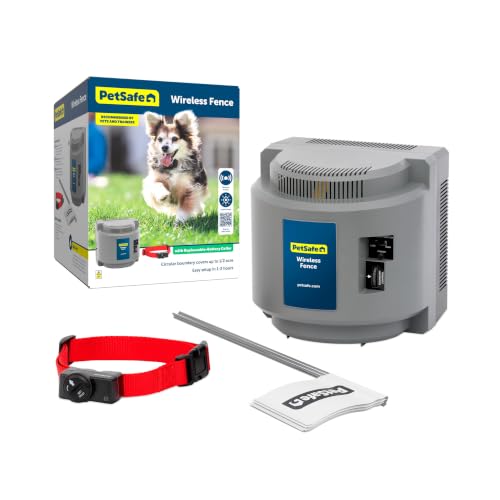
- For a normal open yard with a clearly acceptable circular boundary, the PetSafe Stay & Play Compact Wireless Fence is the sensible starting point. For large or irregular land, SpotOn GPS Fence offers the strongest coverage flexibility. For owners who want app-led training and multiple…
The best wireless dog containment systems depend on whether your priority is a simple circular boundary, flexible GPS coverage, or dependable containment on a small irregular yard: PetSafe’s wireless radio system suits straightforward home use, while Halo Collar 4 and SpotOn GPS Fence are better for larger or changing boundaries.
Our top picks


As an Amazon Associate we earn from qualifying purchases at no extra cost to you. Ratings are shown as listed on Amazon.
Quick comparison
| System | Best for | Typical range or coverage | Battery | Correction and training | Weather resistance |
|---|---|---|---|---|---|
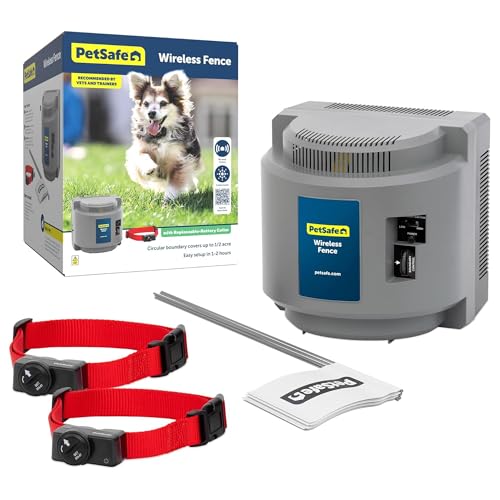
| PetSafe Stay & Play Compact Wireless Fence | Small to medium, roughly circular yards | Up to about 3/4 acre, adjusted as a radius | Rechargeable collar; commonly several weeks per charge depending on use | Multiple static levels plus tone and vibration options | Water-resistant collar; keep the indoor transmitter dry |
| Halo Collar 4 | Owners wanting app-based GPS boundaries and guided training | GPS boundaries can cover properties far larger than a typical home yard | Usually about a day of active use, depending on tracking and correction settings | Tone, vibration, and adjustable static feedback; training features in the app | Designed for outdoor use; check the current model’s charging and immersion limits |
| SpotOn GPS Fence | Large, rural, or irregular properties | GPS fences can span many acres; minimum boundary size varies by model and conditions | Often approximately 15–24 hours of active operation | Tone, vibration, and adjustable static correction | Outdoor-rated collar; protect the charging equipment from moisture |
| GPS wireless fence, general type | Portable use, multiple properties, or boundaries that change | Often 1–1,000+ acres, depending on the product | About 12–48 hours is common | Usually tone, vibration, and several static levels | Look for an IP rating of at least IPX7 for dogs that swim |
| Radio wireless fence, general type | Predictable use around one home | Typically a circular radius of about 90–210 feet from the transmitter | Rechargeable or replaceable batteries; roughly 1–8 weeks is common | Usually tone plus multiple static levels | Collar may be water-resistant, but the transmitter normally stays indoors |
Specifications can change between collar generations and regional versions, so confirm the current manual before purchase. GPS accuracy also varies with tree cover, buildings, terrain, satellite visibility, and cellular service.
Which wireless containment system fits your yard?
Choose a radio system for a simple, open yard
A radio fence uses an indoor transmitter to create a circular signal. It is normally the least complicated option to install: position the transmitter near the center of the property, select the radius, and train the dog to recognize the boundary flags.
Its main limitation is geometry. A 200-foot radius is not a 200-foot line around your lot; it creates a circle, which may cross a road, a neighbor’s property, a pond, or an area where you do not want the dog to go. Radio signals can also be affected by metal siding, vehicles, dense construction, steep changes in elevation, and nearby electronic equipment.
For a mostly open yard with a house near the center, PetSafe Stay & Play Compact Wireless Fence is the most practical type of choice. It is easier to understand than a GPS system and generally requires less frequent charging.
Choose GPS for large or irregular properties
GPS systems let you draw or save a boundary using an app rather than relying on a transmitter’s circle. This is useful for acreage, corner lots, holiday homes, and properties where a circular signal would leave too much unusable space.
Halo Collar 4 is oriented toward app-based boundary management and training tools. SpotOn GPS Fence is aimed more directly at large-property containment and multiple saved fences. Both can be more flexible than radio systems, but they need careful mapping and a clear understanding of the collar’s location accuracy.
GPS is not automatically more consistent. A boundary may shift slightly when satellite visibility changes. Set the fence well inside roads, cliffs, water, and property lines rather than placing the virtual line exactly on a hazard.
Head-to-head buying criteria
Signal range and boundary consistency
Radio systems provide a continuously active signal but normally only a circular boundary. GPS systems provide better shape flexibility but can have brief location uncertainty. For a compact, open yard, consistent radio coverage is often preferable. For a 10-acre property or a boundary with several corners, GPS flexibility usually matters more than absolute precision.
Collar fit
Measure the dog’s neck where the collar will sit, then compare that measurement with the manufacturer’s range. The contact points should touch the skin through the coat without being painfully tight. A useful check is to slide two fingers beneath the strap. Recheck the fit after grooming, weight changes, or replacing the collar.
Long-haired dogs may need longer contact points or careful trimming at the contact area, depending on the manufacturer’s instructions. Do not leave a correction collar continuously tight; remove it regularly and inspect the skin.
Correction settings
The best systems begin with a warning tone or vibration and use the lowest effective static level only if necessary. More levels do not necessarily mean better containment. Training, boundary placement, and the dog’s temperament matter more than the maximum correction level.
Look for adjustable boundary width, a warning zone, automatic safety shutoff, and a way to disable correction during training. A collar should never be treated as a substitute for supervision, especially during the first several weeks.
Battery life and ownership cost
Radio collars usually win on runtime. GPS collars use more power because they maintain location tracking and may communicate with a phone network. If a GPS collar lasts 20 hours and you use it five days per week, you will need to charge it about once every four days of use. A radio collar lasting 30 days may require only one monthly charging routine.
Budget for replacement batteries or a replacement collar, boundary flags, charger cables, contact-point covers, and any required subscription. GPS products may have recurring connectivity fees, while basic radio systems generally do not.
Weather resistance
Water resistance is not the same as unlimited swimming protection. An IPX7 rating generally indicates temporary immersion testing, but the collar still needs its charging port sealed and should be dried before charging. Keep the transmitter, phone, and charging accessories protected from rain. Salt water, mud, shampoo, and fine grit can damage seals and contact points over time.
Decision matrix
| Your situation | Best fit | Why | Trade-off |
|---|---|---|---|
| Small budget and one ordinary yard | Radio wireless fence | Lower purchase complexity and usually no cellular subscription | Circular boundary only |
| Large or irregular property | GPS system such as SpotOn | Flexible perimeter shape and much greater potential coverage | Higher cost, charging frequency, and GPS variability |
| First-time owner wanting guided training | GPS system with an app, such as Halo Collar 4 | Boundary management and training instructions are integrated | Requires a smartphone and regular charging |
| Several properties or travel | Portable GPS system | Saved boundaries can be created in different locations | Each new location must be mapped and checked carefully |
| Dog that swims frequently | System with a clearly stated immersion rating | Better protection against water exposure | Rinse and dry the collar; no rating removes maintenance needs |
Setup that prevents common failures
- Map hazards first. Mark roads, gates, driveways, ponds, pools, retaining walls, and neighboring properties. Put the boundary well inside each hazard rather than at its edge.
- Place the transmitter or map the GPS boundary carefully. For radio systems, test several indoor transmitter positions. For GPS, walk the entire perimeter with the app and check corners, tree cover, and elevation changes.
- Install visible flags. Flags give the dog a physical learning aid and help people identify the invisible boundary.
- Train on a leash. Walk toward the warning zone, wait for the tone or vibration, and guide the dog back. Practice short sessions for at least several days before testing off leash.
- Test the collar yourself according to the manual. Confirm the warning, correction, low-battery alert, and safe-shutoff behavior. Never test a correction level on a person or improvise with the contact points.
- Supervise off-leash use. A dog may cross a boundary when chasing wildlife, frightened by a noise, or pursuing another dog. A physical fence or leash remains the safer choice beside traffic and other serious hazards.
Durability and maintenance realities
Contact points, rubber seals, straps, charging ports, and boundary flags usually wear before the main electronics. Clean contact points with a soft, dry cloth; rinse mud from the collar after outdoor use; inspect the strap for cracks; and keep the charging port closed. Replace damaged parts rather than continuing to use a collar with a compromised seal.
Common mistakes include mounting a radio transmitter beside a metal appliance, setting a GPS boundary directly on a property line, assuming a fully charged collar will last through a weekend, and skipping refresher training after moving the system. Test the boundary after storms, landscaping changes, transmitter relocation, firmware updates, and any change in the dog’s behavior.
Bottom line
For a normal open yard with a clearly acceptable circular boundary, the PetSafe Stay & Play Compact Wireless Fence is the sensible starting point. For large or irregular land, SpotOn GPS Fence offers the strongest coverage flexibility. For owners who want app-led training and multiple digital boundaries, Halo Collar 4 is the more feature-rich option. Whichever system you choose, prioritize safe boundary placement, correct collar fit, realistic battery planning, and supervised training over maximum range or maximum correction strength.



Write Your Review
No reviews yet. Be the first to share your experience!