

Key takeaways
- Maximum ambient temperature: A rating of 100°F is more useful than a vague “suitable for garages” label if your space becomes very hot.
- Minimum ambient temperature: A garage that falls below 50°F may cause an ordinary refrigerator to cycle incorrectly, especially if it has a freezer compartment.
- Climate-class information: This can help, but a clear temperature range in degrees is easier to apply to your garage.
- Required clearance: Many compact units need roughly 2–4 inches behind and above the cabinet for ventilation. Follow the manufacturer’s exact instructions.
The best mini fridges for garage storage are compressor models rated for the temperature range of your garage, with adjustable thermostats, enough shelf clearance for your containers, and a documented ambient operating range—not simply the cheapest compact refrigerator.
A garage is harder on a refrigerator than a kitchen: summer heat makes the compressor run longer, winter cold can confuse the thermostat, and dust can restrict airflow around the condenser. For dependable storage in 2026, choose by garage conditions first, then capacity, energy use, shelving, and noise.
Our top picks
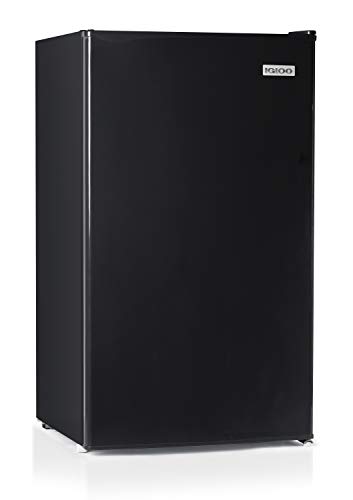


As an Amazon Associate we earn from qualifying purchases at no extra cost to you. Ratings are shown as listed on Amazon.
Quick picks by garage situation
| Garage situation | Best choice | Recommended specifications | Why it fits |
|---|---|---|---|
| Occasional drinks and snacks | Compact compressor refrigerator | 3.1–4.5 cu. ft.; 100–180 kWh/year; reversible door | Uses less space and energy than a larger unit |
| Frequent family use | Large compact refrigerator | 4.4–5.5 cu. ft.; separate freezer; 2–3 adjustable shelves | Provides useful food capacity without full-size depth |
| Very hot garage | Heavy-duty compressor model with a published high-ambient rating | Rated for at least 100°F ambient temperature; 3–5 cu. ft. | Has more thermal headroom during summer |
| Unheated winter garage | Garage-rated refrigerator or refrigerator/freezer with a low-ambient specification | Published minimum operating temperature of 38–45°F or lower | Less likely to stop cooling or behave unpredictably in cold weather |
| Quiet workspace or attached garage | Low-noise compressor refrigerator | Approximately 38–45 dB; no automatic ice maker | Reduces compressor cycling and vibration noise |
What “garage-ready” should mean
“Garage-ready” is not a universal performance standard for every mini fridge. Some manufacturers publish a usable ambient range; others only state that the appliance is intended for indoor use. Before buying, look for two numbers in the manual or specification sheet:
- Maximum ambient temperature: A rating of 100°F is more useful than a vague “suitable for garages” label if your space becomes very hot.
- Minimum ambient temperature: A garage that falls below 50°F may cause an ordinary refrigerator to cycle incorrectly, especially if it has a freezer compartment.
- Climate-class information: This can help, but a clear temperature range in degrees is easier to apply to your garage.
- Required clearance: Many compact units need roughly 2–4 inches behind and above the cabinet for ventilation. Follow the manufacturer’s exact instructions.
If the product page does not provide an operating range, treat the refrigerator as a normal indoor appliance rather than assuming it is suitable for severe heat or freezing conditions.
Compressor performance matters more than a low purchase price
For garage storage, choose a compressor refrigerator rather than a thermoelectric cooler. Compressor models can maintain refrigerator temperatures more effectively in warm rooms and usually offer substantially more usable capacity. Thermoelectric units are best for mild indoor environments, personal workspaces, or short-term cooling; they often struggle when the surrounding air is hot.
A compressor should run longer during a hot afternoon. That is normal. Trouble signs include nonstop operation with warm contents, heavy frost over much of the freezer compartment, repeated clicking without starting, or large temperature swings. A dusty condenser, blocked ventilation, damaged door gasket, or overloaded interior can cause these symptoms before the compressor itself fails.
Temperature targets
Set the refrigerator section to about 37–40°F and verify it with a separate appliance thermometer placed in the middle of the compartment. The built-in dial usually indicates a relative setting rather than an exact temperature. Avoid placing the thermometer in the door, where temperatures change more quickly.
In a cold garage, turning the dial colder may not solve the problem. The surrounding air can already be below the thermostat’s expected range, causing the compressor to stop while the freezer warms. A low-ambient-rated appliance is the better solution.
Capacity and shelving: measure the items, not just the cabinet
A mini fridge’s advertised cubic-foot capacity does not tell you whether it will hold your containers. Door bins, compressor humps, rounded corners, and a small freezer box reduce practical storage. Measure the tallest and widest items you expect to store, then compare those measurements with the shelf openings.
- 3.1–3.5 cu. ft.: Appropriate for beverages, condiments, a few meal containers, or occasional use.
- 4.4–5.5 cu. ft.: Better for regular household use and larger bottles, with enough room to separate drinks from food.
- More than 5.5 cu. ft.: Often approaches the footprint and energy use of a small apartment refrigerator; consider whether a full-size garage refrigerator offers better value.
Glass shelves are easier to wipe clean and contain spills better than wire shelves. Wire shelves can provide more flexible height adjustment and allow cold air to circulate, but small cans and jars may sit unevenly. The most useful arrangement is usually two adjustable shelves, a full-width lower shelf, and a door bin tall enough for bottles.
Energy use and the real cost of running a garage fridge
Use the energy label’s annual kilowatt-hour figure rather than comparing wattage alone. A refrigerator may draw around 60–100 watts while the compressor is running but cycle on and off throughout the day.
For example, if a unit uses 170 kWh per year and electricity costs $0.18 per kWh:
170 × $0.18 = $30.60 per year
In a hot garage, actual consumption may be higher than the label value because the compressor runs more often. A refrigerator rated at 240 kWh per year would cost about $43.20 annually at the same electricity rate. The difference is modest for one appliance, but a more efficient model also generally produces less heat and places less continuous demand on its compressor.
Keep the refrigerator out of direct sunlight, away from a running freezer or water heater, and off the floor if flooding is possible. Do not use an extension cord unless the manufacturer explicitly permits it; use a properly grounded outlet with suitable capacity.
Noise, vibration, and placement
Compact compressors can make clicking, humming, bubbling, or brief knocking sounds during normal operation. A published noise figure around 38–45 dB is a reasonable target if the garage doubles as a workshop or office. Automatic ice makers and interior fans add noise and are unnecessary for basic storage.
Level the cabinet so the door closes by itself without slamming. Leave ventilation space around the cabinet, and avoid pushing it tightly against shelving. A thin rubber isolation pad can reduce vibration on a concrete floor, but it should not block the refrigerator’s bottom ventilation openings.
Durability and maintenance realities
The parts most likely to cause problems are usually the door gasket, thermostat or electronic controls, interior light, shelf supports, and condenser area—not the shelves themselves. Garage dust and pet hair can coat the condenser, while frequent door opening increases moisture and frost.
- Vacuum or brush accessible condenser coils and ventilation areas every three to six months, more often in a dusty workshop.
- Check that the door gasket grips a sheet of paper evenly around the frame. Replace a gasket that is cracked, loose, or unable to seal.
- Keep several inches of open space around ventilation points and never cover the top or rear with stored items.
- Clean spills promptly with mild detergent and water; avoid abrasive cleaners that can damage plastic liners and seals.
- Defrost a manual-defrost freezer when ice becomes roughly 1/4 inch thick. Do not chip ice with a knife, which can puncture refrigerant tubing.
- Use containers with lids and leave space between items so cold air can circulate.
Buying checklist for the best mini fridge for your garage
- Confirm the published minimum and maximum ambient operating temperatures.
- Choose a compressor design for reliable cooling in warm conditions.
- Compare annual energy use in kWh, not only the purchase price.
- Measure the installation space, door swing, and route through the garage.
- Check shelf opening dimensions against your largest bottles and containers.
- Prefer adjustable, easy-clean shelving and a replaceable door gasket.
- Look for a reversible door if the cabinet will sit beside a wall or workbench.
- Verify whether the freezer compartment meets your needs; compact freezers often have limited space and inconsistent temperature.
- Buy a refrigerator with a clearly documented warranty and accessible service information.
Bottom line
The best mini fridges for garage storage are not necessarily the smallest or least expensive models. For a mild garage, a 3.1–4.5 cu. ft. compressor refrigerator with efficient operation and adjustable shelves is usually enough. For extreme summer heat or winter cold, the decisive feature is a published ambient operating range that matches your actual garage. Combine that rating with adequate ventilation, a separate thermometer, regular condenser cleaning, and enough shelf space for your real containers, and the refrigerator is far more likely to remain reliable year-round.


Write Your Review
No reviews yet. Be the first to share your experience!