

Key takeaways
- Open box: Scoop once or twice daily, top up litter, and wash weekly or as needed. The low purchase price is offset by more visible daily maintenance.
- Covered box: Scoop daily and wipe the hood and filter area weekly. Replace carbon filters according to the manufacturer’s schedule or when odor returns.
- Top-entry box: Check hidden corners every day and clean the lid texture, where litter can collect.
- Automatic box: Empty the waste drawer before it is full, clean sensors and moving parts, and budget for liners, filters, trays, or compatible litter.
- Sifting box: Lift or rotate daily, inspect the screen for blocked holes, and wash the base before urine residue hardens.
The best cat litter boxes for odor control are usually large, easy to clean, and matched to your cat’s habits: choose an open box for maximum accessibility, a covered or top-entry box for better odor containment, an automatic box for frequent waste removal, or a sifting box for simpler daily maintenance.
Our top picks


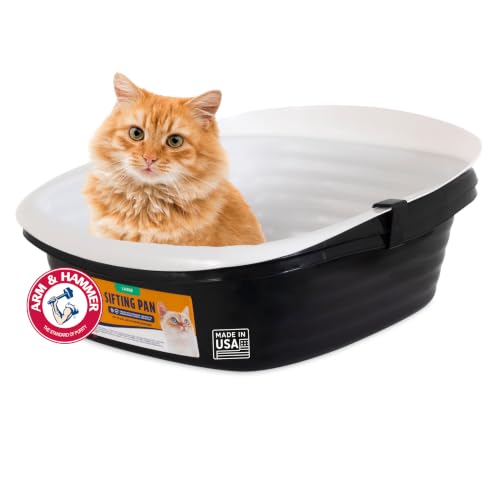
As an Amazon Associate we earn from qualifying purchases at no extra cost to you. Ratings are shown as listed on Amazon.
Quick picks by living situation
| Situation | Best box type | Why it fits | Main compromise |
|---|---|---|---|
| Kitten, senior cat, or mobility limitations | Large open box with a low entrance | Fast, unrestricted access and easy monitoring | Does the least to contain odors |
| Small apartment with a cat that accepts enclosure | Covered box with a removable hood | Contains some odor and litter scatter | Needs frequent scooping and ventilation |
| Cat that kicks litter out of the box | Top-entry box | High walls reduce scatter around the box | Not suitable for every cat, especially those with limited mobility |
| Busy household able to buy ongoing supplies | Automatic self-cleaning box | Removes waste regularly and can reduce odor between visits | Higher cost, noise, sensors, and proprietary consumables |
| Clumping litter and simple daily routine | Sifting box | Separates clumps without repeated scooping of clean litter | Requires compatible litter and regular emptying |
What actually controls litter-box odor?
Odor control depends more on waste removal and ventilation than on a lid alone. Urine that remains in the box, damp litter stuck to the base, and waste tracked onto the floor will continue producing smells even inside an enclosed container. A box that is too small also concentrates waste in one area, making odor worse and encouraging a cat to eliminate elsewhere.
Look for enough interior length for your cat to turn around comfortably, a base that does not flex, and surfaces without deep seams. A carbon filter can reduce some airborne odor in a covered box, but it is a consumable rather than a substitute for scooping. Avoid heavily perfumed litter or deodorizer if your cat dislikes strong scents. Unscented clumping litter, adequate depth, and prompt waste removal are often the more reliable combination.
Head-to-head comparison of the main litter-box designs
Open litter boxes: best for accessibility and visibility
An open box is the safest starting point for kittens, older cats, nervous cats, and multi-cat homes where you need to notice changes in urine or stool. There is no door or hood to deter entry, and cleaning takes only seconds because every part of the litter surface is visible.
For one average-sized cat, target at least 18 by 14 inches of usable interior floor space; larger cats generally need about 24 by 18 inches or more. A low entry around 3 to 5 inches helps accessibility, while walls around 8 to 12 inches can reduce spray and scatter. High-sided open pans, including versions sold by Van Ness, IRIS, and other pet-supply brands, can offer a useful compromise.
The drawback is exposure. Open boxes provide little odor containment, so they work best when placed in a ventilated, low-traffic area and scooped at least once daily.
Covered boxes: better containment, not automatic odor elimination
A covered box can hide waste from view, reduce litter scatter, and contain some odors near the source. Models with removable hoods are easier to wash than designs with complicated clips, flaps, and narrow channels. Carbon-filtered designs from brands such as Catit and Nature’s Miracle illustrate the general approach, although filter size and replacement schedules vary.
Measure the interior rather than the outside. A box that appears large may lose several inches of usable space to curved walls and a raised entry. Aim for approximately 20 by 16 inches of interior floor area for an average cat, with more room for a large breed. Entry openings around 8 to 10 inches wide and 7 to 9 inches high suit many adult cats, but measure your cat if it is especially large.
Covered boxes demand more cleaning discipline. Odor becomes concentrated inside the hood, and some cats refuse a box if the door flap is stiff, the opening is cramped, or the air feels stale. Start with the flap removed, then add it only if your cat continues using the box confidently.
Top-entry boxes: strongest scatter control
Top-entry boxes are effective for cats that dig vigorously or carry litter on their paws. The lid catches much of the litter as the cat exits, and the tall sides make it harder for urine to spray outside. Many designs also use a textured lid that acts as a stepping surface.
They are less universally accessible than open or front-entry boxes. A cat must jump onto the lid and climb down, so this style may be unsuitable for kittens, senior cats, heavy cats, or cats with movement difficulties. A typical top opening is about 8 to 10 inches across, but the usable interior can be smaller than the advertised exterior dimensions.
Top-entry boxes also hide wet areas. Lift the lid during daily checks and inspect the corners, where clumps can adhere. Do not choose this style solely because it looks tidy; the cat’s willingness to enter matters more than the owner’s preference for concealment.
Automatic boxes: frequent removal at a higher ownership cost
Automatic boxes can improve odor control by removing clumps or waste soon after use. Products such as Litter-Robot and PetSafe ScoopFree represent different mechanisms: some rake or rotate waste into a receptacle, while others use a disposable tray or specialized litter system.
Before buying, check the actual entry opening, interior turning area, minimum cat weight, cleaning cycle delay, and waste-drawer capacity. A large exterior does not guarantee a spacious interior. Automatic models also need a nearby power outlet, a level floor, sensor cleaning, and periodic disassembly. Moving parts, seals, liners, rakes, and sensors are the components most likely to require attention over time.
They reduce scooping rather than eliminating maintenance. You still need to empty the waste drawer, wipe the interior, replace filters or liners where applicable, and monitor whether the mechanism is removing clumps cleanly. Some cats also dislike motor noise or a box that moves shortly after use.
Sifting boxes: efficient with compatible litter
A sifting box uses a perforated tray or lift mechanism to separate waste from clean litter. This can make daily maintenance faster with suitable clumping litter, because clean granules fall through while solid clumps remain behind. Omega Paw’s Roll’N Clean is a recognizable example of a manual rotating approach; other designs use a lift-out sieve.
Sifting systems work poorly with litter that does not form firm clumps, lightweight litter that falls through with waste, or very fine litter that packs into the screen. Keep a spare tray or liner if the system uses replaceable parts. Sifting does not remove odor by itself: waste must still be separated promptly, and the base must be washed before residue accumulates.
Specification guide: useful numbers before you buy
| Feature | Practical target | Why it matters |
|---|---|---|
| Interior length | At least 1.5 times the cat’s body length, excluding the tail | Allows turning, digging, and choosing a comfortable position |
| Interior width | At least the cat’s body length when possible | Reduces corner accidents and cramped posture |
| Low entry height | 3–5 inches | Useful for kittens and cats that struggle with high steps |
| High-side wall height | 8–12 inches | Helps contain spray and kicked litter |
| Typical litter depth | 2–3 inches, unless the litter instructions say otherwise | Provides digging depth without unnecessarily increasing waste |
| Covered-box entry | About 8–10 inches wide and 7–9 inches high | Reduces the chance that a large or cautious cat rejects the opening |
To apply the sizing rule, measure from your cat’s nose to the base of its tail. For a 16-inch cat, 1.5 times body length suggests a box about 24 inches long internally. If a hood, ramp, or rotating mechanism reduces that usable length, count only the remaining floor area.
Cleaning effort and long-term ownership
- Open box: Scoop once or twice daily, top up litter, and wash weekly or as needed. The low purchase price is offset by more visible daily maintenance.
- Covered box: Scoop daily and wipe the hood and filter area weekly. Replace carbon filters according to the manufacturer’s schedule or when odor returns.
- Top-entry box: Check hidden corners every day and clean the lid texture, where litter can collect.
- Automatic box: Empty the waste drawer before it is full, clean sensors and moving parts, and budget for liners, filters, trays, or compatible litter.
- Sifting box: Lift or rotate daily, inspect the screen for blocked holes, and wash the base before urine residue hardens.
Use mild unscented soap and rinse thoroughly. Avoid mixing cleaning products, especially bleach with ammonia-containing substances. Replace cracked plastic, warped bases, broken hinges, or damaged seals: these defects can trap odor and make the box difficult to sanitize.
How to choose without creating litter-box problems
Start with the largest accessible design that fits your space. If odor is the main issue, improve the cleaning schedule and litter depth before switching to a restrictive hood. When changing styles, place the new box beside the old one and leave both available until your cat uses the replacement consistently. This prevents a sudden change in location, texture, or entry method from becoming an avoidable source of stress.
For households with multiple cats, more than one box is usually more practical than buying one highly enclosed box. Spread boxes across quiet, accessible locations rather than putting every box together. If a cat suddenly stops using the box, strains, cries, produces unusually small or large amounts of urine, or has a persistent change in elimination habits, contact a veterinarian rather than treating the issue as a litter-box design problem.
Bottom line
The best cat litter boxes for odor control remove waste easily and often while still giving your cat enough room and a comfortable entry. Choose a large open or low-entry box for accessibility, a covered model for moderate containment, a top-entry design for litter scatter, an automatic system for frequent removal, or a sifting box for efficient manual cleaning. In every category, interior dimensions, daily maintenance, and your cat’s willingness to use the box matter more than the lid or mechanism alone.



Write Your Review
No reviews yet. Be the first to share your experience!