

Key takeaways
- Teach the behavior first. Practice recall or the chosen cue indoors and on a long line using food, play, or praise.
- Pair the collar with rewards. Put it on for short periods without activating it so the dog does not associate wearing it with punishment.
- Find the response level. With vibration or, where appropriate, the lowest static level, look for a small orientation response rather than fear or pain.
- Use one cue at a time. Give the verbal cue, provide the collar signal if needed, and reward the correct response immediately.
- Increase distraction gradually. Move from the home to a fenced area, then to a long-line environment before attempting off-leash work.
- Stop on success. Short, successful sessions create clearer associations than repeated corrections.
Best Dog Training Collars for Reliable Control
The best dog training collar is usually a vibration-and-tone model with excellent fit and clear controls; choose static stimulation only when you understand how to introduce it carefully, and choose GPS when location tracking or boundary awareness matters more than instant obedience cues.
Training collars are communication tools, not substitutes for daily practice. The right choice depends on your dog’s sensitivity, coat, recall distance, training experience, terrain, and how often you will recharge and clean the equipment. A collar that is powerful on paper can be unreliable if its contacts do not reach the skin, its remote is confusing, or its battery is flat when you need it.
Our top picks

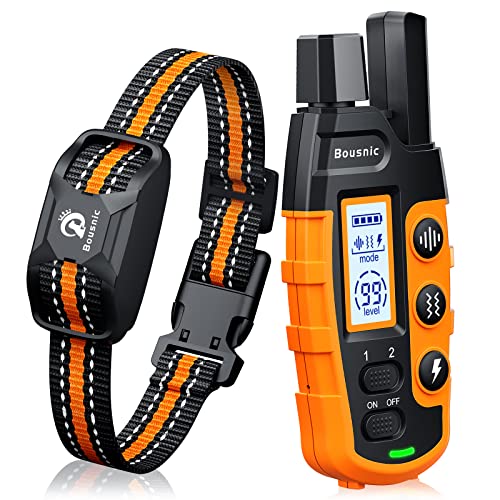

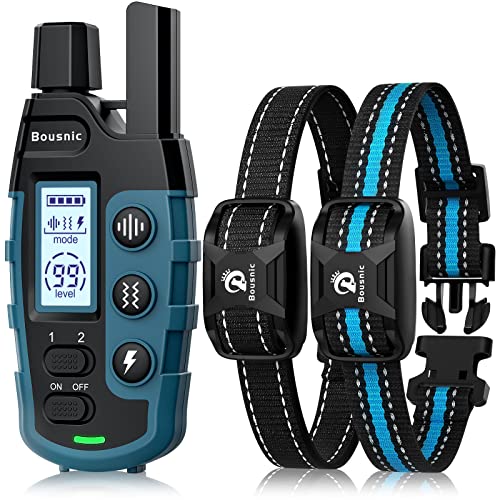
As an Amazon Associate we earn from qualifying purchases at no extra cost to you. Ratings are shown as listed on Amazon.
Vibration, tone, static, and GPS: the head-to-head comparison
| Collar type | Typical useful range | Typical battery life | Best suited to | Main limitation |
|---|---|---|---|---|
| Tone and vibration | 300–1,000 yards | 15–60 hours | Recall, attention, and low-risk obedience practice | May be hard to notice outdoors or through a thick coat |
| Static-capable training collar | 300–1,000 yards | 15–70 hours | Experienced handlers needing a precise backup cue | Misuse, poor fit, or excessive intensity can cause distress |
| GPS training collar | Usually 2–10 miles, depending on terrain and system | 12–72 hours | Hiking, hunting, large properties, and location monitoring | Heavier, more expensive, and not always an instant training signal |
| GPS virtual-fence system | Defined by mapped boundary or local transmitter | 12–48 hours | Boundary awareness where a physical fence is impractical | Requires careful setup and should not replace supervision |
These are practical ranges for common consumer designs, not guarantees. Buildings, hills, dense trees, radio interference, cellular coverage, and the placement of the transmitter can reduce performance.
Tone and vibration collars
Tone is useful as a neutral marker: one sound can mean “look at me,” while a separate vibration can mean “change direction” or “return.” This approach is often the best starting point because it lets you build a conditioned response without relying on discomfort.
Vibration is not automatically gentle for every dog. Some dogs ignore it; others find it startling. Begin at the lowest noticeable setting, pair it with a reward, and stop if your dog freezes, avoids the collar, tucks their tail, or shows other signs of distress. A model with adjustable vibration patterns and separate tone and vibration buttons offers more useful control than one with a single combined button.
Static-capable collars
Static stimulation can provide a consistent cue over distance, but its value depends on skilled timing and conservative use. It should never be used to punish a dog for returning, approaching a person, or showing fear. If the dog cannot reliably respond to a spoken cue and reward at low distraction, increasing intensity is not a substitute for training.
Look for a collar with a genuinely low starting level, many incremental settings, a lockable maximum, a momentary option, and a clear display. Avoid products that make intensity changes easy to trigger accidentally. Static contacts must touch the skin rather than rest on the fur, but the strap must not be tightened enough to restrict breathing or irritate the neck.
GPS-enabled collars
GPS collars solve a different problem. They can show a dog’s position on a phone or handheld receiver and may provide route history, activity information, or a virtual boundary. They are particularly useful on large rural properties and long hikes, where a conventional remote’s radio range is not enough.
GPS accuracy is affected by satellite visibility and the surrounding landscape. A GPS location is not the same as a guaranteed instant command channel. Cellular models may require a subscription and can lose communication outside network coverage; radio-based systems usually avoid a cellular subscription but may cost more initially and require a dedicated handheld receiver.
Which collar fits your situation?
| Your situation | Most sensible choice | What to prioritize |
|---|---|---|
| First training collar and modest budget | Tone and vibration | Simple remote, low weight, waterproof construction, and replaceable strap |
| Daily off-leash work in a local park | Long-range tone and vibration, with optional static | 300–1,000-yard rated range, tactile buttons, and 20-hour or better runtime |
| Large property or frequent hiking | GPS tracking collar | Map quality, tracking interval, receiver range, and 24-hour minimum battery life |
| Thick-coated or double-coated dog | Adjustable-contact training collar | Longer contacts, coat-safe fit, and a way to use vibration without overtightening |
| Several dogs | Expandable multi-dog system | Separate dog selection, color-coded controls, and collision-resistant charging ports |
| Infrequent emergency use | Basic tone-and-vibration model | Low standby drain, battery indicator, and controls you can operate without looking |
Fit matters more than advertised range
A collar can have a two-mile specification and still fail at 30 feet if it moves around the neck. Position the receiver high on the neck, generally below the jaw and behind the ears, while keeping it clear of the throat. You should be able to slide two fingers under the strap. Check the fit after your dog walks, runs, and shakes.
For a dog with a 16-inch neck, a strap with a usable adjustment range of approximately 12–20 inches gives room for correct positioning. Do not select a collar solely by the maximum stated neck size: excess strap can snag, while a receiver designed for a large dog may be unnecessarily heavy for a small one.
Inspect the contact area regularly. Remove the collar after training, vary its position slightly, and check for redness or rubbing. Never leave a training collar on continuously. If skin irritation appears, stop using it and seek veterinary advice if it does not quickly resolve.
Battery life and ownership costs
Manufacturers usually quote standby or light-use runtime. Repeated vibration, frequent GPS location updates, cold weather, and weak cellular or satellite conditions can reduce it. For a collar used four sessions per week at 45 minutes per session, a 20-hour stated runtime provides about:
20 hours ÷ 3 hours of weekly use = roughly 6.7 weeks in theory.
In practice, recharge it weekly if it is your safety backup. A GPS collar used continuously can require daily or every-other-day charging despite a similar headline capacity. A charging indicator, low-battery alert, sealed charging port, and a spare cable are more useful than an impressive maximum-runtime claim.
The parts most likely to wear are the strap holes, buckle, contact covers, charging seal, and remote buttons. Rinse off dirt and salt with fresh water, dry the unit before charging, and follow the manufacturer’s cleaning instructions. Do not submerge a collar described only as water-resistant. Keep contact points clean, and replace worn straps before the receiver can shift.
How to introduce a training collar safely
- Teach the behavior first. Practice recall or the chosen cue indoors and on a long line using food, play, or praise.
- Pair the collar with rewards. Put it on for short periods without activating it so the dog does not associate wearing it with punishment.
- Find the response level. With vibration or, where appropriate, the lowest static level, look for a small orientation response rather than fear or pain.
- Use one cue at a time. Give the verbal cue, provide the collar signal if needed, and reward the correct response immediately.
- Increase distraction gradually. Move from the home to a fenced area, then to a long-line environment before attempting off-leash work.
- Stop on success. Short, successful sessions create clearer associations than repeated corrections.
If you are unfamiliar with static training, consult a qualified reward-based trainer who can observe the dog and teach timing. Dogs showing fear, aggression, pain, or sudden changes in behavior should be assessed by a veterinarian or qualified behavior professional rather than managed by increasing collar intensity.
Bottom line
For most households, the best dog training collars are lightweight, waterproof tone-and-vibration models with tactile controls, at least 20 hours of realistic use, a secure adjustable fit, and clear low-battery warnings. Add static capability only when you have a specific training reason and the knowledge to use it conservatively. Choose GPS when finding and monitoring your dog across distance is the primary need; it is a location tool first and a training collar second.





Write Your Review
No reviews yet. Be the first to share your experience!