

Key takeaways
- The best tonneau covers for most truck owners are a low-profile folding cover for balanced security and access, a hard one-piece cover for maximum weather protection, a soft roll-up cover for the lowest cost, or a retractable cover when frequent…
The best tonneau covers for most truck owners are a low-profile folding cover for balanced security and access, a hard one-piece cover for maximum weather protection, a soft roll-up cover for the lowest cost, or a retractable cover when frequent bed access matters more than price and cargo height.
The right choice depends less on appearance than on four practical questions: how closely the cover fits your truck bed, how quickly you need to remove or open it, whether you carry tall cargo, and how much rain, snow, dust, and theft risk it must handle. Always match the cover to your truck’s exact year, make, model, bed length, cab configuration, and any factory or aftermarket bed accessories.
Our top picks

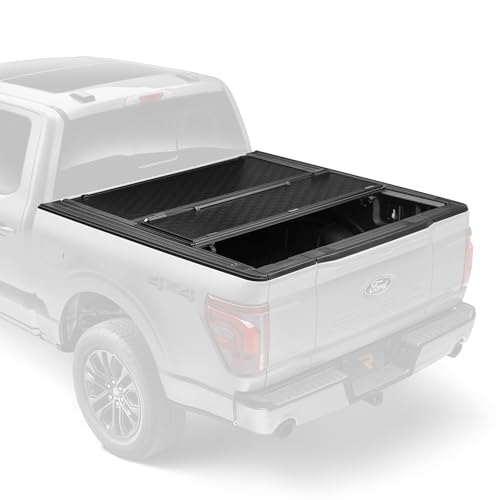

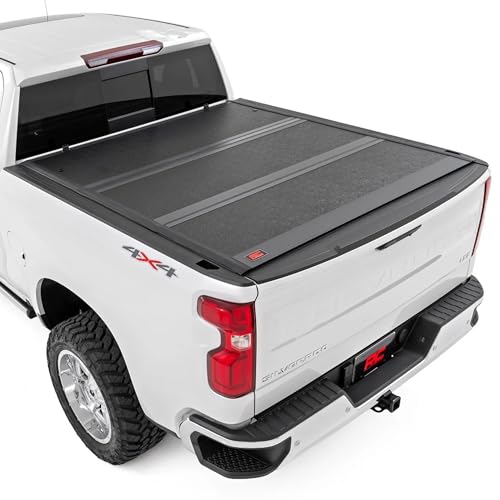
As an Amazon Associate we earn from qualifying purchases at no extra cost to you. Ratings are shown as listed on Amazon.
Best tonneau covers by situation
| Truck-owner situation | Best cover type | Typical price range | Typical installation | Main compromise |
|---|---|---|---|---|
| Lowest cost and occasional use | Soft roll-up | $180–$500 | 30–90 minutes | Fabric can be cut more easily than rigid panels |
| Balanced security, weather sealing, and flexibility | Hard folding | $700–$1,600 | 45–120 minutes | Panels occupy some space at the front when folded |
| Maximum rigid protection and a clean appearance | Hard one-piece | $900–$2,500 | 1–3 hours | Usually requires removing the entire cover for tall cargo |
| Frequent bed access and adjustable opening | Retractable | $900–$3,000 | 1–3 hours | Housing reduces usable space near the cab |
| Fast removal and full-height cargo capacity | Soft or hard roll-up | $250–$1,500 | 30–120 minutes | Roll-up designs may seal less tightly at the tailgate |
Hard folding covers: the best all-rounder
Hard folding covers use two, three, or more rigid panels made from aluminum, fiberglass-reinforced plastic, or molded composite. They are a strong fit for owners who want better security than fabric without giving up regular bed access.
A typical three-panel cover weighs about 55–90 pounds and folds toward the cab, leaving roughly two-thirds to three-quarters of the bed open. Some designs can be removed in a few minutes after installation, while others require releasing clamps and lifting the full assembly. Check whether the folded panels block the rear window or require support straps; driving with unsupported panels can damage hinges or obstruct visibility.
Fit and weather resistance
Hard folding covers generally use side rails, compression seals, and a tailgate seal. They can handle ordinary rain and road spray well when the rails are level and the seals make continuous contact. They are not automatically waterproof: water can enter around the tailgate, stake pockets, hinges, or poorly sealed bed accessories.
Choose this type if you carry groceries, tools, camping equipment, or pet supplies that need protection from weather but still need access several times a week. A cover with adjustable clamps is more forgiving when a bed has a spray-in liner or minor dimensional variation.
Soft roll-up covers: the budget and convenience pick
Soft roll-up covers use vinyl-coated fabric stretched over bows or side rails. They are usually the lightest option, commonly weighing 20–35 pounds, and many can be installed with basic hand tools in under an hour. When rolled toward the cab, they provide nearly full bed height without removing a heavy panel.
Their advantages are low cost, quick removal, and simple operation. Their limitations are security and long-term tension. Fabric may flap if the tension is incorrect, while heat, ice, ultraviolet exposure, and repeated rolling can eventually produce cracks or a loose fit. A soft cover discourages casual access but should not be treated as a secure vault for expensive equipment.
Weatherproofing details that matter
Look for a full-length side seal, a tailgate seal, adjustable tension, and hook-and-loop or locking rail attachment. A cover that only stretches across the top without sealing the front and corners will allow dust and fine rain inside. Do not roll the cover when it is frozen; thaw it first to avoid creasing or splitting the vinyl.
Hard roll-up covers: easier access with stronger protection
Hard roll-up covers use interlocking aluminum or composite slats that roll into a compact bundle near the cab. They offer better resistance to cutting and impact than soft fabric while retaining access to much of the bed. Typical systems weigh approximately 60–100 pounds, and the rolled housing may extend 8–12 inches into the cargo area.
This style suits contractors and frequent users who open the bed daily but still want a rigid surface when closed. The main fit issue is the housing: measure the distance from the front bed wall to the inside edge of the tailgate, and confirm that the cover does not interfere with a toolbox, ladder rack, or a short-bed cargo divider.
Slats, seals, and drain tubes are the parts most likely to need attention. Keep the tracks free of leaves and grit, and confirm that drain tubes remain open. A blocked drain can direct water into the bed rather than outside it.
Retractable covers: the premium access solution
Retractable covers slide into a canister behind the cab instead of folding on top of the bed. They provide adjustable openings: you can cover only the front portion, open the middle, or expose the entire bed. Aluminum slats and locking mechanisms offer good security, while sealed tracks improve protection from rain and dust.
The trade-off is cost, installation complexity, and permanent space consumption. A canister commonly uses about 8–12 inches of bed length and may be 9–14 inches tall. That lost space matters in a short 5.5-foot bed, especially if you carry tall coolers, toolboxes, or large crates. Retractable covers also need more cleaning because grit in the tracks can make operation stiff.
Hard one-piece covers: strongest weather barrier
A hard one-piece cover uses a single fiberglass, composite, or molded panel attached with hinges or lift struts. It creates a smooth, sealed-looking surface and usually offers the best resistance to rain, snow, and tampering among conventional tonneau designs.
Its weakness is cargo flexibility. Tall items cannot remain in the bed unless the cover is fully removed, and a large panel often requires two people to handle safely. Installation can also be more involved because the panel must be aligned carefully with the tailgate and cab. Pick this style when the bed usually carries low cargo and the cover stays closed for long periods.
Decision matrix: match the cover to your habits
| Your priority | Recommended choice | Why |
|---|---|---|
| Under $500 and fewer than two openings per week | Soft roll-up | Low purchase cost, light weight, and quick removal |
| Two to five openings per week | Hard folding | Good balance of access, rigidity, and weather protection |
| Daily access with no lifting away | Retractable or hard roll-up | Adjustable opening without handling a full panel |
| Short bed and maximum cargo volume | Soft roll-up | Leaves little permanent hardware inside the bed |
| Valuable equipment and low cargo | Hard one-piece or hard folding | Rigid panels provide more resistance to cutting and forced entry |
| Snow, dust, and frequent highway travel | Hard folding or retractable | More stable surfaces and better compression sealing when adjusted correctly |
Installation and fit: avoid the expensive mistakes
- Measure the bed correctly. Measure from the inside of the bulkhead to the inside of the closed tailgate, following the bed floor. Do not use the advertised nominal length alone. A “6.5-foot” bed may not measure exactly 78 inches.
- Check obstructions. Account for bed liners, rail caps, factory utility tracks, bed extenders, toolboxes, racks, and tailgate accessories. Some covers mount inside the rails; others need clearance above them.
- Dry-fit before tightening. Center the cover, close the tailgate, and inspect both side gaps. Uneven gaps usually cause leaks and wind noise.
- Level the rails. Tighten clamps gradually from front to back. Over-tightening can distort rails or compress seals unevenly.
- Test with water. Use a gentle hose spray rather than a pressure washer. Mark any leak, dry the area, and adjust the seal or rail before loading cargo.
As a practical time calculation, an owner installing a clamp-on soft cover may spend 45 minutes, while a retractable system may take 2 hours. If you open the bed five times per week, that extra installation complexity is usually paid back through easier daily access; if you remove the cover only twice per year, simplicity matters more.
Ownership costs and maintenance
Wash vinyl with mild soap and water, rinse thoroughly, and let it dry before rolling. Avoid petroleum-based cleaners, abrasive brushes, and silicone products that can make fabric slippery or attract dust. For rigid covers, clean hinges, latches, and seals several times each season. Lubricate only with the product maker’s recommended lubricant, particularly on retractable tracks.
The first parts to wear are commonly tailgate seals, hook-and-loop fasteners, tension components, clamps, and drain tubes. Snow should be brushed off rather than left to accumulate; a heavy, uneven load can bend rails or stress hinges. Never place a heavy box on a soft cover, and check the manufacturer’s load rating before using any hard cover as a temporary work surface.
Final buying recommendation
Choose a soft roll-up if price, light weight, and full-height cargo access come first. Choose a hard folding cover if you want the most balanced solution for security, weather resistance, and everyday use. Choose a hard roll-up or retractable cover for frequent, adjustable access, accepting the loss of some bed space. Choose a hard one-piece cover when maximum sealing and rigid protection matter more than carrying tall cargo.
Whichever style you select, exact vehicle fit is more important than a fashionable finish. A correctly sized cover with properly aligned rails and maintained seals will protect cargo better than a more expensive cover installed on the wrong bed configuration.



Write Your Review
No reviews yet. Be the first to share your experience!