

Key takeaways
- Rustic bread and porridge: choose a coarse or medium setting. Larger particles add texture and shorten milling time.
- Everyday yeast bread: use a fine setting, then allow the flour to cool before mixing if it feels warm.
- Cakes and tender pastry: select the finest setting available and sift if a lighter texture matters. Freshly milled whole-grain flour will not behave exactly like refined white flour.
- Rye: mill in modest batches and keep the grain dry. Rye can produce a denser, stickier dough even when the flour is finely ground.
- Oats: confirm compatibility first. Some mills handle dry oat groats, while others warn against foods that are soft, oily, or prone to clogging.
The best grain mills for most home bakers are the Mockmill 100 for compact electric milling, the KoMo Classic for quieter premium use, the NutriMill Classic Plus for large batches, and the Country Living Grain Mill for dependable manual milling when electricity is unavailable.
The right choice depends less on a single “best” machine than on four practical questions: how quickly you need flour, how fine it must be, how much noise your kitchen can tolerate, and whether you prefer wiping down an electric mill or brushing a manual one. The comparison below focuses on whole wheat, rye, spelt, oats, and other dry grains—not oily foods such as nuts or seeds unless the manufacturer specifically permits them.
Our top picks


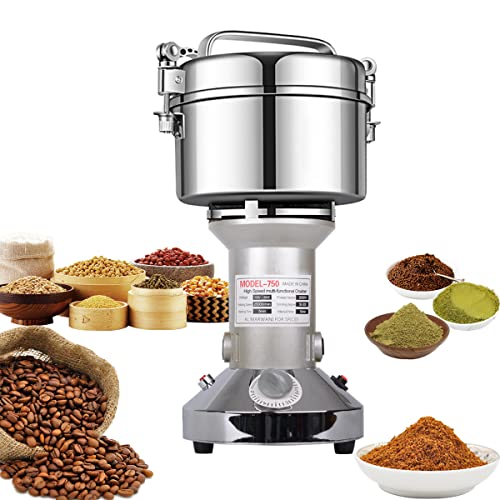
As an Amazon Associate we earn from qualifying purchases at no extra cost to you. Ratings are shown as listed on Amazon.
Best grain mills by situation
| Situation | Best fit | Why it suits the job | Main compromise |
|---|---|---|---|
| Frequent bread baking in a small kitchen | Mockmill 100 | Compact, quick, adjustable flour texture, roughly 100 g of flour per minute | Noticeable electric-motor noise |
| Quiet, attractive countertop setup | KoMo Classic | Stone burrs, wooden housing, fine adjustment, approximately 100 g per minute | Premium price and a larger footprint than compact mills |
| Large weekly batches | NutriMill Classic Plus | High-capacity hopper and fast impact milling for several pounds of grain | Typically louder and less visually compact |
| No-electricity milling or emergency preparedness | Country Living Grain Mill | Heavy-duty manual burr mill with clamp or stand options and replaceable parts | Slow and physically demanding for fine flour |
| Occasional small quantities | Compact manual burr mill | Lower purchase cost, simple storage, no motor or cord | Usually requires multiple passes for very fine flour |
Output rates vary with grain hardness, moisture, grind setting, and how steadily grain is fed. Treat the figures as useful comparisons rather than guarantees.
Head-to-head comparison: speed, fineness, noise, and cleanup
| Mill type or model | Typical output | Flour fineness | Noise expectation | Cleanup and ownership |
|---|---|---|---|---|
| Mockmill 100, electric stone mill | About 100 g/minute | Fine enough for bread and pastry; continuously adjustable | Similar to a loud vacuum cleaner during operation | Brush the chamber and stones; avoid washing the grinding mechanism |
| Mockmill 200, electric stone mill | About 200 g/minute | Comparable adjustment range to the 100 | Loud, but batch time is shorter | Same basic care, with more capacity for frequent bakers |
| KoMo Classic, electric stone mill | About 100 g/minute | Very fine settings for bread flour and lighter baking | Generally moderate for an electric impact or stone mill, though still clearly audible | Accessible grinding chamber and wipe-clean exterior; wood should stay dry |
| NutriMill Classic Plus, electric impact mill | Often around 300–400 g/minute, depending on grain and setting | Very fine flour; less suited to coarse cracked grain | Usually the loudest category in this comparison | Large hopper and filter require periodic brushing; allow the motor to cool between heavy batches |
| Country Living Grain Mill, manual steel burr mill | Roughly 50–100 g/minute by hand, depending on operator and setting | Fine flour is possible, but often takes more effort or a second pass | Quiet except for handle, bearings, and grain movement | Brush away residual flour; lubricate or replace moving parts as directed |
Electric stone mills: best texture control
Stone-burr mills such as the Mockmill 100, Mockmill 200, and KoMo Classic are strong all-rounders for wheat, rye, spelt, and other dry grains. Their stepless or fine-graduated adjustment lets you move from a coarse meal toward flour without changing a screen. That flexibility is useful when one household makes rustic loaves, pancakes, and pastry.
The trade-off is sound. Milling a cup or two is over quickly, but the motor can be intrusive in an open-plan kitchen. Stone mills also need a dry cleaning routine: empty the hopper, run a small amount of dry grain if the manual recommends it, unplug the machine, and brush loose flour from the chamber. Do not rinse electrical components or store grain inside the hopper.
Impact mills: fastest for fine flour
The NutriMill Classic Plus uses an impact-style grinding system designed to produce fine flour quickly. It is a practical choice when a household mills several pounds at a time and values throughput over a quiet countertop. Its large hopper reduces refilling, while its flour bowl and filter system help contain dust.
Impact mills are less convenient when you want a deliberately coarse texture. They can also sound harsh at full speed. Positioning the mill on a stable surface with clearance around ventilation openings helps, but no pad will make a high-speed mill silent. Let the motor rest during unusually large sessions instead of running repeated batches beyond the instructions.
Manual mills: quiet and durable, but not effortless
A manual mill such as the Country Living Grain Mill avoids electricity, motor noise, and electronic failure. Its steel burr design is appropriate for regular grain milling, and replacement components can extend its service life. It is also useful in a pantry or cabin where outlet access is limited.
Its limitation is human energy. Fine flour requires more handle turns than coarse meal, and a large bread batch can become tiring. A sturdy mounting surface matters: a flexible table wastes effort and can loosen clamps. Manual mills are best for small batches, occasional use, or people who specifically value independence from electricity—not for anyone expecting electric-mill speed.
How fine should your flour be?
- Rustic bread and porridge: choose a coarse or medium setting. Larger particles add texture and shorten milling time.
- Everyday yeast bread: use a fine setting, then allow the flour to cool before mixing if it feels warm.
- Cakes and tender pastry: select the finest setting available and sift if a lighter texture matters. Freshly milled whole-grain flour will not behave exactly like refined white flour.
- Rye: mill in modest batches and keep the grain dry. Rye can produce a denser, stickier dough even when the flour is finely ground.
- Oats: confirm compatibility first. Some mills handle dry oat groats, while others warn against foods that are soft, oily, or prone to clogging.
Never put damp grain, cooked grains, coffee, or oily ingredients through a mill unless its instructions explicitly allow them. A blockage can stress the motor, glaze burrs, and leave residue that is difficult to remove.
A simple capacity calculation before you buy
Suppose you bake two 900 g loaves each week and want all the flour freshly milled. If flour makes up about 75% of each dough’s total weight, you need approximately 1,350 g of flour per week. At 100 g per minute, an electric stone mill would need about 14 minutes of milling time, not counting weighing and cleanup. A 300 g-per-minute impact mill could complete the same amount in roughly five minutes, but the noise would be more concentrated.
For one small loaf per week, that time difference is minor. For multiple loaves, pet-safe homemade crackers, or regular bulk baking, the faster mill may justify its larger size and louder operation. The calculation also shows why hopper capacity matters less than motor output for many households: you can refill a small hopper quickly if the grinding rate is high.
Durability, wear, and maintenance realities
The parts most likely to need attention are burrs or impact components, bearings, filters, gaskets, and switches. Hard foreign objects such as stones can damage a burr, so inspect and rinse-free-clean grain before milling. Moisture is another common cause of trouble; store grain in airtight containers and mill only grain that is dry and free-flowing.
- Unplug the machine before opening or brushing the grinding chamber.
- Do not use water on electrical mills unless a removable part is specifically dishwasher-safe.
- Clean flour dust from ventilation openings so the motor can shed heat.
- Do not leave flour in the chamber for weeks; it can attract pantry pests and absorb moisture.
- Keep a small brush dedicated to the mill rather than using a damp kitchen sponge.
- For manual mills, check the clamp, handle, shaft, and bearings periodically for looseness.
Bottom line
Choose the Mockmill 100 for a compact, versatile electric mill, or the Mockmill 200 when you regularly make larger batches. Pick the KoMo Classic when quiet-ish operation, build quality, and countertop appearance matter as much as output. Choose the NutriMill Classic Plus for maximum fine-flour throughput, accepting more noise and a larger footprint. Select the Country Living Grain Mill when manual control, repairability, and operation without electricity outweigh speed.

Write Your Review
No reviews yet. Be the first to share your experience!