

Key takeaways
- Heat retention: Heavier materials store more energy and transfer it steadily to the dough, preventing temperature drop when you load cold dough.
- Seal and dome shape: A tight-fitting lid and tall dome hold steam close to the loaf without touching it, which is critical for batards and high-hydration boules.
- Thermal conductivity: How quickly the material reheats affects preheat time and how evenly the base browns the bottom crust.
The best bread cloches for bakery-style crusty loaves are cast iron for maximum heat retention and oven spring, ceramic for even browning and attractive serving, and steel for lighter weight and fast preheating, with the right choice depending on your loaf size, oven strength, and how often you bake.
Our top picks


As an Amazon Associate we earn from qualifying purchases at no extra cost to you. Ratings are shown as listed on Amazon.
How a Bread Cloche Creates a Bakery Crust
A cloche traps steam released by the dough itself, mimicking a professional deck oven. That enclosed steam keeps the crust soft for the first 15-20 minutes of baking, which allows for greater oven spring and a thinner, crackling crust once the lid is removed. Without a cover, home ovens vent steam too quickly, resulting in a thicker, duller crust and less volume.
Three factors determine performance:
- Heat retention: Heavier materials store more energy and transfer it steadily to the dough, preventing temperature drop when you load cold dough.
- Seal and dome shape: A tight-fitting lid and tall dome hold steam close to the loaf without touching it, which is critical for batards and high-hydration boules.
- Thermal conductivity: How quickly the material reheats affects preheat time and how evenly the base browns the bottom crust.
Cast Iron vs. Ceramic vs. Steel: Head-to-Head Comparison
These three materials dominate the best bread cloches category, but they behave very differently in a home oven.
Cast Iron Cloches
Represented by products like the Challenger Bread Pan and Lodge Cast Iron Bread Oven, cast iron is the best for heat retention and steam. It holds temperature remarkably well, produces the deepest crust color, and is virtually indestructible. The trade-off is weight and maintenance. Most cast iron cloches require seasoning to prevent rust and weigh 15 to 22 pounds, which makes handling with oven mitts more demanding.
Best for: bakers who want maximum oven spring, bake 1-2 times per week, and have a sturdy oven rack and good heat tolerance.
Ceramic Cloches
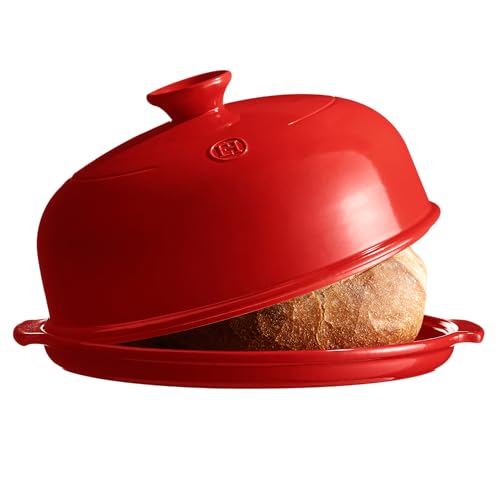
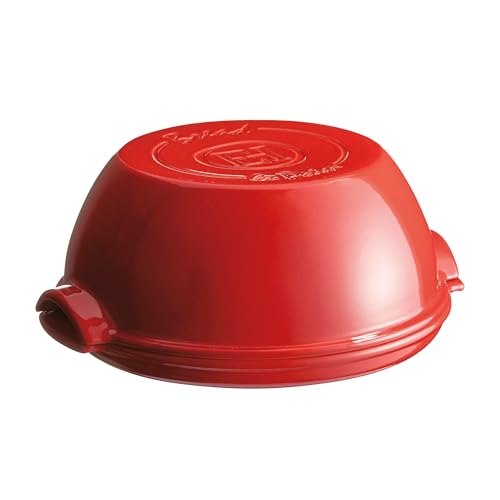
The Emile Henry Bread Cloche is the most established example. Made from high-fired Burgundy clay with a glazed interior and unglazed interior lid, ceramic heats more gently than cast iron. It browns more evenly and is less likely to scorch the bottom crust, especially in ovens that run hot on the bottom. Ceramic is lighter than cast iron, does not require seasoning, and can go directly from oven to table. It is, however, vulnerable to thermal shock and chipping if dropped or plunged from a hot oven into cold water.
Best for: bakers who prioritize ease of use, even baking, and presentation, and who bake round boules up to 1kg.
Steel Cloches and Pans
This category includes spun carbon steel cloches and purpose-built steel bakers like the Fourneau Grande. Steel is significantly lighter and preheats 30-40% faster than cast iron. It does not retain heat as long, but its high conductivity gives excellent bottom heat and a crisp base. Bare carbon steel needs seasoning like cast iron, while enameled steel is easier to clean but may discolor over time.
Best for: bakers with smaller ovens, limited lifting strength, or who want a quick preheat and easy storage.
Spec and Performance Comparison Table
| Type / Example Model | Material & Construction | Internal Capacity | Weight (Lid + Base) | Preheat Time to 475°F / 245°C | Max Temperature Rating |
|---|---|---|---|---|---|
| Cast Iron Pan – Challenger Bread Pan | Pre-seasoned cast iron, 2-piece reversible pan/lid | Approx. 6.5 quarts, fits boules up to 1.5 kg and 12-inch batards | 22 lbs / 10 kg | 45-60 minutes | 600°F / 315°C |
| Cast Iron Oven – Lodge Double Dutch Oven (3.2 qt model used as cloche) | Pre-seasoned cast iron, Dutch oven with skillet lid | 3.2 quarts, fits boules up to 900g | 12.5 lbs / 5.7 kg | 40-50 minutes | 600°F / 315°C |
| Ceramic Cloche – Emile Henry Bread Cloche (Charcoal) | High-fired Burgundy clay, glazed base and exterior | 4.2 quarts, fits boules up to 1 kg (9.5-inch diameter base) | 9.8 lbs / 4.4 kg | 25-35 minutes (requires gradual preheat, avoid empty preheat above 500°F) | 520°F / 270°C |
| Carbon Steel Cloche – Spun Steel Cloche with Flat Steel Base | 1.5mm spun carbon steel lid + 4mm baking steel base | Variable dome, fits boules up to 1.2 kg | 8.2 lbs / 3.7 kg | 25-30 minutes | 600°F / 315°C |
| Enameled Steel – Enameled Steel Bread Dome (generic) | Enameled carbon steel dome + enameled tray | 3.8 quarts, fits boules up to 1 kg | 6.5 lbs / 2.9 kg | 20-25 minutes | 500°F / 260°C |
The table shows why bakers feel a difference: cast iron is 2 to 3 times heavier than steel and needs nearly double the preheat. That weight translates directly into stored heat. For a typical 900g loaf, a cast iron base will drop only 15-25°F when loaded, while a thin enameled steel base may drop 40-55°F before recovering.
Decision Matrix: Which Cloche Should You Choose?
Use your baking habits and kitchen constraints to match to a material, not just a brand name.
| Your Situation | Best Choice | Why |
|---|---|---|
| You bake weekly, want the best crust and maximum rise, and have a strong oven and good oven mitts | Cast Iron Pan (Challenger-style) | Unmatched heat retention and steam seal; low, wide shape makes scoring and loading easy |
| You bake occasionally, want easy cleanup and an attractive baker to serve in | Ceramic Cloche (Emile Henry-style) | Non-stick glazed base, no seasoning, gentle even heat that prevents burnt bottoms |
| You have a compact oven, limited storage, or difficulty lifting heavy cookware | Lightweight Steel Cloche | 6-8 lb total weight, fast preheat, stores vertically; good performance for most white and whole wheat boules |
| You bake oblong batards and ciabatta, not just round boules | Cast Iron or Oval Ceramic Cloche | Round Dutch ovens constrain shape; oval or rectangular pans accommodate 11-14 inch loaves |
| Your oven runs hot on the bottom or you consistently get dark bottoms | Ceramic or Enameled Steel | Lower conductivity than bare cast iron/steel reduces scorching; add parchment for extra insulation |
| Budget is the primary constraint (general market ranges) | Enameled Steel or Lodge-style Cast Iron Dutch Oven | Typically $60-$130 vs. $120-$200 for ceramic and $250-$350 for specialty cast iron bread pans |
Ownership Realities: Durability, Cleaning, and Mistakes to Avoid
A cloche lasts for years, but each material wears differently. Knowing this before you buy prevents disappointment.
Cast Iron
Durability is excellent if seasoned. The first thing to wear is the seasoning itself, not the iron. Acidic doughs, cooking spray buildup, or washing with harsh detergent strips it and causes sticking and rust spots on the rim. Clean while warm with hot water and a brush, dry immediately on a warm burner, and apply a thin coat of neutral oil. Never plunge a screaming-hot pan into cold water; thermal shock can warp the lid and break the steam seal over time. The main downside is weight-related wear on oven racks and handles loosening with heavy use.
Ceramic
Durability is good but not abuse-proof. The most common failure is thermal shock cracking. Never preheat ceramic empty at maximum oven temperature, and never add cold water to a hot cloche. Emile Henry and similar makers recommend placing the cloche in a cold oven and allowing it to heat with the oven, or preheating no higher than 500°F for a shorter time. Crazing (fine glaze cracks) is cosmetic and does not affect baking. Avoid metal utensils that chip the glaze and never use it on a stovetop burner.
Steel
Carbon steel can rust within hours if left damp. Like cast iron, it needs seasoning and complete drying. Enameled steel avoids rust but the enamel can stain dark brown from high-heat baking and may chip if banged against an oven rack. Steel lids can also discolor and warp slightly above 550°F, so keep within the manufacturer’s rating. The advantage is that neither type will crack from thermal shock.
Common Mistakes With All Cloches
- Using no parchment: Dough sticks to hot ceramic and steel. Use a parchment round or light semolina dusting.
- Removing the lid too early: Keep the lid on for 20 minutes at 450-475°F, then remove for 15-20 minutes to brown. Removing it at 10 minutes releases steam before the crust has set.
- Under-preheating: A cloche that is not fully preheated steams poorly and produces a pale, thick crust. If your loaf is pale after lid removal, extend preheat by 15 minutes next time.
How to Use a Bread Cloche for Best Results
For a standard 800g to 1kg lean dough (70-78% hydration):
- Place the base and lid in the oven on the middle rack. Preheat to 475°F / 245°C for the time listed in the table for your material.
- Transfer proofed dough on parchment to the hot base. Score quickly with a lame, 1/2-inch deep.
- Cover with the hot lid. Bake covered for 20 minutes. Do not open the oven.
- Remove the lid carefully, venting steam away from you. Reduce to 450°F / 230°C if the crust is coloring fast.
- Bake uncovered 15-22 minutes more until the internal temperature reaches 205-210°F / 96-99°C and the crust is deep mahogany.
- Cool on a wire rack for at least 60 minutes before slicing; the crust crisps as moisture equalizes.
If you bake back-to-back loaves, allow the cloche to reheat covered for 12-15 minutes between bakes. Cast iron recovers slower than steel but holds heat longer, so a second loaf in cast iron often needs no extra time.
Final Picks by Baking Style
For most bakers seeking true bakery-style crust in a home oven, a heavy cast iron bread pan remains the performance standard for the best bread cloches due to steam retention and bottom heat. If lifting 20 pounds is a concern or you want a more forgiving, beautiful baker that is easier to live with day to day, a ceramic cloche like the Emile Henry delivers excellent crust with less risk of burning. For small kitchens and quick bakes, a spun steel cloche with a baking steel base gives 85% of the performance at half the weight and the fastest turnaround.
Match capacity to the bread you actually bake: for frequent 1kg+ boules or long batards, choose a long cast iron pan; for occasional 750-900g rounds, a ceramic or enameled steel cloche is more practical and easier to store.

Write Your Review
No reviews yet. Be the first to share your experience!