

Key takeaways
- You should fit one finger under the cuff but no more.
- Walk the dog on a hallway for 5 minutes. High-stepping is normal at first.
- Check for twisting, sliding or red marks on the skin.
- Check the dewclaw area if the boot is tall.
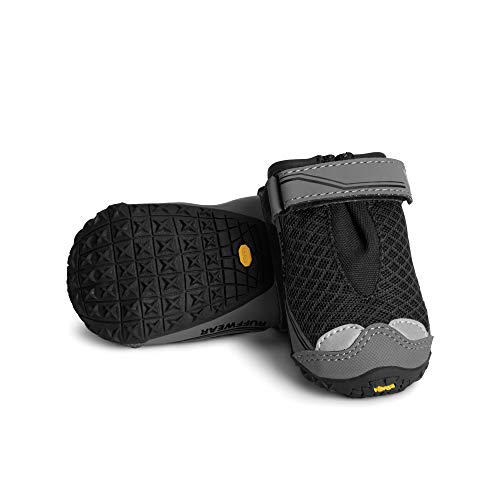
For most dogs, the Ruffwear Grip Trex is the best non-slip dog boot thanks to its Vibram outsole and secure closure. Muttluks boots balance rubber traction with a comfortable fit, Pawz disposable boots work for short, temporary protection, and the Non-stop Dogwear Protector Bootie is a strong option for active trail dogs. Fit matters more than brand: a boot that is too loose twists, and one that is too tight rubs. Below are the picks, a measuring method and the mistakes that cause most boot returns.
Our top picks

As an Amazon Associate we earn from qualifying purchases at no extra cost to you.
Quick Comparison of the Picks
| Boot | Best for | Key specs | Price range |
|---|---|---|---|
| Ruffwear Grip Trex | Hiking, rough pavement, rocky trails | Vibram outsole, breathable mesh upper, hook-and-loop closure; not waterproof | Upper-mid |
| Muttluks All Weather / Mutt Trackers | Year-round wear, wet and mixed terrain | Rubber sole, mushing-style fit | Mid |
| Muttluks Fleece-Lined Winter | Snow and cold | Fleece lining, rubberized sole | Mid |
| Non-stop Dogwear Protector Bootie | Active dogs, trail running | Protective bootie design | Upper-mid |
| Pawz Rubber Dog Boots | Hot pavement, indoor recovery, short use | Natural rubber, pull-on, sold in packs of 12 | Budget |
Details are drawn from manufacturer descriptions and 2026 roundup coverage; check the current spec sheet and sizing chart before ordering.
What “Non-Slip” Really Means
Grip comes from the sole material and the tread pattern. Hard plastic soles slip on wet tile. Soft rubber compounds grip ice, wet leaves and polished floors better. A Vibram outsole, found on the Grip Trex, is a well-known hiking-shoe rubber designed to bite on rock and mud. For true ice, a rubber sole helps but is not a guarantee; take smaller steps and keep walks short in extreme conditions.
Best Overall: Ruffwear Grip Trex
The Grip Trex pairs a Vibram outsole with a breathable mesh upper and a closure that combines hook-and-loop with hardware. Roundups describe it as the go-to hiking boot and praise its durability. Reviewers note two drawbacks: it is not waterproof, and the sizing can feel off for dogs with oval feet, so measure carefully.
Who it suits: hiking dogs and city dogs that walk on rough or hot surfaces. Main trade-off: price per set, and the fiddly fit if your dog has unusual paws.
Best for All Seasons: Muttluks
Muttluks make several styles. The All Weather and Mutt Trackers boots use a rubber sole with a mushing-boot fit, the Fleece-Lined Winter style is built for snow. They offer a balance of traction and comfort. Because they stay on better than many pull-on boots, they suit dogs that walk daily in mixed conditions.
Main trade-off: they take a little time to put on, and the closures need to be adjusted carefully so they do not slide down.
Best for Active Trail Dogs: Non-stop Dogwear Protector Bootie
This bootie from a performance dog-gear brand is a favorite of reviewers who run or hike with their dogs. It is built to protect the paw pad and stay on during fast movement. As with any performance boot, you need the right size, so use the maker’s chart rather than guessing.
Best Disposable: Pawz
Pawz are thin, pull-on boots made of natural, biodegradable rubber and sold in packs. They help on hot pavement, in light rain or while a paw heals. They are not built for rough terrain; nails can puncture them, and the tight ankle opening can annoy some dogs. Think of them as a short-term fix.
How to Measure Your Dog’s Paw
- Place your dog’s front paw on a sheet of paper with weight on it.
- Mark the widest points on the left and right sides, then measure the distance in millimeters or inches.
- Match that width to the maker’s sizing chart. Do not use the dog’s weight or breed as a guide.
- Measure both front and rear paws; they can differ.
- If your dog falls between sizes, choose based on the widest paw and use the closure to tighten.
Worked example: if the widest point reads 3.0 inches and a brand’s chart lists size M as 2.75 to 3.0 inches and size L as 3.0 to 3.25 inches, check the chart notes. Many brands advise sizing up at the boundary, but follow the chart instructions for that specific boot.
Fit Check After Putting Boots On
- You should fit one finger under the cuff but no more.
- Walk the dog on a hallway for 5 minutes. High-stepping is normal at first.
- Check for twisting, sliding or red marks on the skin.
- Check the dewclaw area if the boot is tall.
Training Your Dog to Wear Boots
Start indoors for a few minutes at a time with treats. Put on one boot, then two, then all four. Keep first outdoor walks short. Many dogs adapt in a few days, but some never accept boots; if your dog is truly distressed, consult a trainer, or try paw wax and paw wipes instead.
Care and Durability
- Rinse off salt and dirt after every walk.
- Air dry fully before storing, to prevent smell and mold.
- Replace worn soles; a smooth sole is no longer non-slip.
- Check the closure strap for fraying.
Decision Guide by Surface
| Surface or weather | Choose | Why |
|---|---|---|
| Rocky trail or rough pavement | Ruffwear Grip Trex | Vibram outsole built for abrasion and grip |
| Wet leaves, mud and mixed terrain | Muttluks Mutt Trackers | Rubber sole with a snug mushing-style fit |
| Snow and cold | Muttluks Fleece-Lined Winter | Lining adds warmth |
| Running or fast hiking | Non-stop Dogwear Protector Bootie | Designed to stay put in motion |
| Hot sidewalks, short trips | Pawz | Thin, cheap and disposable |
Common Mistakes
- Guessing the size from the dog’s weight instead of measuring paw width.
- Putting boots on for the first time right before a long hike.
- Skipping a post-walk paw check for cuts, redness or rubbing between toes.
- Leaving damp boots in a bag, which breeds odor and can irritate skin.
- Using boots for a limp. If your dog limps, the cause needs a vet, not a boot.
Cost Per Walk
A sturdy set that lasts 150 walks costs far less per walk than disposable boots used once or twice. If a set of Pawz is used for about 3 walks and a durable set for 150, the durable set wins for daily use. For a one-off event such as hot pavement during a trip, disposable boots are enough.
Frequently Asked Questions
Do dog boots really prevent slipping?
They can improve traction on wet floors, ice and rocky surfaces if the sole is a good rubber and the fit is correct. They are not magic on sheer ice, so be careful.
How long can a dog wear boots?
Most dogs can wear them for a walk of an hour or two. Remove them for breaks and check the paws, since sweat can cause irritation.
Why does my dog walk funny in boots?
The high-stepping gait is common and usually disappears in a few days. If it continues or the dog limps, the fit may be wrong.
Can dogs wear boots indoors on slippery floors?
Some owners use them for senior dogs on hardwood. Nail trimming, paw pad trimming and rugs may also help. Speak to your vet if your dog slips often, since it may be a mobility issue.
Are Pawz boots reusable?
They can be reused a few times, but they are designed to be disposable. Rough surfaces wear them quickly.

Write Your Review
No reviews yet. Be the first to share your experience!