

Key takeaways
- Wash sheets in a full load only when they can move freely; overcrowding increases abrasion and leaves detergent residue.
- Use cool or warm water according to the care label, especially for cotton that may shrink.
- Avoid chlorine bleach unless the label specifically permits it; it can weaken fibers and elastic.
- Dry on low or medium heat and remove the sheets while slightly damp if wrinkles are a concern.
- Do not wash flannel with zippers, hook-and-loop fasteners, or abrasive towels.
- Keep a second fitted-sheet set available so one set is not washed and dried under time pressure every week.
Best Split King Sheets for a Secure Fit
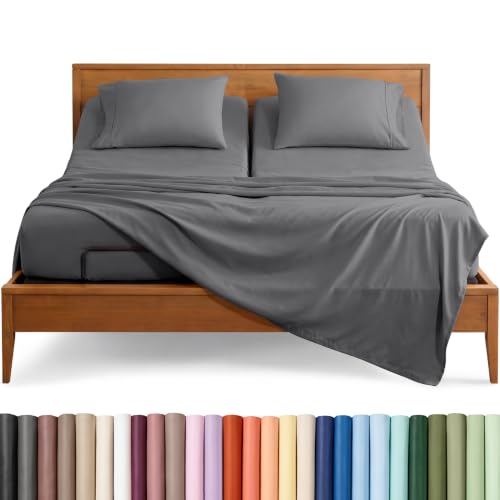
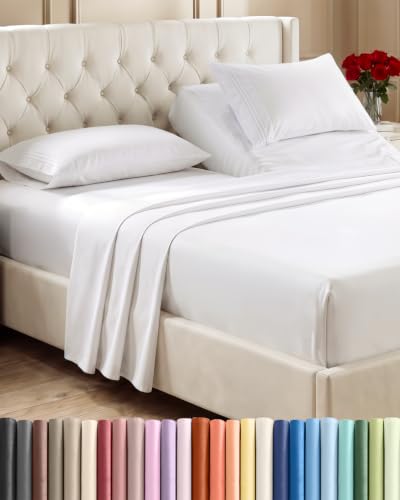
The best split king sheets for a secure fit are a deep-pocket, fully elasticized set made from durable cotton or cotton-blend fabric, with two fitted sheets sized for Twin XL mattresses measuring 38 by 80 inches each.
A split king bed uses two Twin XL mattresses side by side, creating a 76-by-80-inch sleeping surface. That arrangement improves independent adjustment, but it also creates the main sheet problem: each mattress can move separately, causing loose corners, exposed mattress sides, or a gap between the two fitted sheets. The right choice depends less on thread count than on pocket depth, elastic construction, fabric weight, and how often the bed is adjusted.
Our top picks


As an Amazon Associate we earn from qualifying purchases at no extra cost to you. Ratings are shown as listed on Amazon.
Quick Comparison: Which Split King Sheet Type Fits Your Needs?
| Sheet type | Typical fabric weight | Common pocket depth | Corner retention | Cooling performance | Best for |
|---|---|---|---|---|---|
| Lightweight cotton percale | 100–130 GSM | 15–18 inches | Good with strong elastic | Excellent | Hot sleepers and warm rooms |
| Midweight cotton sateen | 130–170 GSM | 16–18 inches | Good to very good | Moderate | Softness and everyday use |
| Cotton-polyester blend | 110–160 GSM | 16–21 inches | Very good when elastic is wide | Moderate to good | Frequent washing and lower budgets |
| Bamboo-derived rayon | 120–180 GSM | 16–18 inches | Good, but fabric may stretch | Very good initially | Soft hand feel and moisture management |
| Heavy flannel | 170–250 GSM | 16–21 inches | Very good if sized correctly | Poor in warm conditions | Cold bedrooms and winter use |
Fabric weight is listed in GSM, or grams per square meter. It does not predict quality by itself. A tightly woven 120-GSM percale can outlast a loosely woven, heavier fabric. It does, however, help predict warmth, drying time, and how bulky the fitted sheet will be in the laundry.
Best Choices by Sleeping Situation
Best for adjustable beds: two fitted sheets with full elastic
Choose a split king set containing two separate Twin XL fitted sheets rather than one oversized king fitted sheet. Separate sheets allow each mattress to raise or lower without dragging the opposite side out of position. Look for elastic that runs around the entire perimeter, not just across the four corners. Corner-only elastic is more likely to loosen when the head or foot of an adjustable mattress moves.
For mattresses with a topper, mattress pad, or protective cover, select pockets at least 2 inches deeper than the measured stack. For example, a 13-inch mattress plus a 2-inch topper and a 1-inch protector creates a 16-inch stack. A 16-inch pocket may fit, but an 18-inch pocket gives the elastic more room to grip beneath the mattress.
Best for hot sleepers: lightweight cotton percale
Lightweight cotton percale, generally around 100 to 130 GSM, has a crisp weave and tends to release heat more readily than heavier sateen or flannel. It is a strong choice when the bed is used every night in a warm room. The trade-off is a slightly less silky feel and a greater chance of wrinkling.
For cooling, prioritize breathable construction over very high thread-count claims. A dense, heavy sheet can feel warmer even when it is marketed as premium. A cotton or cotton-lyocell blend can also provide a smooth feel without the heat retention of heavy microfiber.
Best for frequent washing: cotton-polyester blend
A cotton-polyester blend is often the practical choice for guest rooms, children’s rooms, or any bed washed weekly. Polyester fibers reduce shrinkage and usually help the fitted sheet retain its shape after repeated laundering. Wide elastic and reinforced corner stitching matter more than a small difference in fiber percentage.
The compromise is airflow. Some blends feel warmer than percale, particularly when the polyester percentage is high. If cooling is important, look for a lighter fabric in the 110–150 GSM range and avoid brushed finishes intended to mimic flannel.
Best for cold rooms: midweight sateen or flannel
Midweight cotton sateen provides a smoother, warmer surface without the full bulk of flannel. Flannel is better for genuinely cold bedrooms, but its napped surface can pill if washed with rough items, over-dried, or exposed to excessive heat. A 170–200 GSM flannel is usually easier to manage than an especially heavy winter sheet.
How to Prevent Split King Sheets from Popping Off
- Measure the mattress stack. Measure from the top sleeping surface down to the underside, including every topper, pad, and protector. Add about 2 inches for a secure tuck.
- Confirm the actual mattress size. Each fitted sheet should be labeled Twin XL, approximately 38 by 80 inches. A standard Twin is usually 38 by 75 inches and will not provide reliable coverage.
- Identify the head and foot of the sheet. Put the deeper or marked corners at the correct ends if the manufacturer provides directional labels.
- Install the two bottom corners first. Pull the sheet evenly over the mattress instead of stretching one corner as far as possible. Excessive corner tension encourages the opposite corner to release.
- Check the underside after adjustment. Raise and lower the head and foot sections through their normal range. If a corner slips, the pocket may be too shallow or the elastic may not be strong enough.
- Use sheet straps only as a correction. Under-mattress straps can help with a slightly loose sheet, but they should not compensate for a fitted sheet that is substantially undersized.
Corner retention is affected by mattress height, movement, and the smoothness of the mattress cover. A thick, slippery protector can make even a correctly sized sheet migrate. In that situation, a fitted sheet with wider elastic and elastic sewn into the corners is usually more reliable than a tighter but lightly constructed sheet.
Flat Sheet and Set Configuration: What You Actually Need
Many split king sets include two Twin XL fitted sheets, one large king flat sheet, and two king-size pillowcases. That configuration works well when both sleepers share one top sheet. If each person prefers separate blankets, a set with two Twin XL flat sheets may be more useful, even though it is less common.
A single king flat sheet is approximately 102 by 108 inches, but dimensions vary. Check the listed measurements rather than assuming every “king” flat sheet has enough side drop. If the mattresses sit on a tall foundation, a short flat sheet can become untucked during movement.
Some sets include a center connector panel or a single split-head design. A split-head king has two separate fitted sections only at the head and a connected section toward the foot; it is not the same as a true split king. Buy according to the mattress configuration, not simply the bed’s overall width.
Wash Durability and Ownership Costs
The fitted corners and elastic are usually the first components to wear. Repeated stretching, high dryer heat, and washing with towels can weaken the elastic before the fabric itself shows damage. Pilling is more common with brushed polyester, low-quality flannel, and loose blends than with tightly woven percale.
- Wash sheets in a full load only when they can move freely; overcrowding increases abrasion and leaves detergent residue.
- Use cool or warm water according to the care label, especially for cotton that may shrink.
- Avoid chlorine bleach unless the label specifically permits it; it can weaken fibers and elastic.
- Dry on low or medium heat and remove the sheets while slightly damp if wrinkles are a concern.
- Do not wash flannel with zippers, hook-and-loop fasteners, or abrasive towels.
- Keep a second fitted-sheet set available so one set is not washed and dried under time pressure every week.
For a simple ownership comparison, suppose a $60 set lasts 18 months with weekly washing. That is about 78 uses, or roughly $0.77 per wash. A $100 set lasting three years provides about 156 uses, or about $0.64 per wash. The lower cost per use assumes the more expensive sheet actually has stronger elastic, stable sizing, and better wash care; a high price alone does not guarantee those features.
What to Look for Before Buying
- Correct configuration: two Twin XL fitted sheets for a true split king.
- Measured pocket depth: at least 2 inches deeper than the full mattress-and-bedding stack.
- Full-perimeter elastic: preferably at least 1 inch wide, with reinforced corners.
- Suitable fabric weight: approximately 100–130 GSM for cooling, 130–170 GSM for general use, and 170 GSM or more for cold-weather warmth.
- Stable sizing: prewashed or shrink-resistant construction is valuable for cotton sheets.
- Care requirements: avoid a fabric that needs delicate handling if the bed is washed frequently.
For most households, the best split king sheets are a midweight cotton percale or cotton blend with 16- to 18-inch pockets, full-perimeter elastic, and reinforced corners. Choose lightweight percale for cooling, a stable cotton-polyester blend for frequent washing, and heavier sateen or flannel when warmth matters more than airflow. The secure fit comes from matching the pocket to the complete mattress stack—not from pulling an undersized sheet tighter.

Write Your Review
No reviews yet. Be the first to share your experience!