

Key takeaways
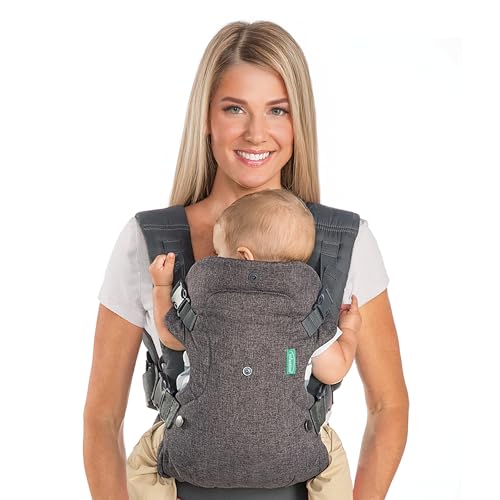
- Want quick, repeatable setup: Start with a soft-structured carrier (SSC) with buckles and adjustable straps. It suits regular errands and caregivers who share a carrier.
- Want a small, close-fitting carrier: A stretchy wrap is easy to pack and can feel comfortable for newborn carrying, but usually needs retying as your baby grows. A woven wrap offers more carrying options but takes practice.
- Need a fast one-shoulder carry: A ring sling is compact and quick to adjust, particularly for short carries. Weight rests asymmetrically, so it may not be the most comfortable choice for long walks.
- Planning hikes with a baby who can sit independently: Consider a framed carrier with a supportive seat, hip belt, and adjustable torso. It is bulky and generally intended for babies who meet the manufacturer’s developmental and weight requirements.
For most families, the best baby carriers are adjustable soft-structured carriers for everyday use, a woven wrap or ring sling for a lighter, compact option, and a framed carrier for longer outdoor trips with an older baby. The right choice depends less on a “best” label than on your baby’s size, the positions you need, how much fitting you’re willing to do, and the weather.
Our top picks


As an Amazon Associate we earn from qualifying purchases at no extra cost to you. Ratings are shown as listed on Amazon.
Choose by situation
- Want quick, repeatable setup: Start with a soft-structured carrier (SSC) with buckles and adjustable straps. It suits regular errands and caregivers who share a carrier.
- Want a small, close-fitting carrier: A stretchy wrap is easy to pack and can feel comfortable for newborn carrying, but usually needs retying as your baby grows. A woven wrap offers more carrying options but takes practice.
- Need a fast one-shoulder carry: A ring sling is compact and quick to adjust, particularly for short carries. Weight rests asymmetrically, so it may not be the most comfortable choice for long walks.
- Planning hikes with a baby who can sit independently: Consider a framed carrier with a supportive seat, hip belt, and adjustable torso. It is bulky and generally intended for babies who meet the manufacturer’s developmental and weight requirements.
Always use the specific carrier’s manual for its minimum and maximum weight, approved positions, and fit instructions. The ranges below are common examples, not universal limits or a substitute for the label.
Carrier types compared
| Type | Typical usable range* | Common positions | Adjustability and ventilation | Best suited to |
|---|---|---|---|---|
| Stretchy wrap | About 3.5–15 kg (8–33 lb), depending on model | Usually inward-facing front carry | One-size length fits many caregivers, but tying takes practice. Soft fabric can feel warm; layering adds heat. | Newborn closeness and compact storage |
| Woven wrap | From newborn sizes to toddler weights; follow the wrap and carry instructions | Front, hip, and back carries, depending on skill and wrap | Highly adjustable through wrapping; fabric thickness and weave affect warmth and support. | Caregivers who want multiple carries and are willing to learn |
| Ring sling | Often about 3.6–15.9 kg (8–35 lb), model-dependent | Inward-facing front and hip carries; some manuals allow other positions | Shoulder fabric and rings adjust the fit; a single shoulder bears the load. Usually little padding, but fabric can still be warm. | Quick short carries and easy packing |
| Soft-structured carrier | Often about 3.2–20.4 kg (7–45 lb), with infant inserts or adjustments varying by model | Front inward-facing; some models allow outward-facing, hip, or back carries | Buckles make repeated fitting easier. Padded panels are supportive; mesh options can improve airflow. | Everyday use and sharing between caregivers |
| Framed carrier | Commonly starts around 7–9 kg (16–20 lb); maximums may be around 18–27 kg (40–60 lb), model-dependent | Back carry; some models offer a supported stand for loading | Torso, harness, and hip belt adjust to the wearer. Open frames and mesh panels can aid airflow, but the carrier adds bulk. | Longer hikes with a baby who meets the model’s sitting and fit requirements |
*Approximate examples only. A carrier’s stated limits, developmental requirements, and approved positions vary by model. Never exceed its instructions.
What matters most when comparing carriers
Fit across your baby’s growth
Check that the carrier adjusts to support your baby without forcing them into an uncomfortable position. For an inward-facing carry, the seat should support the thighs, and the fabric should suit the baby’s height. Some carriers adjust with snaps, sliders, or a changing panel width; others need an infant insert or are unsuitable until the baby reaches a stated size. Avoid relying on age alone when the manufacturer specifies weight or developmental milestones.
For the wearer, look for adjustable shoulder straps and a waist belt that can be positioned comfortably. If two adults will share it, test how easily each can re-fit the carrier. An SSC with clearly marked adjustment points may be less frustrating than repeatedly retieing a wrap.
Position options without assuming every carry is suitable
Front inward-facing is the most broadly offered position. Hip and back carries can be useful as babies grow, but the minimum size, age, and required wearer skill differ. Outward-facing carries are not available on every model and may have specific duration or fit guidance. Treat the manual as the authority, and use only positions listed for that exact carrier.
Heat and fabric
Mesh panels can help air circulate, but they do not make a carrier heat-proof. A thick wrap, padded panel, baby’s clothing, and the wearer’s clothing all contribute to warmth. In hot conditions, choose lighter layers, check the baby often, and avoid covering the face or blocking airflow. Breathable fabric is useful, but fit and safe positioning come first.
Use frequency and learning curve: a decision matrix
| Your situation | Good starting point | Trade-off to consider |
|---|---|---|
| First carrier; frequent daily use | Adjustable SSC with buckles and a clear fit guide | Bulkier to store than a sling or wrap |
| Small budget; short carries | Ring sling or a basic wrap with appropriate sizing | One-shoulder loading or tying takes practice |
| Enjoy learning techniques; want several positions | Woven wrap | Different carries require practice and careful tensioning |
| Regular hikes; baby meets frame requirements | Framed carrier with a well-fitting hip belt | Higher cost, storage space, and more weight to carry when not in use |
| Multiple caregivers with different builds | SSC with broad strap and belt adjustments, or an easily re-tied wrap | Confirm each person can achieve a secure fit; a shared carrier may need frequent readjustment |
Ownership costs and care
As a broad 2026 market guide, simple wraps and ring slings often fall around $30–$100, everyday SSCs around $80–$250, and framed hiking carriers around $150–$400 or more. Materials, features, and region change prices; these ranges are not quotes. A less expensive carrier is not automatically a poor choice, but check the fit range, instructions, fabric condition, and availability of replacement parts before buying.
With use, inspect seams, stitching, buckles, adjustment webbing, rings, and frame joints. These are more consequential wear points than minor fading. Stop using a carrier with damaged load-bearing fabric or hardware. Follow the care label: frequent hot washing, harsh detergents, or tumble-drying where prohibited can shorten the life of fabric and elastic. For a used carrier, verify its model and manual, check for recalls through the manufacturer or relevant safety authority, and do not use one with unknown damage.
A common mistake is choosing by the maximum weight alone. A baby may be within the weight limit but not yet meet the model’s minimum height, sitting, or developmental requirements for a particular position. Another is buying a framed carrier for occasional short errands: its structure is helpful on longer trails but can make everyday storage and transport less convenient.
Before the first carry
- Read the model’s instructions and confirm the baby meets the requirements for the chosen position.
- Practice tightening and releasing the carrier over a bed or with another adult nearby; follow any manufacturer-recommended fit checks.
- Keep the baby’s face visible, nose and mouth unobstructed, and chin from resting against the chest. Recheck positioning as the baby settles.
- For hiking carriers, check the frame, buckles, and loading setup on level ground before taking it on a trail.
If you are unsure whether a carrier or position is appropriate for your baby, ask the manufacturer for model-specific guidance or consult a qualified child-passenger-safety or babywearing professional. For concerns about your baby’s breathing, posture, or development, speak with a pediatric health professional.

Write Your Review
No reviews yet. Be the first to share your experience!