

Key takeaways
- Activated carbon: Usually improves chlorine taste and odor and may reduce selected organic chemicals. Performance varies substantially by cartridge and contact time.
- Ion exchange: Some cartridges reduce lead or certain dissolved ions. The exact contaminant list and capacity matter more than the phrase “advanced filtration.”
- Reverse osmosis: Uses a membrane to reduce many dissolved substances, including salts and some metals. It normally produces filtered water more slowly and sends some water to a drain.
- Ultrafiltration: Uses a fine membrane while generally preserving more minerals than RO. It does not automatically remove dissolved salts.
- UV treatment: Can help control microorganisms in suitable systems, but it does not remove sediment, metals, or chemicals and requires electricity and clear water.
The best water filtration system depends on what you need removed, how much water your household and pets use, and whether you can alter plumbing: choose a countertop reverse-osmosis unit for broad contaminant reduction without installation, an under-sink carbon system for everyday drinking water, a whole-house system for water-quality problems at every tap, or a pitcher for the lowest upfront cost.
Our top picks


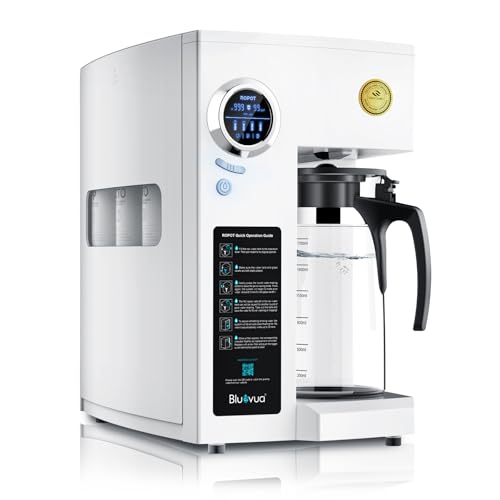

As an Amazon Associate we earn from qualifying purchases at no extra cost to you. Ratings are shown as listed on Amazon.
Quick picks by situation
| Situation | Best-fit system | Why it fits | Main compromise |
|---|---|---|---|
| Renter, limited space, one or two people | Certified pitcher | No plumbing; roughly 6–12 cups per refill | Slow filling and limited contaminant coverage |
| Apartment or home with counter space | Countertop reverse osmosis | Broad reduction of dissolved solids and many contaminants | Uses a tank, electricity, and replacement filters |
| Family, frequent cooking, pets, and a clear sink cabinet | Under-sink carbon or reverse osmosis | More capacity and convenience than a pitcher | Requires installation and cabinet access |
| Sediment, chlorine, or odor throughout the property | Whole-house filter | Treats shower, laundry, and pet-bowl water at the entry point | Higher installation cost and filter expense |
| Very hard or mineral-heavy water | Reverse osmosis for drinking water, often paired with a softener | Targets dissolved minerals where they matter most | RO is not a substitute for whole-house scale control |
What should a water filter remove?
Start with a water-quality report or an accredited laboratory test rather than choosing by taste alone. Municipal water may contain disinfectant taste, sediment, lead from household plumbing, nitrate, or other regulated substances. Private well owners should test periodically for bacteria, nitrate, arsenic, and minerals according to local guidance.
- Activated carbon: Usually improves chlorine taste and odor and may reduce selected organic chemicals. Performance varies substantially by cartridge and contact time.
- Ion exchange: Some cartridges reduce lead or certain dissolved ions. The exact contaminant list and capacity matter more than the phrase “advanced filtration.”
- Reverse osmosis: Uses a membrane to reduce many dissolved substances, including salts and some metals. It normally produces filtered water more slowly and sends some water to a drain.
- Ultrafiltration: Uses a fine membrane while generally preserving more minerals than RO. It does not automatically remove dissolved salts.
- UV treatment: Can help control microorganisms in suitable systems, but it does not remove sediment, metals, or chemicals and requires electricity and clear water.
Look for certification to a relevant NSF or ANSI standard, then check the performance data sheet for the specific contaminant. A system certified for chlorine reduction is not automatically certified for lead, nitrate, PFAS, or bacteria. For pets, filtered water can improve palatability, but it should not be used to treat a pet illness; ask a veterinarian if your animal has urinary, kidney, or other health concerns.
Head-to-head comparison of the main system types
| System type | Typical output or capacity | Typical replacement interval | Typical market cost | Installation |
|---|---|---|---|---|
| Pitcher | 6–12 cup reservoir; about 0.1–0.5 gallons per hour depending on cartridge and water | About 1–6 months or 20–150 gallons | $20–$60 initially; $5–$20 per cartridge | None |
| Countertop RO | 0.3–1.0 gallon storage; roughly 10–50 gallons per day of membrane capacity | Pre-filters 6–12 months; membrane about 1–3 years | $150–$500 initially; $40–$150 per year in filters | Set beside a faucet; drain or waste-water arrangement may be required |
| Under-sink carbon | 0.5–2.0 gallons per minute; commonly 300–1,000 gallons per cartridge | About 6–12 months, depending on use and capacity | $100–$300 initially; $30–$150 per year | Connects to cold-water tubing; may need a dedicated faucet |
| Under-sink RO | About 25–100 gallons per day membrane rating; usually a 2–4 gallon storage tank | Pre-filters 6–12 months; membrane about 1–3 years | $200–$600 initially; $60–$180 per year | Plumbing and drain connection normally required |
| Whole-house carbon | About 5–20 gallons per minute, depending on model and pressure | Media commonly 6–12 months for cartridges, or several years for large tanks | $300–$1,500 initially, excluding complex installation | Installed on the main water line |
These are planning ranges, not guarantees. Flow falls as cartridges load, and manufacturer capacity depends on water pressure, temperature, sediment, and the contaminants being reduced.
Best choices within each category
Pitchers: Brita Elite, PUR PLUS, or ZeroWater
Brita Elite is a practical choice when you want a familiar pitcher format and a longer-life replacement cartridge than basic carbon filters. PUR PLUS is another widely available pitcher option with models designed around contaminant-specific certifications. ZeroWater uses a five-stage ion-exchange and filtration design that can reduce total dissolved solids much more aggressively than ordinary carbon pitchers, but its cartridges may be consumed quickly in hard or mineral-rich water.
Choose a pitcher only if its capacity matches your routine. A household using two gallons daily may empty a 10-cup pitcher nearly five times per day. That is inconvenient for people and pets, and frequent refilling can cause the filter to be replaced sooner than the calendar estimate.
Countertop RO: broad treatment without permanent plumbing
A countertop reverse-osmosis unit such as the APEC RO-CTOP is suited to renters or households that want RO treatment without installing a tank under the sink. Many countertop RO units include a clean-water reservoir, display, and automatic fill features, but designs differ: some need a drain connection while others collect reject water in a separate container.
RO is usually the strongest choice when testing identifies several dissolved contaminants. It is less attractive when your only complaint is chlorine taste, because carbon filtration uses less water, makes less noise, and is cheaper to maintain.
Under-sink systems: the everyday convenience winner
Aquasana Claryum under-sink systems are carbon-based options intended for treated tap water and are often selected for chlorine, odor, and specified contaminant reduction. For broader dissolved-contaminant reduction, an under-sink RO system from established manufacturers such as APEC or iSpring may be more appropriate.
Measure the cabinet before buying. Allow space for the cartridge housing, tubing bends, shutoff valve, and—on RO models—the storage tank. Do not place a filter where a leaking connection could damage an electrical outlet or stored pet food.
Whole-house systems: useful only when the problem is property-wide
Aquasana Rhino and SpringWell whole-house systems are examples of larger systems designed for point-of-entry treatment. They can make sense when chlorine odor, sediment, or a documented contaminant affects multiple bathrooms, appliances, and outdoor-use points. They are usually excessive if only the kitchen drinking tap needs treatment.
Whole-house carbon does not soften water merely because it is a large filter. If scale is the problem, compare a properly sized water softener or other treatment method. If well water is involved, obtain a professional assessment before selecting equipment; iron, sulfur, bacteria, and sediment can overwhelm an underspecified system.
A simple ownership-cost calculation
Suppose a pitcher cartridge costs $12 and is rated for 120 gallons. Its filter cost is $0.10 per gallon. If your household and pets consume or use 1.5 gallons of filtered water per day, annual filtered volume is about 548 gallons, requiring five cartridges: approximately $60 per year before the pitcher cost.
An under-sink cartridge costing $60 and rated for 600 gallons has the same nominal $0.10-per-gallon filter cost, but it avoids repeated refilling and normally provides faster access. An RO system may cost more per gallon because of multiple cartridges, membrane replacement, and reject water. Compare systems using your actual tested water and consumption, not the lowest advertised cartridge price.
Installation and maintenance that prevent problems
- Flush the new cartridge. Carbon dust and preservative solution can discolor the first water. Follow the specified flush volume before filling a bowl or pet fountain.
- Mark the replacement date. Capacity ratings are usually maximums. Replace sooner if flow slows, taste changes, or the source water is unusually dirty.
- Sanitize reservoirs and pitchers. Wash removable parts regularly with mild dish soap, rinse thoroughly, and let them dry. Avoid harsh cleaners unless the manufacturer permits them.
- Inspect connections after installation. Check the shutoff valve, faucet stem, drain saddle, and tubing for drips over the next day. A slow leak can cause more damage than the filter is worth.
- Protect unused filtered water. Keep stored water covered and clean pet bowls daily. Filtration does not make a dirty container sanitary.
Bottom line
Buy a pitcher for low-cost, occasional use; a countertop RO unit for broad treatment without permanent plumbing; an under-sink system for the best daily balance of convenience and capacity; and a whole-house system only when testing shows that treatment is needed throughout the property. Match the certified contaminant claims, flow rate, replacement cost, and installation space to your water report and routine before comparing brand names.

Write Your Review
No reviews yet. Be the first to share your experience!