
Key takeaways
- This keyword mixes two products; this guide covers lickable cat treats with salmon oil. Compare Catit Creamy and PETPHABET tubes by ingredients.
This keyword bundles two different products together, cat grass treats and salmon oil treats, so this guide makes one coherent choice: it covers lickable cat treats whose ingredient lists include salmon oil or fish oil, the squeezable tube treats cats lick straight from the pouch. The “pet shop” part of the phrase is just framing and is ignored. Both picks below are salmon recipes in single-serve tubes, and both listings name the oil in their ingredients rather than merely printing a fish on the box, which is the standard this guide holds every product to.
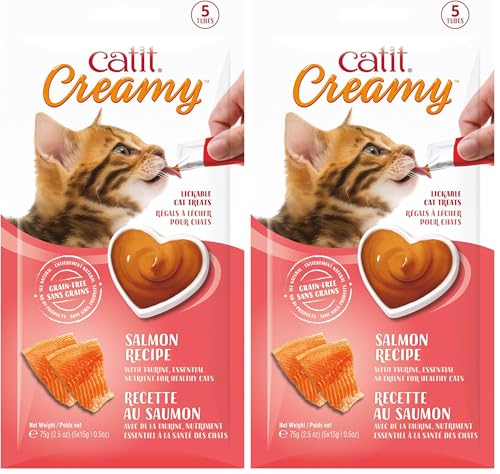

Lickable tubes earn their place in a few specific jobs: coaxing a picky eater, hand-feeding for bonding or training, tempting a cat that needs to eat after a stressful day, and delivering a small daily extra of fish oil. They are treats, not food, and both listings give feeding guidance that treats them that way. The sections below cover what to check in the ingredient list, how the two picks differ, and how much a tube a day really means for your cat’s diet.
One more framing note, because the keyword invites the confusion: cat grass is a separate thing entirely, usually oat or wheat grass grown in a tray or sold as grass-flavored chews, aimed at digestion and the urge to chew plants. It contains no fish oil and does none of the jobs listed above. If your cat actually needs grass, buy grass; this guide is for the owner whose real target is the salmon oil treat, and who wants the label checked properly.
Quick Picks
As an Amazon Associate we earn from qualifying purchases.
| Product | Best for | Key spec from title |
|---|---|---|
| Catit Creamy Lickable Cat Treat, Salmon, 10-Pack | A first trial | Salmon recipe with salmon oil, 10 tubes |
| PETPHABET Lickable Cat Treats, Salmon Recipe | A stocked treat drawer | 20 tubes, fish oil 0.5% on the label |
How to Choose
Verify the oil is actually in the ingredients
“Salmon flavor” and “contains salmon oil” are different claims, and only the ingredient list settles it. The Catit Creamy salmon recipe lists salmon oil among its ingredients, alongside taurine, while the PETPHABET recipe lists fish oil at 0.5 percent and inulin at 0.35 percent, with salmon as the first ingredient. Read the panel, not the front of the box: a treat that names its oil and, better, its percentage gives you something real to compare, while a fish picture gives you nothing.
Decide what the treat is for
A lickable treat is a tool with a few honest jobs. Hand-fed from the tube, it is a bonding and training reward that even shy cats accept. Squeezed over kibble, it is an appetite nudge for a cat that is off its food. Carried in a pocket, it is a high-value bribe for carrier training or a vet visit. Neither pick here is a meal, and both listings frame feeding in tubes per day, so choose pack size by how often you will actually use that tool rather than by the biggest number on the shelf.
Check the calorie and feeding guidance
Tube treats are small but not free. The Catit listing states 4.6 kilocalories per tube and maker guidance of up to three tubes a day, which lets you account for them precisely inside a daily calorie budget. The PETPHABET listing directs you to its feeding guidelines and sizes tubes at 0.5 ounces each, the same single-serve format. Whatever you buy, count tubes as part of the day’s food and reduce the bowl slightly on heavy treat days, especially for indoor cats whose weight creeps up quietly.
Look at what is left out
For cats with sensitive stomachs, the exclusions can matter as much as the inclusions. The Catit salmon recipe is listed as containing no corn, grain, wheat or soy. The PETPHABET recipe is grain free and listed as free from artificial preservatives, flavors and colors. If your cat reacts to a specific ingredient, the full panel on each listing is the document to check, and a short ingredient list built around salmon and water is easier to audit than a long one.
The 2 Best Options
1. Catit Creamy Lickable Cat Treat, Salmon, 10-Pack
Catit’s Creamy line is the established name in tube treats, and the salmon recipe earns its place here on the ingredient panel: salmon oil is a named ingredient, with taurine added, in a recipe the listing describes as free of corn, grain, wheat and soy. Each 0.5 ounce tube carries 4.6 kilocalories and a minimum crude protein of 5.0 percent, and the maker’s guidance runs up to three tubes a day. The ten-pack is the right size for a first trial: enough tubes to learn whether your cat prefers the texture hand-fed or squeezed over food, without a drawer full of commitment.
Specs
- Recipe: salmon, with salmon oil and taurine in the ingredients
- Tube size: 0.5 oz, 10 tubes
- Crude protein: 5.0% minimum
- Calories: 4.6 kcal per tube
- Feeding guidance: up to 3 tubes per day
- Free of: corn, grain, wheat, soy (per listing)
Best for: A first trial of lickable treats, or a cat on a counted calorie budget.
Watch out for: Ten tubes go quickly in a multi-cat home, and this is a treat, not a meal replacement.
ASIN: B0D871RGCQ
2. PETPHABET Lickable Cat Treats, Salmon Recipe, 20 Tubes
PETPHABET’s salmon recipe leads its ingredient list with salmon itself, then declares fish oil at 0.5 percent and inulin, a prebiotic, at 0.35 percent, which is a more transparent label than most tube treats offer. The recipe is grain free, sized at 0.5 ounces per tube across twenty tubes, and listed for all life stages from kittens to seniors. The texture is a smooth squeezable puree that works hand-fed, in a bowl or as a topper. For a household that already knows its cat loves the format, the twenty-tube box is the stocked-drawer option.
Specs
- First ingredient: salmon
- Fish oil: 0.5% (per ingredient list)
- Inulin: 0.35%
- Tube size: 0.5 oz, 20 tubes
- Grain free; no artificial preservatives, flavors or colors (per listing)
- Age range: all life stages
Best for: Households that already use tube treats daily and want a declared fish oil percentage.
Watch out for: The indexed listing data for this ASIN is older than the Catit’s, so confirm the live listing and its current feeding guidance before ordering.
ASIN: B0D7Z6TQTG
Which One Fits Your Situation
Your cat has never had a tube treat
Start with the Catit Creamy ten-pack. It is the smaller commitment, the per-tube calorie count is stated plainly, and the brand’s texture is the reference point for the category. If your cat walks away from it, you have learned the format is not for them at the cost of one small box rather than a stocked drawer.
You use treats for daily training or bonding
Choose the PETPHABET twenty-tube box. Daily hand-feeding burns through tubes, the salmon-first ingredient list is a step up in transparency, and the declared fish oil percentage means you know what each tube actually delivers. All-life-stages listing also helps in a home with both a kitten and an adult cat sharing the routine.
Your cat is picky or off its food
Either tube works as an appetite nudge squeezed over a normal meal, and the Catit’s stated calorie count makes it easier to keep the day’s total honest. A treat that gets a reluctant cat eating its real food is doing its best work. If the appetite loss lasts more than a day or two, that is a vet conversation, not a treat problem.
Your cat has a sensitive stomach
Read both panels and pick the shorter path: the Catit recipe lists its exclusions plainly, no corn, grain, wheat or soy, while the PETPHABET recipe is grain free with inulin, which some cats tolerate well and others do not. Introduce any new treat at half a tube and watch the litter box for a day before making it a daily habit.
Common Mistakes
- Buying a “salmon” treat whose ingredient list contains no salmon oil or fish oil at all.
- Feeding tubes as a meal; both listings frame them as treats with daily limits.
- Ignoring the calories, then wondering why an indoor cat is gaining weight.
- Switching the whole routine to a new treat in one day instead of introducing it gradually.
- Assuming cat grass treats and salmon oil treats are interchangeable; they are different products with different purposes.
Frequently Asked Questions
Why does this guide cover salmon oil treats and not cat grass treats?
The keyword combined two separate products, so the guide chose the more coherent single category: lickable cat treats whose listings include salmon oil or fish oil as an ingredient. Cat grass treats are a different product, usually grown grass or grass-flavored chews for digestion and hairball habits. Splitting the two keeps every pick here comparable on ingredients, calories and feeding guidance.
How much fish oil does a tube actually give my cat?
It depends on the recipe, which is why the label matters. The PETPHABET listing declares fish oil at 0.5 percent of the recipe, while the Catit listing names salmon oil as an ingredient without a percentage. Treats deliver treat-sized amounts, not supplement doses; if your vet has recommended a specific omega-3 amount, ask them whether a treat format can meet it.
Can I feed lickable treats every day?
Yes, within the maker’s guidance. The Catit listing allows up to three tubes a day and states 4.6 kilocalories per tube, so the daily total is easy to count. Build the tubes into the day’s calorie budget rather than adding them on top of full meals, and rotate flavors if your cat bores easily, since both brands sell variety packs alongside the salmon recipe.
Are tube treats suitable for kittens?
The PETPHABET recipe is listed for all life stages, which includes kittens, while guidance varies by brand, so check the specific listing before offering one. Kittens need their calories from complete kitten food first; a tube is a bonding and training extra, given in small amounts. When in doubt, half a tube shared as a hand-fed reward is the cautious start.
Hand-feeding is also where tube treats quietly outperform bowl treats for young kittens: the kitten comes to your hand for the food, which builds the association that people mean good things. That early handling habit pays off later at nail trims and vet visits, long after the specific flavor in the tube stops mattering.
More from Amazon
Programs that pair well with the guide above. Offers and eligibility are set by Amazon and may change.
Set up recurring deliveries of everyday items on eligible products. Terms and savings are set by Amazon.
Explore Subscribe & SaveFree shipping on eligible items, Prime Video and more. Eligible new members can start with a free trial.
Start a Prime free trialAudiobooks and podcasts to listen to on the go. Eligible new members can start with a free trial.
Try Audible freeRead from a large library of eBooks and audiobooks on any device. Check Amazon for current plans.
Explore Kindle UnlimitedAs an Amazon Associate we earn from qualifying purchases.



Write Your Review
No reviews yet. Be the first to share your experience!