

Key takeaways
- UV-stabilized plastic: Light, rust-free, and easy to wash. Low-cost plastic can become brittle, fade, or crack after years of direct sun, especially around the lid hinge.
- Galvanized steel: Resistant to sun damage and often more stable in wind. Scratches, cut edges, and standing water can eventually lead to corrosion.
- Stainless steel: Attractive and corrosion-resistant, but usually more expensive and prone to visible dents.
- Resin wicker or decorative composite: Better suited to sheltered patios and dry waste. Open weave, drainage holes, and decorative lids may provide weak odor and animal protection.
The best outdoor trash cans for clean patios are lidded, weighted or lockable cans made from UV-resistant plastic or galvanized steel, with enough capacity for your collection schedule but not so much that a full load becomes difficult to move.
Our top picks
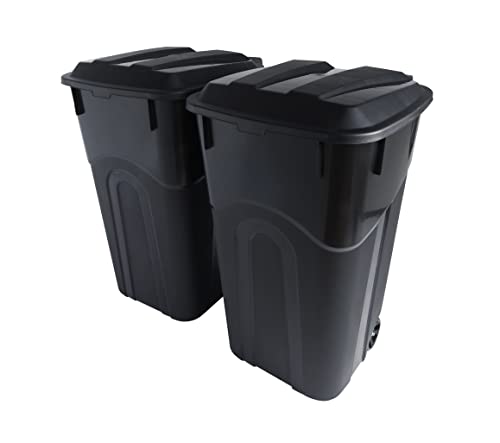
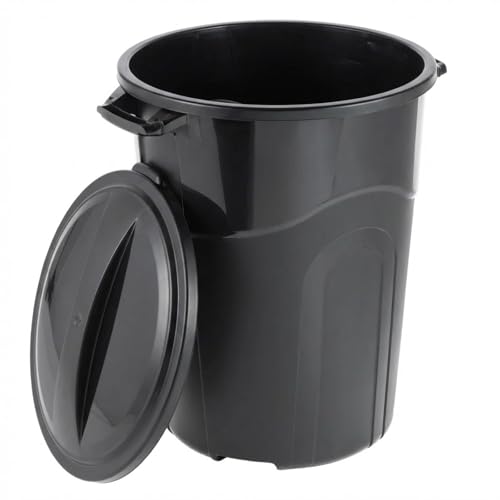


As an Amazon Associate we earn from qualifying purchases at no extra cost to you. Ratings are shown as listed on Amazon.
Quick picks by patio situation
| Patio situation | Best can style | Useful capacity | Why it fits |
|---|---|---|---|
| Small balcony or apartment patio | Hard-sided step can with tight lid | 10–13 gallons | Compact footprint, easy indoor removal, better odor control than an open bin |
| Typical family patio | Weighted outdoor plastic can | 32–44 gallons | Enough room for several days of waste without becoming excessively heavy |
| Windy, exposed yard | Locking or animal-resistant wheeled cart | 64–96 gallons | Large footprint, stable wheels, and a secured lid resist tipping and scavenging |
| Grilling and entertaining area | Metal can with fitted lid or pedal-operated can | 20–32 gallons | Accessible during use while limiting food odors between pickups |
| Low-waste household | Narrow slim can | 13–21 gallons | Uses less space and avoids storing a large amount of waste outdoors |
What matters most when comparing outdoor trash cans
Capacity without an unmanageable full load
A larger can is not automatically better. A 96-gallon cart can hold roughly three times as much as a 32-gallon can, but a full load of wet food waste may weigh more than one person can safely maneuver. For most patios, 32 to 44 gallons is the practical middle ground. Choose 10 to 21 gallons for light daily waste, 32 to 44 gallons for a household using the patio regularly, and 64 to 96 gallons only when municipal collection or a large property justifies the size.
Allow some empty space at the top. Overfilling prevents the lid from sealing, makes liner removal difficult, and encourages animals to pull loose material from the rim. If your household produces one 13-gallon bag every two days, a 32-gallon can gives useful reserve capacity without requiring a very heavy weekly lift.
Odor control depends on the lid and the waste
The most effective odor control is a lid that overlaps the rim and stays closed. A pedal lid is convenient near a grill, but its hinges and seals can collect grease and food residue. A manual locking lid usually offers better outdoor security because it has fewer moving parts and can be clamped or latched more firmly.
For food-heavy waste, look for a smooth interior, a removable inner bucket, and a lid that does not leave a large ventilation gap. Activated-carbon filters can reduce some odors, but they are consumables rather than a substitute for bagging wet scraps. Replace a filter according to its instructions, commonly every three to six months, and do not put loose pet waste or liquids directly into the can.
Animal-resistant lids are more important than decorative features
Raccoons, dogs, and other animals can defeat a lid that merely rests on top. Better designs use a twist lock, two-point latch, clip, or lid that engages with the can body when closed. A locking mechanism is especially valuable if the can will hold meat scraps, cat litter, or pet waste overnight.
Wheeled carts with a hinged, locking lid are generally more animal-resistant than lightweight open-top cans. If you use a standard can, place a separately purchased strap or bungee system around the lid only if the manufacturer allows it; straps can become trip hazards and may interfere with collection equipment. Never use a locking method that prevents sanitation workers from emptying the container.
Weatherproof materials have different trade-offs
- UV-stabilized plastic: Light, rust-free, and easy to wash. Low-cost plastic can become brittle, fade, or crack after years of direct sun, especially around the lid hinge.
- Galvanized steel: Resistant to sun damage and often more stable in wind. Scratches, cut edges, and standing water can eventually lead to corrosion.
- Stainless steel: Attractive and corrosion-resistant, but usually more expensive and prone to visible dents.
- Resin wicker or decorative composite: Better suited to sheltered patios and dry waste. Open weave, drainage holes, and decorative lids may provide weak odor and animal protection.
Brands such as Rubbermaid, Toter, Suncast, and Behrens offer established outdoor waste-container lines, but the exact lid, capacity, wheels, and warranty vary by model. Compare the individual specification rather than assuming every container from a brand has the same weather or animal resistance.
Head-to-head: the main outdoor trash-can designs
| Design | Typical capacity | Typical empty weight | Wind stability | Best liner size | Main weakness |
|---|---|---|---|---|---|
| Compact pedal can | 10–21 gal | 8–18 lb | Fair to good | 13–30 gal | Pedal and hinge need cleaning; limited reserve space |
| Round galvanized can | 20–31 gal | 7–14 lb | Fair | 30–33 gal | Loose lids may be lifted by animals or strong wind |
| Heavy-duty rectangular plastic can | 32–44 gal | 12–25 lb | Good | 40–55 gal | Plastic hinges and wheels are wear points |
| Wheeled locking cart | 64–96 gal | 25–40 lb | Very good when positioned correctly | 64–96 gal cart liner | Full loads are heavy and take substantial patio space |
| Decorative open-top receptacle | 10–32 gal | 5–20 lb | Poor to fair | 13–33 gal | Weak odor control and little protection from animals |
These are typical ranges, not specifications for every model. Check the manufacturer’s dimensions before buying, particularly if the can must fit beneath a counter or inside a screened enclosure.
Best choices by priority
Best for most patios: a 32- to 44-gallon lidded plastic can
This format balances capacity, portability, and stability. Choose a rectangular body with a broad base, a lid that overlaps the rim, and handles that let two people move it when full. A textured exterior can hide scuffs, while a smooth interior makes bag changes easier. This is the most sensible option for households that empty outdoor waste once or twice per week.
Best for strong wind: a locking wheeled cart
Choose a 64- or 96-gallon cart when the patio is exposed or the collection schedule is infrequent. The large wheelbase lowers the chance of tipping, and a locking lid helps prevent animals from opening it. Keep the cart with its wheels facing away from prevailing wind and against a wall or designated enclosure, while leaving enough clearance for the lid to open fully.
Best for rust concerns: UV-resistant resin or plastic
Plastic is the safer choice near sprinklers, salt air, and wet ground. Look for UV protection, thick hinge mounts, and a warranty that covers cracking rather than only manufacturing defects. Raise the container slightly or place it on a slatted surface so rainwater cannot remain underneath.
Best for a sheltered, traditional setup: galvanized steel
A galvanized can works well under a covered patio when you prefer a simple, durable container. It needs a genuinely fitted lid and a level surface. Inspect the rim and bottom annually for sharp corrosion, especially if trash bags leak. A steel can without a secured lid is a poor choice where raccoons are common.
Liner sizing: a simple calculation
Do not select a liner using the can’s gallon rating alone. Measure the can’s circumference near the rim and its height. A liner must cover the inside walls and leave enough material to fold over the rim.
For example, a 32-gallon rectangular can may need a 40- to 45-gallon bag because the bag’s width must span the container’s broadest side and its length must reach the bottom plus the rim overlap. If the bag is 36 inches long and you need 6 inches to fold over the rim, the usable depth is about 30 inches. A can deeper than that will cause the bag to pull loose when filled. Test one small box of liners before buying a bulk case.
For wet or sharp waste, use thicker commercial liners rather than simply using a larger bag. Oversized bags can bunch at the bottom, waste material, and make the full load harder to lift.
How to keep the can stable and sanitary
- Choose a level base. Set the can on pavers, concrete, or a firm deck section rather than loose mulch. A tilted can places extra stress on the hinge and makes lids less likely to seal.
- Keep it out of direct runoff. Rain entering through the lid or pooling beneath the can accelerates odors and corrosion.
- Secure the lid without blocking collection. Use the built-in latch first. For a light can in windy conditions, position it beside a wall or enclosure rather than relying on a heavy object placed on top.
- Clean before residue hardens. Empty the can, rinse it with a hose, use mild dish detergent, and scrub the lid underside and rim. Let every surface dry before installing a new liner.
- Inspect the wear points. Check wheels, axle caps, hinges, pedal linkages, latches, and the bottom seam. Replace a cracked lid or leaking body before animals discover the opening.
Common buying mistakes
- Buying a lightweight decorative bin for food waste because it looks attractive.
- Choosing a 96-gallon cart when the household cannot safely move it when full.
- Assuming “outdoor” means the lid is animal-resistant.
- Ignoring the lid’s open height beneath a counter, roof, or storage shelf.
- Using indoor liners that split when exposed to sharp packaging or wet waste.
- Leaving liquid at the bottom, where it creates odor and attracts insects.
Bottom line
For the widest range of patios, buy a 32- to 44-gallon UV-resistant plastic can with a broad base, fitted lid, washable interior, and a reliable latch. Move up to a locking wheeled cart for frequent food waste, animal activity, or exposed windy locations. Choose galvanized steel when you want a simple, weather-tolerant container for a covered area, but do not sacrifice lid security. The right outdoor trash can is the one that matches your waste volume, liner size, collection routine, and ability to move it safely when full.

Write Your Review
No reviews yet. Be the first to share your experience!