

Key takeaways
- Single-zone control: suitable for occasional cooking and simple menus.
- Two-zone control: lets you cook on one side and hold finished hot dogs on the other.
- Adjustable thermostat: preferable to a basic low/high switch because it reduces scorching and drying.
- Independent motor switch: allows the rollers to keep turning while heat is reduced or switched off.
The best hot dog roller machines for most home buyers are compact 5-roller units with separate heat and motor controls, while larger 7–11-roller machines make more sense for frequent parties and small concessions.
The right choice depends less on maximum capacity than on how many hot dogs you cook at once, how much counter space you have, and whether you need gentle warming or fast cooking. A roller with independently controlled heat zones is particularly useful: you can cook fresh sausages on a hotter setting, then keep finished food warm on a lower setting without overcooking it.
Our top picks


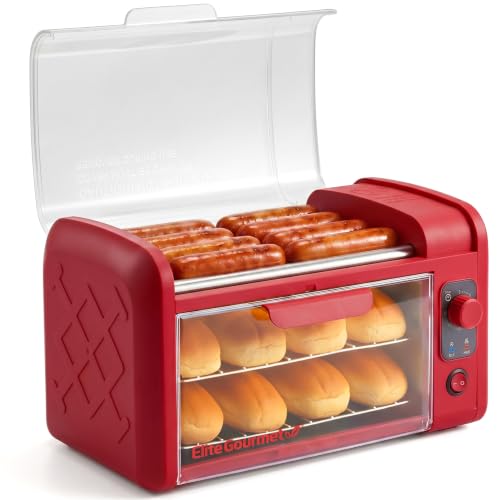

As an Amazon Associate we earn from qualifying purchases at no extra cost to you. Ratings are shown as listed on Amazon.
Best hot dog roller machines by situation
| Best for | Recommended roller type | Typical capacity | Typical footprint | Expected market range |
|---|---|---|---|---|
| Small household | Compact countertop roller with lid | 5 rollers; 8–10 hot dogs | 16–18 in. wide | $40–$90 |
| Family parties | Medium roller with two heat zones | 7 rollers; 12–16 hot dogs | 18–22 in. wide | $80–$180 |
| Frequent entertaining | Heavy-duty stainless-steel roller | 9 rollers; 18–24 hot dogs | 22–26 in. wide | $180–$400 |
| Small concession or fundraiser | Commercial roller with guard and independent controls | 11 rollers; 24–30 hot dogs | 26–30 in. wide | $350–$900 or more |
Capacity estimates assume standard hot dogs about 5–6 inches long, with a little room between items. Extra-long sausages, bratwurst, and jumbo hot dogs reduce the practical capacity.
What to compare before buying
Roller count and usable capacity
Roller count is only a starting point. The gap between rollers, roller length, and the machine’s side clearance determine how much food actually fits. A compact five-roller machine may hold eight standard hot dogs, but only six or seven thick sausages without crowding.
For a family of four, five rollers are usually adequate. Seven rollers are a better fit for birthday parties, game days, or gatherings of 8–12 people. An 11-roller commercial unit is rarely worthwhile for occasional home use unless you regularly cook for a crowd or need food ready in batches.
Heating zones and temperature controls
Basic rollers often use one control for both the rotating rollers and the heating element. These are simple and inexpensive, but they offer less control when food is ready at different times. More useful machines separate the motor, front heating zone, and rear heating zone.
- Single-zone control: suitable for occasional cooking and simple menus.
- Two-zone control: lets you cook on one side and hold finished hot dogs on the other.
- Adjustable thermostat: preferable to a basic low/high switch because it reduces scorching and drying.
- Independent motor switch: allows the rollers to keep turning while heat is reduced or switched off.
Look for a stated temperature range rather than a vague “high heat” setting. Typical countertop units operate from roughly 180°F to 450°F, although the actual surface temperature varies by design and load. A built-in thermometer is helpful, but it should not replace checking the food with a suitable food thermometer when safe serving temperature matters.
Construction and roller materials
Stainless-steel rollers and a stainless-steel body generally tolerate frequent cleaning better than painted metal. Chrome-plated rollers can work well for home use, but damaged plating is a reason to stop using the machine, since flaking surfaces are difficult to clean reliably.
Common wear points include the roller bushings, drive gears, power switch, thermostat, and drip tray coating. A unit with removable rollers or accessible end caps is easier to maintain than one sealed behind a decorative panel. For frequent commercial use, confirm that replacement parts are available before buying.
Cleanup and grease management
Cleanup can matter more than an extra row of rollers. A removable drip tray catches grease and crumbs, while a removable roller assembly makes it easier to wipe the areas where food residue collects. Avoid assuming that any component is dishwasher-safe unless the manufacturer specifically says so.
For routine cleaning, unplug the machine and allow it to cool. Remove the drip tray, wipe away grease with paper towels, then wash removable parts with warm water and mild detergent. Wipe the rollers with a damp cloth rather than immersing the motorized body. Dry every part completely before reassembly.
Do not spray water directly into the control panel, motor housing, or roller ends. Abrasive pads can scratch stainless steel and chrome, creating places where grease accumulates. If grease hardens, a short period with a warm, damp cloth usually works better than aggressive scraping.
Head-to-head: compact home roller versus commercial roller
| Feature | Compact home model | Commercial-style model |
|---|---|---|
| Roller count | 5–7 | 9–11 or more |
| Typical electrical load | 500–800 watts | 800–1,500 watts |
| Heating control | Single thermostat or low/high switch | Two zones and separate motor control |
| Construction | Mixed stainless steel, coated steel, and plastic | Mostly stainless steel with heavier components |
| Approximate weight | 10–18 lb. | 25–55 lb. |
| Warm-up time | 8–15 minutes | 10–20 minutes |
| Best use | Occasional home meals and small gatherings | Frequent events, fundraisers, and concession service |
A commercial roller offers more even throughput and usually better access for cleaning, but it consumes more counter space, weighs much more, and may be excessive for a household that uses the machine a few times each year. A compact unit is easier to store and costs less, but its smaller heating system may recover more slowly after a full load.
Decision matrix for choosing the right size
| Your situation | Choose | Why |
|---|---|---|
| Limited counter space and fewer than 10 hot dogs per meal | 5-roller compact unit | Small footprint and enough capacity for ordinary family use |
| Monthly parties for 10–15 guests | 7-roller, two-zone unit | More capacity without the weight and cost of a full commercial machine |
| Weekly use or large game-day gatherings | 9-roller stainless-steel unit | Better durability, faster recovery, and less crowding |
| Fundraisers or service lasting several hours | 11-roller commercial unit with guard | Designed for continuous batches and easier operator control |
| Low budget and occasional use | Single-zone roller with removable drip tray | Prioritizes useful basics over controls you may rarely use |
How much capacity do you really need?
Use a simple serving calculation before shopping. If 12 guests may each eat two hot dogs, plan for 24 hot dogs. A machine holding 12 at a time will require two batches, plus cooking time for the second load. If your event begins at 6:00 p.m. and you want food ready by 6:15, a small roller may be too slow even if its total daily capacity is adequate.
As a practical rule, choose a roller that holds at least half of your expected peak demand at once. For 24 hot dogs, that means a machine with a realistic capacity of 12 or more. Add extra room if you will cook sausages of different sizes or want a separate holding area.
Common mistakes that reduce performance
- Overloading the rollers: Crowded food can rub against the housing and heat unevenly.
- Starting on maximum heat: This can split casings or brown the exterior before the center is hot.
- Leaving food on heat too long: Rotating does not prevent drying, wrinkled casings, or loss of texture.
- Ignoring the drip tray: Overflowing grease can reach the roller ends and make cleaning much harder.
- Storing it while damp: Moisture around metal parts and controls can encourage corrosion or electrical problems.
- Using unsuitable cookware cleaners: Abrasive chemicals may damage coatings and leave residue.
Bottom line
For most homes, the best hot dog roller machines are compact five- or seven-roller models with a removable drip tray, adjustable heat, and a separate motor switch. Choose two heating zones if you host parties regularly. Move to a nine- or 11-roller stainless-steel commercial-style machine only when you need repeated batches, longer operating periods, or dependable capacity for a small concession.
Before purchasing, measure the available counter space with the drip tray and lid attached, check the machine’s weight, confirm the electrical requirements, and verify that replacement rollers or drive parts can be obtained. Those details have more effect on long-term satisfaction than a larger headline capacity.

Write Your Review
No reviews yet. Be the first to share your experience!