

Key takeaways
- For the most consistent custom coverage, choose an in-ground wired system such as a PetSafe or SportDOG model. For a small, open, roughly circular yard, a PetSafe wireless system is simpler. For travel or multiple mapped properties, a GPS collar such as Halo Collar is…
The best electric dog fences depend on your property: choose a wired system for irregular boundaries and dependable containment, or a wireless and GPS system for faster installation and portability when a circular boundary is acceptable.
Our top picks


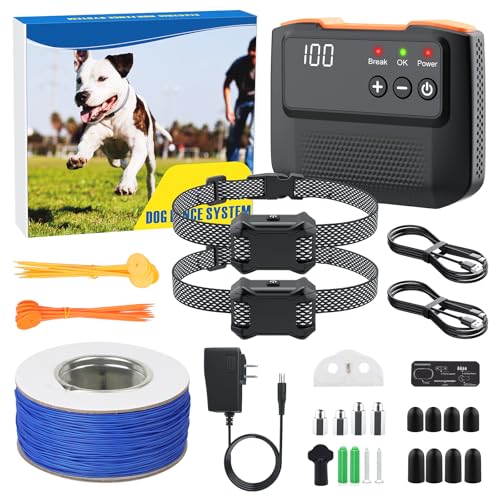
As an Amazon Associate we earn from qualifying purchases at no extra cost to you. Ratings are shown as listed on Amazon.
Quick picks by property and dog
| Situation | Best match | Why it fits | Main compromise |
|---|---|---|---|
| Large, irregular yard | In-ground wired fence | Custom boundary follows property lines, gardens, driveways, and water | Buried wire requires planning and installation |
| Rental home or temporary use | Wireless or GPS fence | Little or no digging; can be moved more easily | Wireless systems usually create a circle rather than a custom shape |
| Small, open, roughly circular yard | Wireless transmitter system | Fast setup and a consistent radial boundary | Boundary can shift if the transmitter is moved or obstructed |
| Multiple dogs | Expandable wired or GPS system | Additional compatible collars can share one boundary | Each dog needs a correctly fitted receiver and individual training |
| Dog that ignores warnings or rushes through boundaries | Professionally planned wired system plus physical fencing | Provides a more controlled setup and a visible backup | Costs more and still requires training and supervision |
Best electric dog fences compared
Best for custom coverage: PetSafe In-Ground Fence systems
PetSafe’s in-ground systems are a practical choice when your yard is not a neat circle. You can route the boundary around a pool, flower beds, driveway, neighboring property, or areas where you do not want your dog to enter. The wire is typically installed in a shallow trench or attached to an existing fence, and the transmitter connects to the loop.
Coverage varies by model and wire layout, but many residential kits are designed for approximately one-third to one acre, with expandable wire available for larger areas. PetSafe also sells compatible receiver collars in different size ranges, including options intended for smaller dogs. Check the specific collar’s minimum neck size rather than assuming every receiver fits every dog.
The main advantage is boundary precision. The main disadvantages are digging, locating a break if the wire is damaged, and replacing collar batteries or contact components over time. This is usually the strongest choice for a permanent home with an unusual property shape.
Best for a simple circular boundary: PetSafe Wireless Fence
A PetSafe Wireless Fence uses a central transmitter to create an adjustable circular containment area. The commonly advertised coverage is up to approximately three-quarters of an acre, although usable space depends on the transmitter position, terrain, buildings, metal structures, and the dog’s distance from the house.
Wireless coverage is appealing because installation can take substantially less time than burying hundreds of feet of wire. It is also easier to take to another property. However, a circle may place part of your dog’s allowed area in the street, a neighbor’s yard, or an unwanted section of your own land. The system is therefore best for an open, isolated property where a circular boundary is safe.
Do not place the transmitter near large metal objects or in a location where walls and appliances interfere with the signal. Mark the boundary with flags, then walk the perimeter yourself before allowing your dog outside.
Best for long or complex properties: SportDOG In-Ground Fence
SportDOG’s in-ground systems are aimed at larger properties and multi-dog households. The SportDOG SDF-100A is designed for up to approximately 1 1/3 acres with the included wire, and the system can be expanded with additional compatible wire. SportDOG receivers are known for adjustable correction levels and multiple contact-point options, but the right setting should be the lowest effective level after proper training—not the strongest available setting.
This type of system makes sense when a narrow side yard, long driveway, or irregular boundary rules out a wireless circle. It also suits owners willing to map the property carefully and bury or protect the wire. As with any wired fence, installation quality matters more than the headline coverage number: a damaged loop or poorly connected splice can stop the boundary from working.
Best for portable GPS boundaries: Halo Collar
A GPS collar such as Halo Collar avoids buried wire by using satellite positioning and a smartphone-based setup process. You can create virtual fences around a property and manage multiple saved locations, which is useful for travel or homes where digging is impossible. The collar requires regular charging and a reliable initial map of the safe area.
GPS systems are not identical to wired systems. Position estimates can vary with satellite visibility, trees, buildings, terrain, and other environmental conditions. The boundary may also feel less exact near narrow roads or close to a property line. Confirm current subscription, device-compatibility, coverage, and battery specifications before buying, because these details can change between collar generations.
Wired versus wireless versus GPS
| Factor | Wired | Wireless | GPS |
|---|---|---|---|
| Boundary shape | Custom loop | Usually adjustable circle | Virtual mapped areas |
| Typical setup | Plan, bury or secure wire, test loop | Position transmitter, set radius, flag edge | Charge collar, install app, map and verify boundary |
| Typical coverage | About 1/3 to 1 1/3 acres in common residential kits; expandable | Up to roughly 3/4 acre in common systems | Often designed for multiple saved areas; check current plan and model limits |
| Boundary consistency | Generally the most predictable when the loop is intact | Can change with transmitter placement or interference | Can vary with signal conditions and mapping accuracy |
| Ongoing ownership | Battery and wire-break maintenance | Battery and transmitter maintenance | Charging, app upkeep, and possibly a subscription |
Collar fit matters more than maximum correction
A receiver should sit snugly against the dog’s neck without choking, shifting, or rubbing. You should generally be able to slide two fingers between the collar and the neck. A loose collar may fail to make consistent contact; an overly tight collar can cause irritation. Rotate the receiver’s position periodically and inspect the skin, especially for dogs with thick coats or sensitive skin.
Measure the dog’s neck where the collar will sit, then compare that measurement with the manufacturer’s stated range. Do not use a large-dog receiver on a small dog simply because it has more settings. The collar’s weight, contact-post length, and minimum neck size all matter.
Water resistance is also worth checking. “Waterproof” and “water-resistant” are not interchangeable, and a collar that tolerates rain may not be suitable for swimming. Remove the receiver when the dog is not in the containment area unless the manufacturer gives a different recommendation.
What installation actually involves
- Draw the boundary. Mark the house, roads, neighboring properties, gates, pools, and hazards. Keep the dog’s safe zone away from traffic rather than using the boundary as a substitute for a physical barrier.
- Choose the system type. Use wired for a custom outline, wireless for a safe circular area, and GPS when portability is more important than pinpoint consistency.
- Test before permanent installation. For wired systems, connect the complete loop and check the transmitter’s status indicator. For wireless and GPS systems, walk the perimeter with the collar in test mode if available.
- Install boundary flags. Flags should be close enough that the dog can see several at once. They are training aids, not permanent substitutes for checking the signal.
- Train in short sessions. Introduce the warning tone, walk toward the edge, turn back calmly, and reward the dog for returning. Practice from different approaches and distractions over several days or weeks.
- Supervise every early outing. A dog that has not learned the boundary may run through it, particularly when chasing wildlife, greeting visitors, or reacting to another dog.
Ownership costs and common failure points
Budget for more than the initial kit. A wired installation may need extra wire, waterproof splice capsules, trenching tools, replacement flags, and a backup battery. Wireless and GPS systems may need rechargeable batteries or charging accessories; GPS products may also have ongoing service fees. A rough planning example: if a receiver battery costs $15 and lasts six months, two years of batteries costs about $60 per collar, before replacement contact posts or damaged wire.
The parts that commonly wear first are collar straps, buckle holes, contact posts, charging ports, batteries, and exposed wire near gates or landscaping. Keep wire splices dry, check the collar before each use, clean contact points according to the manual, and walk the boundary after major landscaping, storms, or fence work. Never assume a transmitter light proves that every section of a buried loop is intact; use the manufacturer’s wire-break testing procedure.
Are electric dog fences safe and suitable?
These systems deliver an audible warning and, depending on the model and setting, a static correction. They should not be used as punishment or as a way to contain a dog that is routinely panicked, highly reactive, or determined to escape. Some dogs may run through the boundary during an emergency and then hesitate to return because the correction occurs when they cross back.
Use positive reinforcement, supervision, and a physical fence or leash where traffic, wildlife, aggressive dogs, or other hazards are present. If your dog shows fear, skin irritation, avoidance, or escalating reactivity, stop using the system and consult a qualified trainer or veterinary professional about safer containment options.
Bottom line
For the most consistent custom coverage, choose an in-ground wired system such as a PetSafe or SportDOG model. For a small, open, roughly circular yard, a PetSafe wireless system is simpler. For travel or multiple mapped properties, a GPS collar such as Halo Collar is more flexible, but it demands charging, app setup, and tolerance for location variability. Match the boundary technology to the land first, then choose the collar that fits your dog securely and commit to careful training.





Write Your Review
No reviews yet. Be the first to share your experience!