

Key takeaways
- Real blue cheese near the top: Ideally within the first three ingredients, listed as “blue cheese” or “aged blue cheese” rather than “blue cheese flavor.”
- Dairy base: Soybean oil and water as the first two ingredients signals a shelf-stable, mayo-like base. Canola or soybean oil is standard, but refrigerated dressings often use sour cream, buttermilk, and mayonnaise as the base, which gives richer mouthfeel and shorter shelf life.
- Stabilizers: Xanthan gum and guar gum are normal for texture. A long list of artificial flavors, added colors, or high-fructose corn syrup is a sign of a lower-cheese formula.
- Refrigerated vs. shelf-stable: Refrigerated dressings (found in the produce cooler) typically contain more real cheese and dairy and no artificial preservatives, but they expire faster once opened. Shelf-stable bottles last longer in the pantry and are better for occasional use.
The best blue cheese dressing for most salads and dipping is Ken’s Steak House Chunky Blue Cheese for its balanced tang and thick, spoonable texture, while Marie’s Chunky Blue Cheese is the better pick if you want maximum crumbles and a refrigerated, dairy-forward flavor, and Litehouse Chunky Blue Cheese is ideal for mild, creamy dipping.
Our top picks


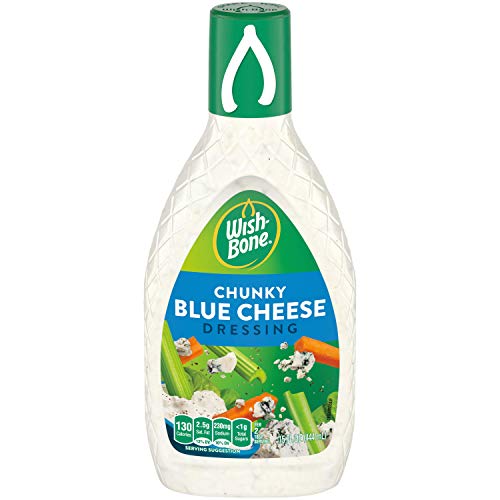
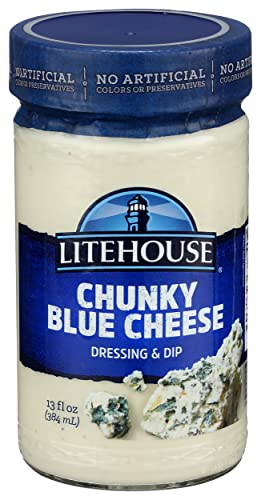
As an Amazon Associate we earn from qualifying purchases at no extra cost to you. Ratings are shown as listed on Amazon.
How to Choose a Blue Cheese Dressing by What Matters Most
Blue cheese dressings vary more than the label suggests. Three factors determine whether you will like one: chunkiness, tanginess, and ingredient quality. Matching those to how you plan to use it is more reliable than choosing by brand alone.
1. Chunkiness
Chunkiness comes from the size and amount of actual blue cheese crumbles, not just flavoring. A chunky dressing will have visible 3-5mm crumbles that sit on lettuce or cling to a wing instead of sliding off. Smooth or creamy-style dressings use finely ground cheese and emulsifiers for a pourable, uniform texture. If you are dressing a wedge salad or steak salad, chunky gives you bites of cheese. If you are drizzling over a delicate mixed greens salad or using it as a dip for a crudité platter, a smoother dressing coats more evenly.
2. Tanginess and Sharpness
Tang comes from three sources: the age and type of blue cheese (Roquefort-style is sharper, Gorgonzola-style is milder and creamier), the acid (vinegar vs. lemon juice), and cultured dairy (buttermilk, sour cream). High-vinegar, aged-cheese formulas taste sharp, salty, and pungent – great for cutting through rich foods like Buffalo wings and bacon. Buttermilk and sour cream-based formulas taste mellow, creamy, and slightly sweet – better for Cobb salads, where the dressing should not overpower avocado and egg.
3. Ingredient Quality and Label Signals
For blue cheese dressing, ingredient order tells you the most. Look for:
- Real blue cheese near the top: Ideally within the first three ingredients, listed as “blue cheese” or “aged blue cheese” rather than “blue cheese flavor.”
- Dairy base: Soybean oil and water as the first two ingredients signals a shelf-stable, mayo-like base. Canola or soybean oil is standard, but refrigerated dressings often use sour cream, buttermilk, and mayonnaise as the base, which gives richer mouthfeel and shorter shelf life.
- Stabilizers: Xanthan gum and guar gum are normal for texture. A long list of artificial flavors, added colors, or high-fructose corn syrup is a sign of a lower-cheese formula.
- Refrigerated vs. shelf-stable: Refrigerated dressings (found in the produce cooler) typically contain more real cheese and dairy and no artificial preservatives, but they expire faster once opened. Shelf-stable bottles last longer in the pantry and are better for occasional use.
For general wellness context, blue cheese dressings are high in saturated fat and sodium by design. If you are managing sodium, saturated fat, or dairy sensitivity, check the nutrition panel and ingredient list and talk with your healthcare provider or dietitian about portions that fit your needs.
Blue Cheese Dressing Comparison: Size, Texture, and Nutrition
This table compares widely available options in 2026 to show how texture, base, and nutrition differ. Nutrition is per 2-tablespoon (30ml) serving as listed on the label; bottle sizes are standard retail sizes.
| Product | Bottle Size | Base Type | Texture | Calories / Fat | Sodium | Storage |
|---|---|---|---|---|---|---|
| Ken’s Steak House Chunky Blue Cheese | 16 fl oz (473 ml) | Soybean oil, blue cheese | Very chunky, thick pour | 130 cal / 14g | 320 mg | Shelf-stable |
| Marie’s Chunky Blue Cheese | 11.5-12 fl oz (340-355 ml) | Soybean oil, buttermilk, egg yolk, real blue cheese crumbles | Extra chunky, spoonable | 130 cal / 13g | 290 mg | Refrigerated |
| Litehouse Chunky Blue Cheese | 13 fl oz (384 ml) | Canola oil, sour cream, buttermilk, blue cheese | Creamy with medium crumbles | 110 cal / 11g | 280 mg | Refrigerated |
| Wish-Bone Chunky Blue Cheese | 15 fl oz (444 ml) | Soybean oil, blue cheese | Smooth-creamy, small crumbles | 140 cal / 14g | 340 mg | Shelf-stable |
| Hidden Valley Original Ranch Blue Cheese | 16 fl oz (473 ml) | Soybean oil, buttermilk, blue cheese | Creamy, lightly chunky | 120 cal / 12g | 310 mg | Shelf-stable |
| Brianna’s Home Style Blue Cheese | 12 fl oz (355 ml) | Canola oil, sour cream, blue cheese | Medium chunky, herb-flecked | 160 cal / 17g | 260 mg | Shelf-stable / refrigerate after opening |
Best Blue Cheese Dressings by Use Case
Best for Wedge and Steak Salads: Marie’s Chunky Blue Cheese
Marie’s delivers the most identifiable cheese pieces and a tangy, cultured dairy backbone. Because it is found in the refrigerated section and uses buttermilk and egg yolk, it tastes closer to a restaurant wedge dressing than a shelf-stable bottle. The thickness means it sits on top of iceberg without pooling at the bottom. Keep in mind it separates less than shelf-stable dressings but must stay refrigerated and is typically used within 3-4 weeks after opening.
Best All-Purpose for Salads and Wings: Ken’s Steak House Chunky Blue Cheese
Ken’s is the balanced reference point for chunkiness and tang. It has large, soft crumbles, a sharp vinegar tang, and enough body to cling to romaine, Buffalo wings, and celery. As a shelf-stable dressing, it is also the most convenient to keep on hand. Shake well before each use – the crumbles settle and the oil can separate if stored for months.
Best Mild and Creamy for Dipping: Litehouse Chunky Blue Cheese
If you find traditional blue cheese too pungent, Litehouse is noticeably milder. The sour cream and buttermilk base softens the sharpness, and the crumbles are smaller, so it works as a dip for chicken tenders, fries, and vegetables without overwhelming them. It is also lower in sodium than many shelf-stable options, which matters if you serve it as a dip where portions tend to be larger.
Best Budget-Friendly Pourable Option: Wish-Bone Chunky Blue Cheese
Wish-Bone is thinner and more pourable than Ken’s or Marie’s, with fine crumbles distributed throughout. That makes it better for lightly coating large mixed salads or drizzle-style use where you want blue cheese flavor without heavy chunks. The flavor is saltier and more vinegar-forward, so a little goes further on bitter greens like radicchio or arugula.
Best for Ranch Lovers Who Want Blue Cheese: Hidden Valley Original Ranch with Blue Cheese
This is a hybrid – ranch seasoning with added blue cheese. It is creamier, more herbaceous, and less sharp than a pure blue cheese dressing. Choose it if your household is split between ranch and blue cheese, or for dipping pizza crusts and wraps where a straight blue cheese would be too strong.
Best Small-Batch Style: Brianna’s Home Style Blue Cheese
Brianna’s uses a canola oil and sour cream base with a higher cheese load and black pepper notes, giving it a homemade, steakhouse quality. It is richer per serving, so it is best when used as a finishing dressing rather than a heavy pour. The 12 oz bottle is smaller than the 15-16 oz shelf-stable standard, which helps reduce waste if you use blue cheese dressing only occasionally.
Decision Matrix: Match Your Situation to the Right Bottle
| Your Situation | What to Prioritize | Best Match |
|---|---|---|
| You serve wedge salad or Cobb salad weekly | Extra chunky, dairy-forward, visible crumbles | Marie’s or Litehouse (refrigerated) |
| You need one bottle for salads, wings, and veggies | Thick but pourable, balanced tang | Ken’s Steak House |
| You dip more than you dress salads | Creamy, mild, clings to food | Litehouse or Hidden Valley Blue Cheese |
| You use blue cheese dressing rarely | Long shelf life before opening | Wish-Bone, Ken’s, or Brianna’s (shelf-stable) |
| You prefer less salt/sharpness | Lower sodium, buttermilk/sour cream base | Brianna’s or Litehouse |
| You want bold, pungent bite for Buffalo wings | High vinegar, aged cheese, salty tang | Ken’s or Wish-Bone |
Cost Per Use and Storage Realities
A quick calculation prevents overbuying. A 16 fl oz bottle contains about 16 servings at 2 tablespoons per serving. If you use 2 tablespoons per dinner salad, that bottle covers roughly 16 salads. A 12 fl oz refrigerated bottle covers about 12 salads. For dipping, portions are often 3-4 tablespoons per person, so the same bottles cover only 6-8 servings.
In general market ranges in 2026, shelf-stable dressings are priced lower per ounce than refrigerated dressings. Refrigerated dressings cost more per ounce but contain more real cheese by weight. If you use blue cheese dressing less than twice a month, a smaller shelf-stable bottle often wastes less, even if the per-ounce price is slightly higher.
Ownership and durability are about freshness, not hardware:
- What breaks down first: Flavor and texture. Once opened, the blue cheese aroma fades, and oil separation increases after 4-6 weeks, especially in shelf-stable bottles stored at warm temperatures.
- Shelf life: Shelf-stable bottles last 6-9 months unopened in a cool pantry. After opening, refrigerate and aim to use within 6-8 weeks. Refrigerated dressings last 8-12 weeks unopened in the fridge and 3-4 weeks after opening. Always follow the best-by date.
- Common mistakes: Storing the bottle in the refrigerator door where temperature fluctuates, not shaking before pouring (crumbles compact at the bottom), and using a wet spoon to scoop from a refrigerated jar, which introduces bacteria and speeds spoilage.
- Cleaning tip: Blue cheese dressings can leave an oily film and cheese residue around the bottle neck. Wipe the threads and cap after each pour to prevent a rancid smell and a stuck cap.
How to Get the Best Flavor Without Changing Brands
If your current bottle tastes flat, try these adjustments before switching:
- Let a refrigerated dressing sit at room temperature for 5-10 minutes before serving. Cold mutes the aroma of blue cheese; a brief temper brings out the tang.
- Add a teaspoon of extra crumbled blue cheese (Gorgonzola for creaminess, Roquefort for sharpness) per 1/4 cup of dressing to boost chunkiness without buying a new bottle.
- For wings, thin a very thick dressing with a tablespoon of buttermilk or milk so it coats evenly instead of sitting in a dollop.
- For salads, season greens lightly with salt and pepper before adding dressing. Blue cheese dressings vary widely in salt, and pre-seasoning helps you use less dressing overall.
Frequently Asked Questions
Is blue cheese dressing the same as blue cheese dip?
They are similar formulas with different thickness. Dips often have more sour cream or cream cheese and less oil for a spoonable texture. You can use a chunky dressing as a dip, or thicken a dressing by stirring in a spoonful of sour cream or Greek yogurt.
Why does my blue cheese dressing taste bitter?
Bitterness usually comes from the blue cheese itself or from vegetable oil that has oxidized. Aged, strongly veined cheese is naturally more bitter and peppery. Storing an opened bottle too long, especially without consistent refrigeration, can also create off flavors. If it smells unusually sharp or sour beyond normal blue cheese pungency, discard it.
Can I freeze blue cheese dressing?
Freezing is not recommended. The emulsion breaks when thawed, leaving a watery, grainy texture and separated oil. Refrigeration is the only reliable storage method after opening.

Write Your Review
No reviews yet. Be the first to share your experience!