

Key takeaways
- Rinse after saltwater or mud: Even waterproof hardware can suffer when salt, grit, or manure dries around charging contacts, buttons, and clips.
- Inspect the attachment: Clips, collar loops, buckles, and silicone mounts usually wear before the electronics. Replace a loose mount rather than trusting it on a long walk.
- Keep charging contacts clean: Dry the tracker fully before charging and wipe contacts with a soft, dry cloth. Do not charge visibly wet hardware.
- Check fit after grooming: A clipped coat or seasonal weight change can make a previously secure collar loose.
- Update before travel: Confirm the app is logged in, location permissions are enabled, notifications are allowed, and the tracker has recently checked in.
- Carry backup identification: A GPS device can lose power, cellular service, or its attachment. A readable ID tag and registered microchip remain important safeguards.
The best dog GPS trackers for most owners are the Tractive DOG 6 for affordable everyday cellular tracking, the Fi smart collar for long battery life and a collar-integrated design, and the Garmin Alpha TT25 for off-grid tracking where mobile coverage is unreliable.
Our top picks
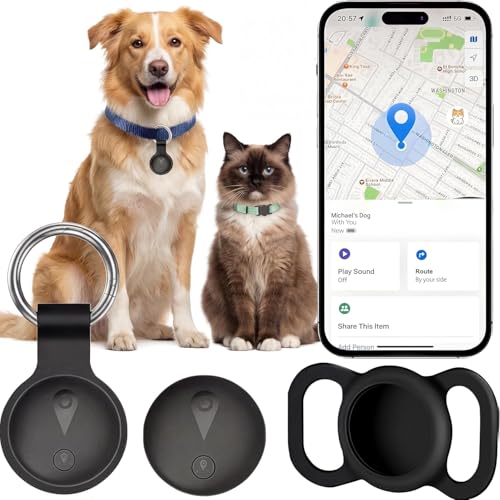


As an Amazon Associate we earn from qualifying purchases at no extra cost to you. Ratings are shown as listed on Amazon.
Quick comparison: the best dog GPS trackers by use case
| Tracker | Best for | Typical battery life | Approx. device weight | Network or range | Subscription | Water resistance |
|---|---|---|---|---|---|---|
| Tractive DOG 6 | Most everyday dog owners | Up to about 2 weeks, depending on live-tracking use | About 1.4 oz / 39 g | LTE-M cellular; coverage depends on country and carrier partnerships | Usually about $5–$15 per month, depending on plan term | IPX8-class waterproof design |
| Tractive DOG 6 XL | Large dogs and longer runtime | Up to about 6 weeks in low-use conditions | About 2.1 oz / 60 g | LTE-M cellular | Usually about $5–$15 per month | Waterproof design |
| Fi smart collar | Long battery life and activity history | Often several weeks; real-world life varies with coverage and location updates | About 1.5–2.0 oz / 43–57 g, depending on collar and hardware | LTE-M cellular with Wi-Fi and Bluetooth assistance | Commonly about $15–$25 per month, depending on membership term | Water-resistant or waterproof hardware, depending on model |
| Garmin Alpha TT25 | Hiking, hunting, and weak-cellular areas | Up to about 20–25 hours, with longer life using extended battery accessories | About 9.3 oz / 265 g including the standard collar unit | VHF radio, typically up to several miles in suitable terrain | No cellular subscription; compatible Garmin handheld required | IPX7 water resistance |
Weights and battery figures are useful comparisons rather than guarantees. Live location requests, poor signal, cold weather, thick vegetation, frequent swimming, and a poorly fitted collar can all change performance.
Our picks, compared head-to-head
Tractive DOG 6: best balance of price and location features
The Tractive DOG 6 is the strongest general-purpose choice for owners who want an app, virtual fences, live location updates, and a relatively light device. It uses cellular networks rather than communicating directly with your phone, so you can locate a dog away from home when both the tracker and your phone have an internet connection.
Its live-tracking mode is designed for following a moving dog and generally updates more frequently than the lower-power location mode. The trade-off is battery drain: a tracker that reports every few seconds cannot last as long as one that checks in occasionally. Tractive’s virtual-fence feature can alert you when a dog leaves a defined safe zone, but it is not an invisible barrier. GPS accuracy takes time to establish, and a notification can arrive after a dog has already crossed the boundary.
Choose the standard DOG 6 for small and medium dogs that tolerate a modest clip-on device. The DOG 6 XL is better for larger dogs and owners who prioritize runtime over minimum weight.
Fi smart collar: best for long-term wear
Fi’s main advantage is that the tracking hardware is integrated into a collar system rather than being a separate tracker hanging from an existing collar. That can reduce swinging and snagging, although the complete collar may be heavier or bulkier than a basic collar with a small clip-on unit.
The long battery interval is useful for owners who do not want to charge every few days. Fi also combines location history, escape alerts, activity information, and a home base that can improve battery efficiency. However, the tracker depends on cellular coverage for remote location reporting. A phone-to-collar Bluetooth connection does not replace cellular service when the dog is far away.
Check the collar’s size range carefully. A collar that is too loose can rotate and affect both comfort and escape security; one that is too tight can cause rubbing. You should be able to place two fingers between the collar and the dog’s neck, while still preventing the dog from backing out of it.
Garmin Alpha TT25: best for off-grid tracking
The Garmin Alpha TT25 is a different category of product. It communicates with a compatible Garmin Alpha handheld using VHF radio, so it does not need a cellular subscription or a nearby mobile tower. That makes it a better option for remote trails, hunting areas, and rural terrain where cellular service is inconsistent.
The disadvantages are substantial for casual users: the collar unit is much heavier than a compact cellular tracker, battery life is measured in hours rather than weeks, and the initial system cost is much higher because you need a compatible handheld. Radio range also depends on elevation, trees, buildings, weather, antenna position, and terrain. “Several miles” should not be treated as a guaranteed radius in a forested valley.
For off-grid work, radio reliability is usually more important than app convenience. For neighborhood walks and ordinary escape alerts, a cellular tracker is generally simpler.
Decision matrix: which tracker fits your situation?
| Your situation | Best direction | Why | Main compromise |
|---|---|---|---|
| Small dog, city living, occasional escape risk | Light cellular tracker such as Tractive DOG 6 | Lower collar burden and useful geofencing | Requires an active subscription and cellular coverage |
| Large dog, frequent outdoor activity, few charging opportunities | Tractive DOG 6 XL or Fi | Longer battery intervals and remote alerts | Heavier hardware or higher membership cost |
| Backcountry hiking with weak or absent mobile service | Garmin Alpha TT25 system | VHF radio does not depend on cell towers | High upfront cost, heavier collar, shorter battery runtime |
| Lowest ongoing cost | Radio tracker, if its range suits your trips | No cellular membership | Requires compatible equipment and line-of-sight conditions |
| Daily wear with a collar-integrated design | Fi smart collar | Less dangling hardware and strong long-term battery focus | Replacement collar compatibility and membership cost |
Subscription cost and battery: the calculation that matters
A tracker’s purchase price is only part of its ownership cost. Suppose a cellular tracker costs $60–$100 and its membership averages $8 per month on a longer plan. Over two years, the tracker cost is approximately:
$80 device + ($8 × 24 months) = $272 before tax.
If a second tracker costs $150 but has no subscription, its two-year cost may be lower despite the higher purchase price. That second option is only useful, however, if its radio range covers your normal routes and you are willing to carry the required receiver.
Battery claims also need context. If a tracker lasts 14 days in low-use mode but only 4 days when live tracking is used for 30 minutes daily, schedule charging around actual behavior rather than the headline figure. A simple maintenance habit is to charge after every long hike, even when the battery indicator still looks comfortable.
Accuracy, coverage, and geofencing limitations
GPS accuracy is usually best outdoors with a clear view of the sky. Buildings, dense tree cover, steep terrain, and indoor locations can produce delayed or less precise positions. The app may also show the last known location rather than a current position when the tracker cannot reach a cellular network.
Network coverage is country-specific. Before buying, enter your home area and regular travel destinations into the manufacturer’s coverage information where available. Border regions and remote campsites deserve special attention because a tracker can work perfectly at home yet fail during a trip.
Set geofences wider than the physical property. A boundary placed directly along a fence may create repeated alerts from ordinary GPS variation. A buffer of roughly 30–100 feet, adjusted for the dog’s speed and the property layout, is often more practical. Geofencing is an alert system, not a substitute for a secure fence, identification tag, and microchip.
Durability and ownership details people often overlook
- Rinse after saltwater or mud: Even waterproof hardware can suffer when salt, grit, or manure dries around charging contacts, buttons, and clips.
- Inspect the attachment: Clips, collar loops, buckles, and silicone mounts usually wear before the electronics. Replace a loose mount rather than trusting it on a long walk.
- Keep charging contacts clean: Dry the tracker fully before charging and wipe contacts with a soft, dry cloth. Do not charge visibly wet hardware.
- Check fit after grooming: A clipped coat or seasonal weight change can make a previously secure collar loose.
- Update before travel: Confirm the app is logged in, location permissions are enabled, notifications are allowed, and the tracker has recently checked in.
- Carry backup identification: A GPS device can lose power, cellular service, or its attachment. A readable ID tag and registered microchip remain important safeguards.
What to buy
Choose the Tractive DOG 6 if you want the best balance of weight, live tracking, geofencing, and subscription cost for ordinary daily use. Choose the Tractive DOG 6 XL when longer battery life matters more than minimum size. Choose a Fi smart collar if you prefer integrated hardware and extended charging intervals. Choose the Garmin Alpha TT25 when your main problem is the absence of cellular coverage, not the need for a low-cost app.
Whichever system you select, judge it by the complete setup: device weight on the dog, expected coverage on your routes, realistic live-tracking battery life, replacement parts, and the two-year ownership cost. Those factors determine whether a tracker remains useful after the first escape alert.




Write Your Review
No reviews yet. Be the first to share your experience!