
Key takeaways
- Compare the best gravel for a koi aquarium: smooth natural pebbles and coarse clay gravels that stay pH neutral, resist digging and vacuum clean easily.
Gravel in a koi tank is not a decoration decision first. Koi spend much of the day nosing along the bottom, mouthing stones and spitting them back out, so the gravel you pour in has to survive that behaviour safely. Grains that are too small get swallowed or stirred into the water column, sharp edges wear on barbels and bellies, and a deep bed quietly fills with the heavy waste koi produce. The real choice is matching grain size and texture to the size of your fish, then keeping the layer shallow enough to vacuum properly.

This guide is for indoor koi keepers: people growing young fish on indoors before pond season, and anyone running a large display aquarium who wants a natural bottom instead of bare glass. Every pick below is a true aquarium gravel sold on Amazon, chosen from its listing details — stated grain size, whether it affects pH, and how the manufacturer says it behaves in freshwater. Coated novelty colours and buffering substrates are left out on purpose.
Quick Picks
As an Amazon Associate we earn from qualifying purchases
| Product | Best for | Key spec from title |
|---|---|---|
| CaribSea Super Naturals Peace River, 20 lb | Grow-out tanks holding young koi | 1.0–2.0 mm smooth natural grains |
| Spectrastone Shallow Creek Regular, 5 lb | Adult koi that constantly mouth the bottom | 1/8–1/4 inch natural pebble gravel |
| Seachem Flourite, 7 kg | Koi displays with rooted plants | Porous clay gravel that will not alter pH |
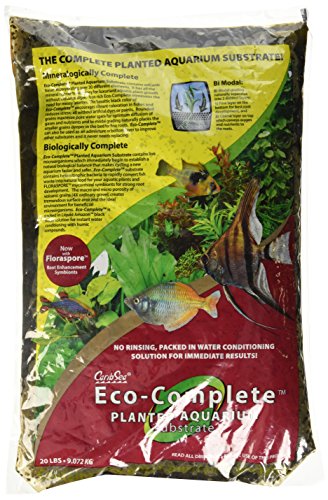
| CaribSea Eco-Complete Planted, Black, 20 lb | Covering a large tank footprint | 0.25–7.0 mm volcanic gravel, bimodal grading |
How to Choose
Match grain size to the size of your koi
Koi investigate everything with their mouths, and a stone that fits comfortably in the mouth is a stone that can be swallowed or lodged. Young fish in a grow-out tank do well on finer gravel around 1–2 mm, because the grains are small enough to pass through their constant sifting without sharp points. As fish pass roughly a foot in length, step up to pebbles in the 3–6 mm range or larger, which are heavy enough to stay put when a big koi fans the bottom and too big to be eaten accidentally. When in doubt, size the gravel for the largest fish in the tank, not the average one.
Pick smooth, rounded grains over sharp ones
A koi’s underside and barbels drag across the substrate all day, so edge shape matters as much as size. River-worn gravels with rounded grains are the safe default, and some manufacturers state this directly in their listing copy with phrases such as soft-belly safe. Fracted or crushed products have angular faces that can scrape skin and damage the sensitive barbels koi use to taste the bottom. If a listing describes its gravel as polished, river stone or naturally tumbled, that is the texture you want; if the grains look like crushed rock in the photos, save it for a planter.
Keep the chemistry inert
Koi are comfortable across a fairly wide pH range, but they dislike swings, and the wrong substrate can push water chemistry around for months. Natural gravels and fired clay products that state they will not affect pH or hardness are the predictable choice. Aragonite and crushed-coral substrates are the ones to avoid here: they are made to buffer water upward for marine or African cichlid tanks, which is the opposite of what a freshwater koi setup needs. Dyed gravel is a second risk, because cheap coatings can flake into the water; uncoated natural stone and clay avoid the question entirely.
Plan a shallow bed you can actually clean
Koi produce far more waste than typical aquarium fish, and whatever sinks into a deep gravel bed stays there until it rots. A layer around one inch deep is plenty for an indoor koi tank: it looks finished, gives the fish something to work over, and a gravel vacuum can still pull debris out of it in one pass. Use the manufacturer’s coverage figures when ordering — a 20 lb bag of the Peace River gravel below, for example, gives roughly a 1¼ inch bed over a 24 by 12 inch footprint, so a long display tank needs several bags, not one.
The 4 Best Options
CaribSea Super Naturals Peace River, 20 lb
Peace River is the gentle end of this list, and it suits the way most people actually keep koi indoors: young fish in a grow-out tank, working the bottom constantly while they put on size. The grains are small, smooth and river-rounded, in a natural mix of brown, tan, black and red, so the tank floor looks like a streambed rather than a bag of coloured stones. CaribSea states the grains are soft-belly safe and that the substrate will not affect pH or hardness, which removes two worries at once for a tank of juvenile fish.
Specs
- Natural freshwater aquarium gravel, 20 lb bag
- Typical grain size: 1.0–2.0 mm
- Smooth grains described by the maker as soft-belly safe
- Will not affect pH or hardness
- Pre-washed Super Naturals substrate
- Average density: 93 lb per cubic foot
- One 20 lb bag covers a 24 x 12 inch footprint to about 1¼ inches deep
Best for: Grow-out and quarantine tanks holding young koi that sift the bottom all day.
Watch out for: The fine grains are the wrong choice once koi grow large — a big fish can mouth and swallow 1–2 mm gravel, so plan to swap to a coarser pebble as the fish size up.
Spectrastone Shallow Creek Regular, 5 lb
Shallow Creek is a natural pebble gravel from Estes, sold under the long-running Spectrastone line, and its larger particle size is exactly what adult koi need. The stones run from about 1/8 to 1/4 inch, big enough that a full-grown fish can push them around without eating them, and the mix has the muted, creek-bed look that suits a koi display. Estes coats the gravel with a non-toxic finish and states it will not affect the pH of the water, so it behaves predictably in a freshwater setup. The catch is the bag size: five pounds covers only a modest footprint.
Specs
- Natural pebble aquarium gravel for freshwater tanks, 5 lb bag
- Particle size: 1/8 to 1/4 inch
- Non-toxic coating
- Will not affect pH balance
- Manufacturer: Estes Gravel Products, model 11509
- Bag dimensions: 10 x 7.25 x 1.5 inches
Best for: Adult koi in small to mid-size display tanks where a natural pebble bottom is the goal.
Watch out for: The 5 lb bag is small for koi-sized aquariums, so a long tank means ordering many bags; check the delivered colour against the listing photos, as natural mixes vary between batches.
Seachem Flourite, 7 kg
Flourite is the pick for the minority of koi keepers who run a planted display and want the substrate to do two jobs. It is a specially fracted porous clay gravel made for planted aquariums, and Seachem states it is not chemically coated or treated and will not alter the pH of the water. The porous grains give plant roots something to grip and hold nutrients at the root zone, and because the material does not break down, Seachem rates it for the life of the aquarium rather than as something you replace. In a koi tank it works best under potted or well-anchored plants.
Specs
- Specially fracted, stable porous clay gravel
- Bag size: 7 kg (15.4 lb)
- Not chemically coated or treated
- Will not alter the pH of the water
- Pre-washed, though the maker advises rinsing to remove residual dust
- Rated by the maker for the life of the aquarium, no replacement needed
- Each 7 kg bag holds roughly 7,000 cubic centimetres of substrate
Best for: Planted koi display tanks where roots need a real gravel bed to anchor in.
Watch out for: The fracted grains have harder edges than river gravel, and koi uproot plants enthusiastically — keep plants in pots or behind rockwork, and rinse the bag well or the tank will run cloudy at first.
CaribSea Eco-Complete Planted, Black, 20 lb
Eco-Complete is the bulk-coverage option, a black volcanic gravel substrate that CaribSea builds for planted freshwater tanks. Its grading is bimodal, with grains running from fine particles up to about 7 mm, so the smaller pieces settle low and the coarser fraction stays on top where koi encounter it. The volcanic material carries iron, calcium, magnesium, potassium, sulfur and a long list of trace elements for plant roots, and it contains no dyes, paints or coatings. A 20 lb bag goes further across a big footprint than the small bags on this list, which matters when the tank is koi-sized.
Specs
- Volcanic basalt aquarium gravel substrate, 20 lb bag, black
- Typical grain size: 0.25–7.0 mm with bimodal grading
- Average density: 54 lb per cubic foot
- Mineral content includes iron, calcium, magnesium, potassium and sulfur
- No dyes, paints or coatings
- Packed with heterotrophic bacteria for waste cycling
Best for: Large koi aquariums that need several bags of dark, coarse gravel to cover the footprint.
Watch out for: The fine end of the grading can cloud the water when koi dig, and CaribSea packs this substrate wet for its bacterial content, so follow the bag directions instead of rinsing it like ordinary gravel.
Which One Fits Your Situation
You are growing out young koi indoors
Start with Peace River. Juvenile koi sift substrate constantly, and its small, smooth, soft-belly-safe grains let them do that without sharp edges or chemistry surprises. Keep the bed near an inch deep so waste stays reachable, and treat the gravel as a stage, not a permanent floor: once the fish approach a foot long, move them up to a coarser pebble such as Shallow Creek.
Your adult koi share a display tank
Shallow Creek fits this job. Its 1/8 to 1/4 inch pebbles are too large for an adult koi to swallow, heavy enough not to cloud the water when the fish fan the bottom, and the natural creek colours suit a display. Budget for multiple 5 lb bags, because koi tanks are long and this gravel is sold in small bags only.
You want live plants in the koi tank
Flourite gives roots a porous clay bed that holds nutrients and never needs replacing, which suits a planted display. Be realistic about the fish, though: koi dig, so anchor plants in pots or wedge them behind stones, and expect to replant after enthusiastic digging sessions. The gravel will outlast several rounds of rearranged planting.
You are covering a very large footprint
Eco-Complete in the 20 lb black bags is the economical shape for a big tank, and its coarser top fraction stands up to adult koi working the surface. The dark colour also shows off koi colouration well. Keep the layer shallow and vacuum on schedule, because the fine particles in its grading hold debris if the bed gets deep.
Common Mistakes
- Buying fine gravel or coarse sand for adult koi, which can mouth, swallow or constantly stir grains in the 1–2 mm range.
- Pouring a deep bed for looks; in a koi tank anything much over an inch traps heavy waste where a vacuum cannot reach it.
- Choosing a buffering substrate such as crushed coral or aragonite, which pushes pH upward and is made for marine or cichlid water, not koi.
- Using decorative landscape pebbles or dyed stones that were never made for aquariums, including polished stones with coatings that can flake off underwater.
- Skipping the rinse on dusty clay gravel, then blaming the filter when the new tank runs cloudy for days.
Frequently Asked Questions
Is gravel actually a good idea in a koi tank?
It can be, with the right grain and depth. Many pond-style keepers run bare-bottom tanks because they are easiest to clean, but a shallow layer of coarse, smooth gravel works well indoors and looks far more natural. The failures come from fine grains that big fish swallow and deep beds that store waste, not from gravel itself.
How deep should the gravel bed be for koi?
Around one inch is the practical target. That is enough to cover the glass, give the fish a surface to work over and still let a gravel vacuum pull waste out in a single pass. Deeper beds in a koi aquarium collect more debris than the fishkeeper can remove, and water quality suffers quietly.
How much gravel do I need to buy?
Work from the tank footprint and the maker’s coverage figures rather than guessing by gallons. CaribSea rates a 20 lb bag of Peace River at roughly a 1¼ inch bed over a 24 by 12 inch base, and denser or lighter gravels cover differently — Eco-Complete, at 54 lb per cubic foot, spreads further per bag than a dense natural pebble of the same weight.
Will aquarium gravel change my water chemistry?
Inert natural gravel and fired clay products will not; their listings state plainly that pH and hardness are unaffected. The substrates that do move chemistry are the buffering ones, such as aragonite and crushed coral, which are sold for saltwater and African cichlid setups. Check the listing for a pH statement before buying and a koi tank stays predictable.
More from Amazon
Programs that pair well with the guide above. Offers and eligibility are set by Amazon and may change.
Set up recurring deliveries of everyday items on eligible products. Terms and savings are set by Amazon.
Explore Subscribe & SaveFree shipping on eligible items, Prime Video and more. Eligible new members can start with a free trial.
Start a Prime free trialAudiobooks and podcasts to listen to on the go. Eligible new members can start with a free trial.
Try Audible freeRead from a large library of eBooks and audiobooks on any device. Check Amazon for current plans.
Explore Kindle UnlimitedAs an Amazon Associate we earn from qualifying purchases.








Write Your Review
No reviews yet. Be the first to share your experience!