

Key takeaways
- Under 10 inches wide: Choose a hot-air popper or compact stirring popper. These are easiest to store but usually lack a warming compartment.
- About 12–16 inches wide: A 4-ounce kettle machine is usually the most practical theater-style size for a home kitchen.
- About 16–20 inches wide: A 6- or 8-ounce machine offers better output but needs a stable, heat-resistant surface and overhead clearance.
- More than 20 inches wide or on a cart: This is generally event equipment. Check doorway widths, vehicle storage, electrical requirements, and whether the venue permits an oil-heated appliance.
The best popcorn machines for most home movie nights are a 4–6 ounce countertop kettle machine if you want theater-style popcorn, or a compact hot-air popper if you value fast cleanup and low cost over buttery flavor.
The right choice depends less on the highest wattage than on five practical questions: how much popcorn you need per batch, how quickly it must be ready, whether the kettle is stainless steel, how much cleaning you will tolerate, and whether the machine must stay on a kitchen counter or travel to events.
Our top picks

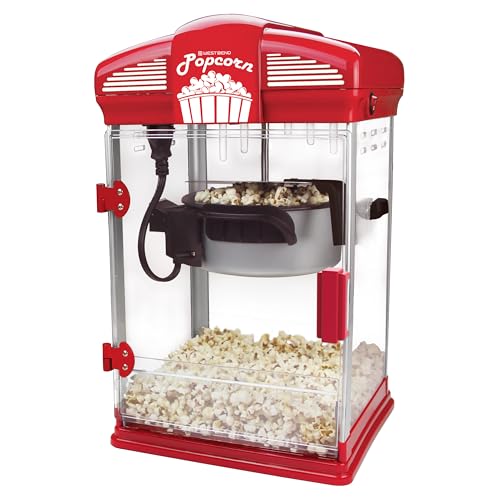
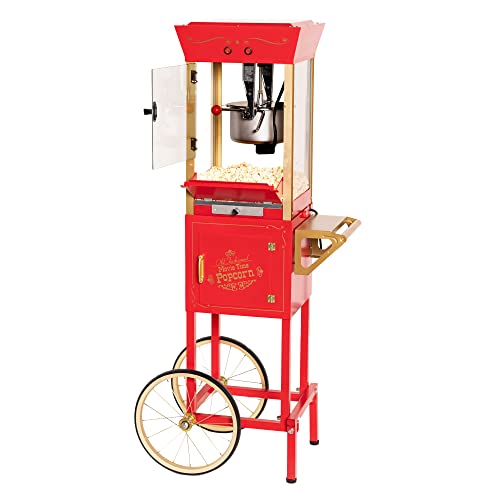

As an Amazon Associate we earn from qualifying purchases at no extra cost to you. Ratings are shown as listed on Amazon.
Best popcorn machines by situation
| Situation | Best machine type | Useful capacity | Why it fits | Main compromise |
|---|---|---|---|---|
| One to three people, limited counter space | Hot-air popper | About 3–4 cups popped per cycle | Usually ready in 2–4 minutes and has no oil kettle to scrub | Less theater-style flavor and more unpopped kernels at the bottom |
| Family movie night | 4-ounce kettle machine | About 10–12 cups popped | Good balance of batch size, speed, appearance, and footprint | Small kettle and door require careful cleaning |
| Frequent gatherings or game nights | 6–8-ounce kettle machine | About 15–24 cups popped | Fewer batches and better serving capacity | Heavier, taller, and slower to move or store |
| Fundraisers, parties, or paid events | Commercial-style 8–12-ounce machine | About 24–36 cups popped | Built for repeated batches and a larger warming area | Higher purchase cost, larger footprint, and more demanding cleanup |
| Occasional use on a tight budget | Stirring electric popper | About 8–12 cups popped | Often costs less than a kettle machine and handles oil-coated kernels | Does not provide the enclosed theater-machine presentation |
Head-to-head: kettle machines, hot-air poppers, and stirring poppers
Kettle machines: best for the movie-theater experience
A kettle machine combines a heated cooking kettle with a cabinet and warming deck. The kettle usually holds oil, kernels, and seasoning, while the cabinet keeps the finished popcorn warm. Models such as the Cuisinart Pop and Serve Popcorn Maker are designed for countertop use, while Great Northern Popcorn machines and Nostalgia kettle-style models cover a wider range of home and event sizes.
The main advantage is consistency. A 4-ounce kettle batch typically produces enough popcorn for a family movie, and a 6- or 8-ounce model reduces the number of cooking cycles for a crowd. The visible kettle also makes these machines useful for birthday parties and fundraisers.
Look for a stainless-steel kettle or a kettle with stainless-steel cooking surfaces. Stainless steel is not automatically nonstick, but it generally tolerates repeated heating and careful wiping better than thin painted metal. A kettle with a removable lid and an oil-drain or tilt mechanism is easier to maintain.
The drawbacks are real: oil residue collects around the kettle brackets, doors, and warming deck; the machine must cool before cleaning; and the cabinet can occupy roughly 12–20 inches of counter width depending on capacity. A decorative machine may also weigh 15–35 pounds, making it inconvenient to put away after every use.
Hot-air poppers: best for speed and easy cleanup
Hot-air poppers use heated air rather than oil. They are usually the smallest and least expensive option, often costing about $20–$60, and many have a footprint close to a tall travel mug or small blender. They can begin popping within a few minutes and need little more than an emptying, cooling, and wipe-down.
Choose one when you make popcorn often but do not want to wash an oily kettle. They are also useful in homes where the machine must be stored in a cabinet. The trade-offs are a smaller serving size, a louder fan, and popcorn that may need melted butter or seasoning added afterward. Never pour liquid butter into the air inlet or popping chamber unless the manufacturer specifically permits it.
Stirring electric poppers: the middle ground
A stirring popper heats kernels in a shallow bowl while an internal arm moves them across the surface. The West Bend Stir Crazy is a well-known example of this category. These machines generally produce more popcorn per cycle than a hot-air popper without requiring the tall cabinet of a kettle machine.
They are practical for families that want oil-popped corn but have limited storage. The lid and bowl can be easier to wipe than a theater cabinet, although the stirring mechanism creates another part that must be kept free of hardened oil and seasoning. Many stirring poppers use a plastic lid, so avoid abrasive pads and allow the bowl to cool before washing.
What the numbers mean in real use
Manufacturers often list kettle size in ounces, but that figure refers to the weight of unpopped kernels, not the final serving volume. A useful planning estimate is that one ounce of kernels produces approximately 2.5–3 cups of popped popcorn, depending on kernel variety and the number of unpopped pieces.
For example, a 4-ounce machine may produce roughly 10–12 cups per batch. If six guests each eat about 2.5 cups, you need approximately 15 cups, so one batch will not be enough. A 6-ounce kettle, producing about 15–18 cups, is a better fit:
6 guests × 2.5 cups = 15 cups required.
15 cups ÷ 3 cups per ounce = approximately 5 ounces of kernels.
This calculation also shows why buying the largest machine is not always better. A large kettle may leave more leftovers, take longer to heat, and consume more counter space when a 4-ounce model already suits a two- or three-person household.
Countertop footprint and event suitability
- Under 10 inches wide: Choose a hot-air popper or compact stirring popper. These are easiest to store but usually lack a warming compartment.
- About 12–16 inches wide: A 4-ounce kettle machine is usually the most practical theater-style size for a home kitchen.
- About 16–20 inches wide: A 6- or 8-ounce machine offers better output but needs a stable, heat-resistant surface and overhead clearance.
- More than 20 inches wide or on a cart: This is generally event equipment. Check doorway widths, vehicle storage, electrical requirements, and whether the venue permits an oil-heated appliance.
For events, popping speed matters as much as batch size. A machine that produces one batch every 3–5 minutes may be adequate for a small party, but a long queue will form if guests arrive faster than the kettle can cook. An event machine should also have a warming deck, a sturdy hinged kettle, and replacement parts available for the stir motor, kettle assembly, and light or warmer.
Cleanup, durability, and ownership costs
The parts most likely to cause trouble are not usually the heating element. They are the kettle stir mechanism, kettle hinges, switches, door panels, and plastic accessories exposed to heat or grease. Before buying, check whether the manufacturer sells replacement kettles, stir motors, measuring cups, and doors. A cheap machine that cannot be repaired may cost more over several years than a sturdier model with available parts.
Use the following cleaning routine after every oil-popped session:
- Unplug the machine and let the kettle cool until it is warm rather than hot.
- Empty unpopped kernels and crumbs from the cabinet and warming tray.
- Wipe the kettle interior with a soft, slightly damp cloth. Do not immerse an attached electrical kettle.
- Clean oil from the door tracks, corners, and stirring mechanism before it hardens.
- Wash removable trays or measuring cups according to the manual, then dry them completely.
- Leave the doors open briefly so trapped moisture does not create odors.
Do not scrape stainless steel with steel wool, spray cleaner into switches or vents, or run an electrical cabinet under water. Seasoning powders can also collect in fans and vents, so add them after popping unless the instructions specifically allow them in the kettle.
Buying checklist
- Capacity: Match the kettle to the number of people you regularly serve, not your largest occasional party.
- Materials: Prefer stainless-steel kettle surfaces and heat-resistant handles over thin decorative components.
- Speed: Look for a stated cycle time or heating time, and distinguish popping speed from preheating time.
- Cleanup: Confirm which parts are removable and whether the kettle can be wiped without reaching around exposed wiring.
- Footprint: Measure width, depth, height, and the space needed to open the kettle door or lid.
- Electrical use: Use a properly grounded outlet and avoid sharing a crowded power strip with high-draw appliances.
- Parts support: Replacement kettles and stir components matter more than decorative lights.
Bottom line
For most households, a 4-ounce stainless-steel kettle machine is the best popcorn machine because it delivers a theater-style result without the size of event equipment. Choose a hot-air popper if low maintenance and compact storage matter most, a stirring popper if you want oil-popped popcorn in a simpler format, and a 6–12-ounce commercial-style machine only when you regularly serve groups. Keep finished popcorn and loose kernels away from pets, and clean oily crumbs promptly so they do not become an unwanted household hazard.

Write Your Review
No reviews yet. Be the first to share your experience!